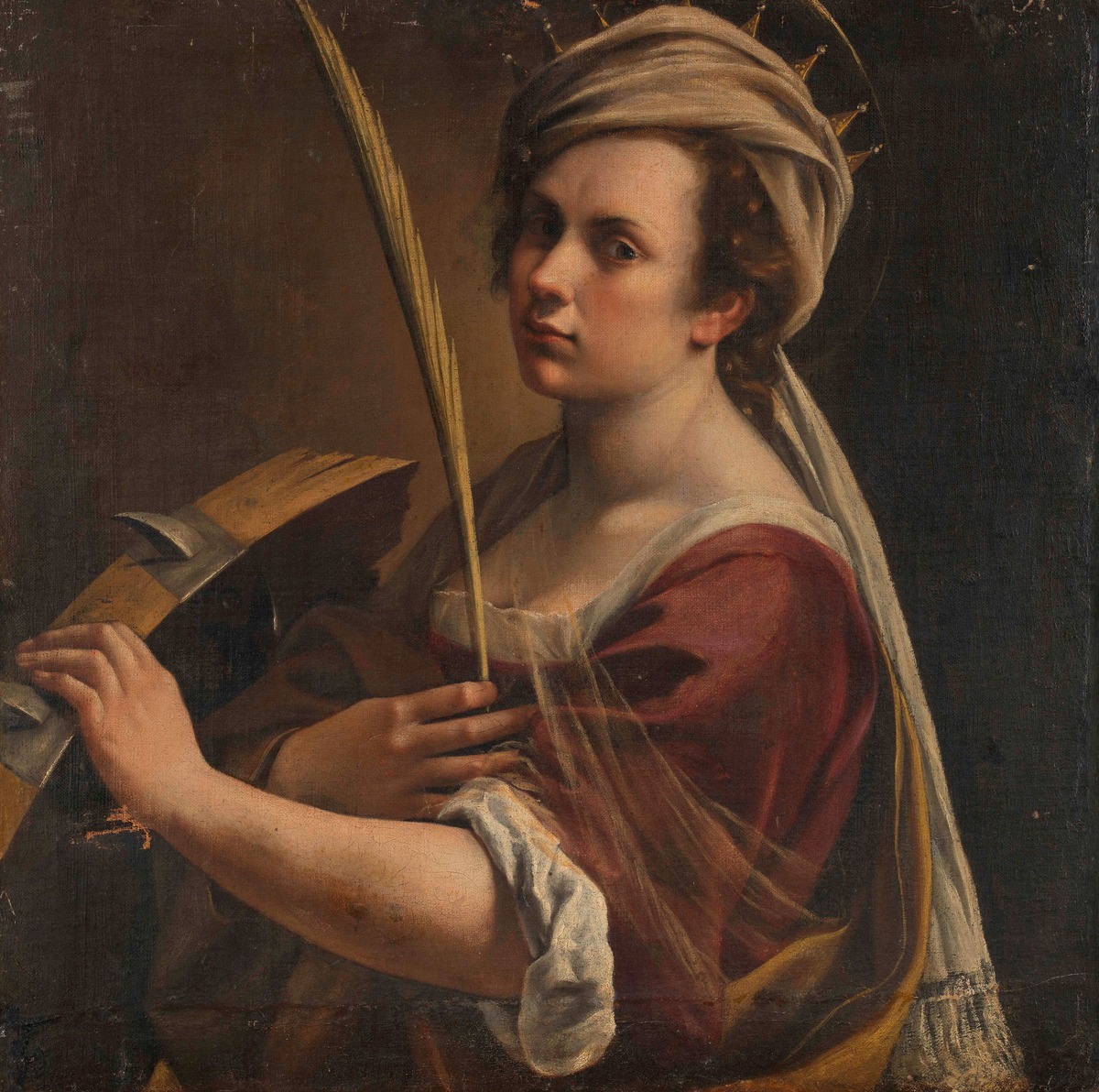
Artemisia Gentileschi’s paintings do not simply depict drama—they are drama: forged in the crucible of seventeenth-century Rome, refined amid Florentine court culture, and projected onto the international stage from Venice to Naples and beyond. Few Baroque artists command the modern imagination with such force, yet Artemisia’s power is not a matter of biography alone. It is in the paint itself—her muscular chiaroscuro, her startlingly present heroines, her uncompromising attention to psychological tension. To look closely at Artemisia Gentileschi paintings is to witness an artist who mastered the visual language of her age and then used it to speak in a voice unmistakably her own.
Artemisia Gentileschi in Context: Baroque Europe and a Woman Painter’s Career
Artemisia Gentileschi (1593 c.1654) was an artist of the Baroque, the era in which painters in Europe, beginning with Italy, competed with each other to tell stories from the Bible and mythology more dynamically, realistically, and in ways that really pulled at the emotions. In Rome, the striking ‘chiaroscuro’ style of Caravaggio, who painted from life and refused to do otherwise, made an impact, changing how pictures were created. Artemisia learned from him but went her own way.
Her talent had already traversed the most culturally renowned and influential institutions. In Florence, she obtained a one-of-a-kind status: she was the first woman to be elected a member of the Accademia delle Arti del Disegno (1616), one of the most prestigious Florentine academies protected by the Medeci. This distinction was not only for recognition it served as formal recognition of the painter‘s professional standing and capabilities in a society that valued technical mastery, complex iconographies, and exquisite craftsmanship.
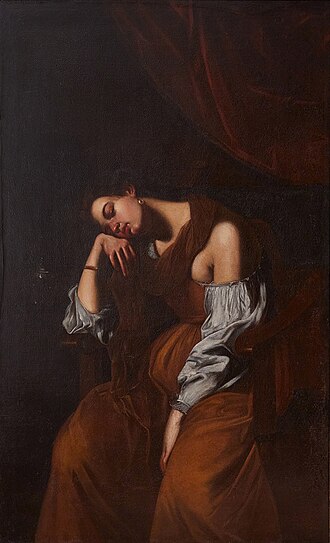
Artemisia’s later years in Venice, Rome, and especially Naples connected her to a cosmopolitan market where collectors sought large-scale history paintings. Naples—then under Spanish rule—was one of Europe’s biggest cities and a hub for artistic exchange. Artemisia worked there for long stretches, sustaining a workshop and producing ambitious canvases that demonstrate both commercial savvy and high artistic ambition.
Hallmarks of Artemisia Gentileschi Paintings: Style, Subjects, and Technique
Central to many of Gentileschi‘s paintings is her way of mixing Baroque theatricality with an almost unnerving psychological realism. Her paintings seem to capture a single decisive moment with a sword drawn, bodies coiled for action and faces frozen with determination. The light is not used for the sake of atmosphere, but for the purposes of rhetoric to illuminate the edge of a blade, to highlight a pair of hands or the look on a face in order to convey intent.
Her themes are another. Artemisia went back to themes Judith, Susanna, Lucretia, Cleopatra, Mary Magdalene about women pushed to the limit again and again, but not usually as passive display. Her figures are agents: fighting back, acting out, submitting, renouncing. It is more than female subjects painted by a woman, it is an extended meditation on power, helplessness, and empowerment within the medium that was considered the highest form of painting.
If we‘re being technical, Artemisia‘s painting is as self-assured as it is sensual in its modeling of figures, texture of textiles and flesh, use of space and drama. Museums often celebrate her craft as much as her persona. As the Metropolitan Museum of Art, a home to Self-Portrait as the Allegory of Painting (La Pittura) (c. 1638–39), puts it, she created “dramatic, powerful” paintings that rank “among the greatest works of Baroque art.” That‘s important: it keeps Artemisia moored in scholarship, not legend.
Key Characteristics of Artemisia Gentileschi Paintings (Summary Table)
| Characteristic | What it looks like in the paintings | Why it matters |
|---|---|---|
| Caravaggesque chiaroscuro | Strong contrasts of light/dark, spotlighting key action | Creates immediacy and moral focus |
| Psychological intensity | Concentrated facial expressions, decisive gestures | Elevates narrative realism beyond melodrama |
| Female protagonists with agency | Judith, Susanna, Lucretia depicted as actors, not ornaments | Reframes canonical stories through agency and will |
| Tactile material realism | Convincing skin, fabric sheen, metal reflections | Demonstrates virtuoso technique and credibility |
| Dramatic narrative cropping | Tight framing, close physical struggle | Pulls the viewer into the action |
Major Works and Where to See Them: Museums, Collections, and Cultural Memory
In fact, some of Artemisia‘s most famous and most museum-ready paintings are central to exploring how she styled herself and presented herself professionally. The Metropolitan Museum of Art (New York) is crucial for getting a sense of this, particularly with Self-Portrait as the Allegory of Painting, which is Artemisia asserting herself not only as an artist but as “Painting” not something a woman in her time would have been allowed to be. This is a visual declaration: the pose is angled, her eyes are directed, the paint is pushed around with authority.
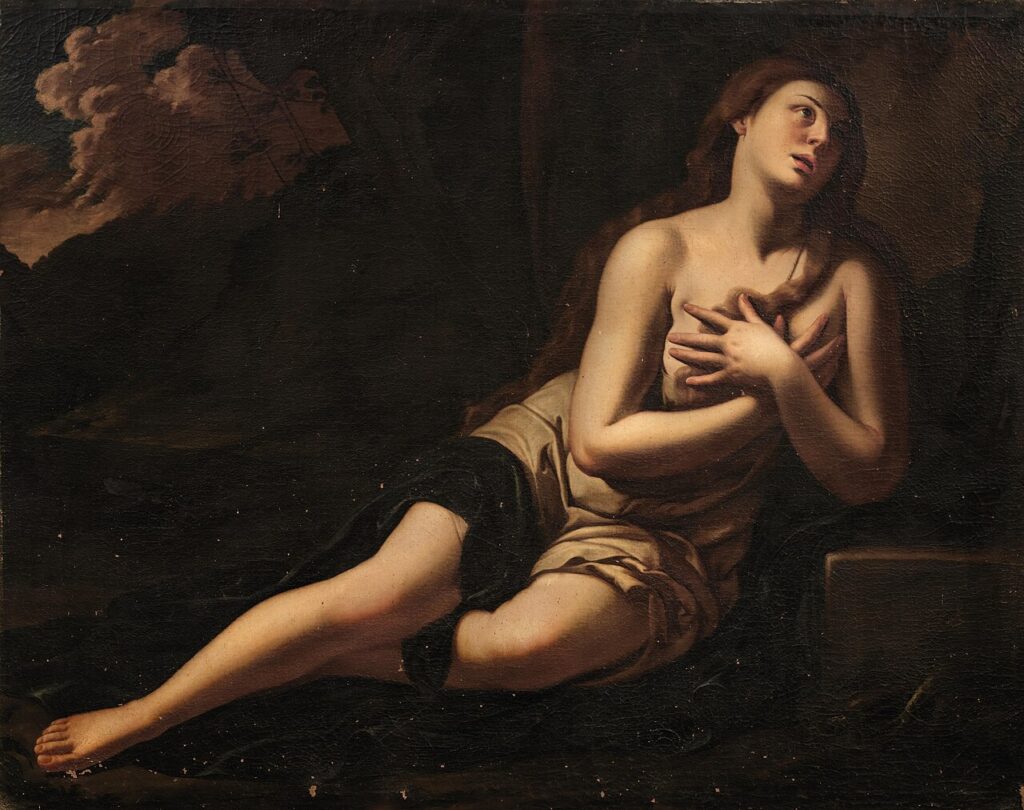
For example, the seventeenth-century Baroque canon has taken shape in part thanks to the collections housed by the Louvre Museum in Paris. The inclusion of Artemisia‘s paintings among the museum‘s collection is a clear indicator of her place within the larger Baroque story, and not some other distinct category. When you stand in front of her paintings alongside those of her contemporaries, including Italian, French and Flemish artists, it becomes clear how she took part in those same Baroque concerns of staging, realism and the compelling representation of emotion.
Museums in the UK such as the V&A help educate the public on the visual culture of the period and the support systems of patronage, material practice and collecting networks that enabled artists like Artemisia to develop their practices. While her paintings may not always be the main subject, the V&A‘s holdings of Baroque works and accompanying scholarship contribute to understanding her place within the textiles, iconography and craft traditions of the period that her canvases rendered so tangible.
Leading voices make her accomplishments clear. Art historian Mary D. Garrard, a foremost expert on Artemisia‘s oeuvre, asserts her paintings should be examined as masterpieces of Baroque art, not as outliers. In her book Artemisia Gentileschi: The Image of the Female Hero in Italian Baroque Art (Princeton University Press), Garrard brought the interpretation of Artemisia‘s artistic oeuvre to the heroines in her paintings.
Why Artemisia Gentileschi Paintings Matter Today: Scholarship, Exhibitions, and Legacy
Artemisia’s modern prominence is inseparable from serious institutional reappraisal. A watershed moment came with the National Gallery, London exhibition Artemisia (2020–2021), which assembled major works and presented her as a leading painter of her time. Such exhibitions change public memory because they replace anecdote with direct comparison: Artemisia’s canvases hold their own in scale, ambition, and execution against the celebrated masters of the Baroque.
Her paintings also resonate because they align with contemporary interests—without needing contemporary “updating.” Issues of violence, testimony, resistance, and survival are embedded in the historical narratives she painted, and viewers often find that her depictions refuse sentimental resolution. That emotional truthfulness, paired with technical command, makes the work durable across centuries.
Finally, Artemisia’s legacy is strengthened by the way major cultural institutions frame her today. The Smithsonian Institution, through its educational resources and research initiatives, has contributed to wider public access to art history and to the understanding of women artists’ professional realities in early modern Europe. This broader context matters: Artemisia’s greatness is not a solitary miracle but evidence of what women artists could achieve—when trained, commissioned, and taken seriously.
Frequently Asked Questions (FAQ)
What is Artemisia Gentileschi most famous for?
She is most famous for powerful Baroque history paintings, especially scenes featuring strong female protagonists such as Judith, Susanna, and Lucretia, rendered with dramatic light and psychological intensity.
Was Artemisia Gentileschi influenced by Caravaggio?
Yes. Working in Rome in the early seventeenth century, she absorbed Caravaggio’s chiaroscuro and realism, but she developed her own narrative and emotional approach, particularly in the depiction of women as active agents.
Where can I see Artemisia Gentileschi paintings in person?
Major works are held by institutions such as The Metropolitan Museum of Art. Artemisia’s paintings also appear in prominent European collections, including the Louvre Museum, and have been featured in major exhibitions like the National Gallery, London’s Artemisia.
What makes Self-Portrait as the Allegory of Painting important?
It is a bold statement of artistic identity: Artemisia portrays herself as “Painting” itself, aligning her professional authority with an allegorical tradition typically dominated by male artists.
Are Artemisia Gentileschi paintings primarily religious?
They include religious subjects, but also mythological and historical narratives. Across these categories, she consistently pursued the highest-status genre of her time: large-scale narrative painting.
Artemisia Gentileschi paintings endure because they unite Baroque spectacle with rare psychological clarity and technical authority. Rooted in the artistic revolutions of seventeenth-century Italy and validated by the attention of major museums and scholars, her work is not only historically significant—it remains visually gripping, intellectually serious, and unforgettable.
Authoritative sources cited: The Metropolitan Museum of Art (collection and object scholarship); the Louvre Museum (collection context); the Victoria and Albert Museum (Baroque and material-culture context); Smithsonian Institution (public scholarship and education); Mary D. Garrard, Artemisia Gentileschi: The Image of the Female Hero in Italian Baroque Art (Princeton University Press).