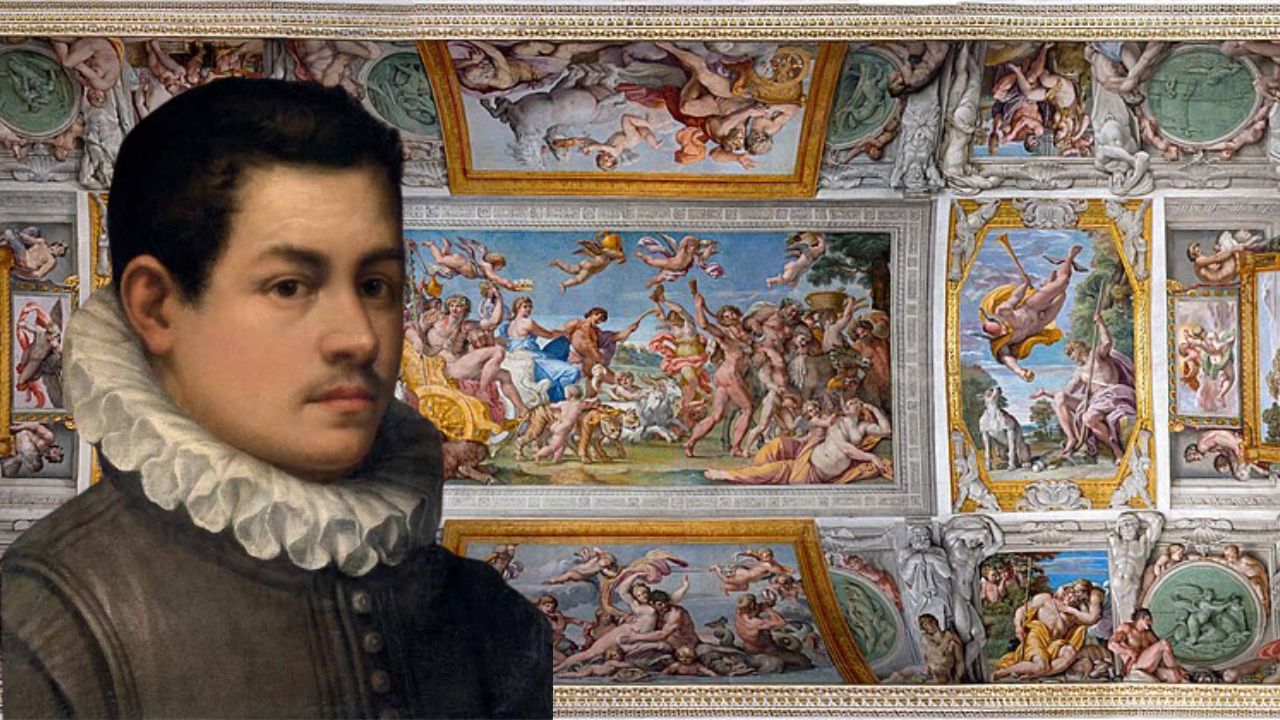
Annibale Carracci’s career unfolded at a moment when Italian art was renegotiating the terms of truthfulness, decorum, and persuasion. In late sixteenth-century Bologna—an intellectually dense city shaped by the University, by learned academies, and by a conservative yet competitive ecclesiastical culture—Annibale, with his brother Agostino and cousin Ludovico, formulated an alternative to both late Mannerist artifice and rigid Counter-Reformation didacticism. Their reform was not a rejection of tradition but a measured synthesis: a “natural” observation of bodies and light, tempered by a studied emulation of revered models (Correggio, Titian, Raphael). This is the necessary background to any credible “hidden clue” in Carracci’s work, because concealment and revelation were already embedded in the era’s visual rhetoric—especially in devotional and courtly contexts where images could function as both argument and allure.
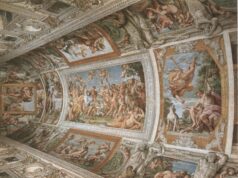
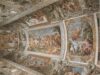
This so-called “lost master secret” associated with Annibale Carracci makes more sense as a matter of the work practices of the period than some romantic myth. Certainly these Roman years for Annibale, starting roughly with his summons by Cardinal Odoardo Farnese sometime in the mid-1590s, thrust him into a complex cultural machine in which painting, architecture and sculpture were bound together to convey a dynastic splendor. The central work here is the ceiling of the Galleria Farnese (Palazzo Farnese, Rome); it is not so much a series of mythological episodes as an artefact composed of architectonic illusions that replicate sculpture, in has painted architecture, with framed representations within representations, complete with all of the illusionistic legerdemain that commanded an educated viewer. Such spaces rewarded foredoffing references, in-jokes, unifying motifs, quotations from antiquity, all of which could be “clues” for the initiated. In this context the “secret” is reasonably explained: patrons and audience anticipated levels of meaning.
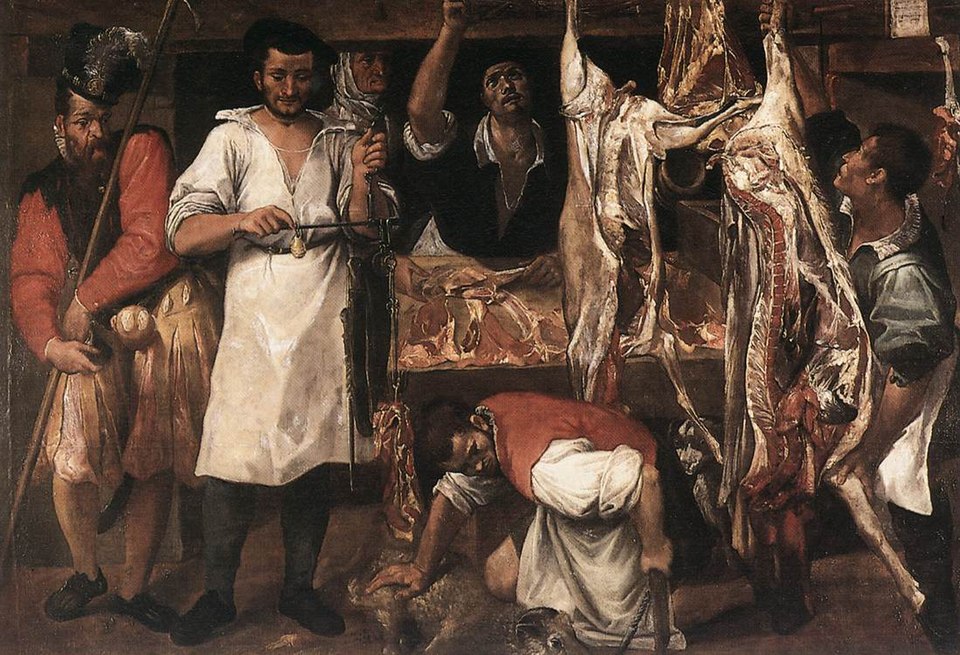
Far less discussed is the workshop ecology of the Annibale Carracci circle and their academy, the Accademia degli Incamminati. It was the Accademia‘s reliance on drawing, life studies, and other comparative looking that produced large quantities of preparatory material chalk studies, compositional modelli, cartoons that were circulated, copied, and sometimes ejected from finished works. In fact, much of the “discovery” of a Carracci indicio is achieved when an isolated drawing, pentimento, or label previously thought to be insignificant coheres with this documentary economy. The revelation is largely achieved not by theatrical display, but by connoisseurship, archival comparison, and by the technical transparency provided by infrared and X-radiography.
Of course, the collecting histories of the periods are crucial. Even by the early seventeenth century, the critical appreciation of the drawn inventions of the Annibale Carracci was such that they were prized above the paintings themselves drawings were thought of as an active record of the artist‘s faculties in motion and, early, this taste contributed to their various dispersals across Europe: drawings moved into princely cabinets, paintings circulated through inheritance and diplomacy, a cadre of preparatory material itself, decontextualized, was sold on as a work of art. As a result, the end-stage ‘lost master secret’ was often not necessarily an individual object but the incomplete circulation of a series of objects: an inexplicably mis-numbered sketchbook page, a refashioned fragment of a panel, or a deconstructed Classicist tableau.
“To understand a master’s intention, one must follow the work from invention to execution—paper to plaster to canvas—and see where the hand hesitates, corrects, and insists.”
—Attributed methodological principle in early modern connoisseurship; echoed in modern technical art history practice.
Annibale Carracci: Cultural and Symbolic Meaning
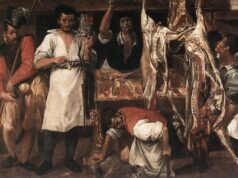
Carracci‘s images are too often associated with “naturalism,” but the best of them are just as much about cultural stage-managing about how meaning is played out to the eye. In fashion items ceiling cycles and gallery schemes that symbolism, which must have been experienced by the viewer at varying speeds up front as story, then as moral (or political) allegory, then finally as learned citation. And the “hidden clue,” which scholars sometimes detect, is too often a symbolic pivot a mascot, a frozen gesture, an antique retainer converted into a layer in the game of interpretation. In the Farnese environment, myth was not escapist dispensation; it was a covert language of statecraft, libido, and dynasties that was made to be enjoyed visually.
A central symbolic theme for Annibale Carracci is the opposition between lust and virtue. Our putative subject, the mythology of the Farnese ceiling, pulsates with erotic stories yet they are set within a space of rigorous conservatism. Not contradiction, but Counter-Reformation nuance: the image shows the capacity to impose mastery over desire through painting. Tucked away at the edges are clues: a satyr mask indicating theatricality, an olive branch suggesting Apollo‘s requisite morality, a chosen antique sculpture quoted for its imperial significance. These weren‘t for all viewers; they were apologies for those familiar with emblem books, Latin verse, and antique bas-reliefs.
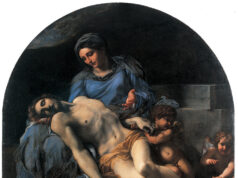
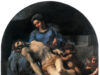
Bologna’s intellectual climate also shaped Carracci’s symbolism. The Carracci reform aligned with a broader “return” to clarity, but clarity did not mean simplicity. Saints, Madonnas, and altarpieces in the Carracci orbit—Annibale included—often embed subtle allusions to local cults, confraternal identities, or doctrinal controversies. A “lost clue” can be as modest as the choice of a plant, a specific instrument, or an architectural backdrop that ties a sacred narrative to a patron’s city, chapel, or family history. Decorative arts scholarship is particularly attuned to these cues because they frequently intersect with the material setting: a painted fictive frame corresponding to an actual carved cornice, or a painted textile echoing a real liturgical vestment donated to the same church.
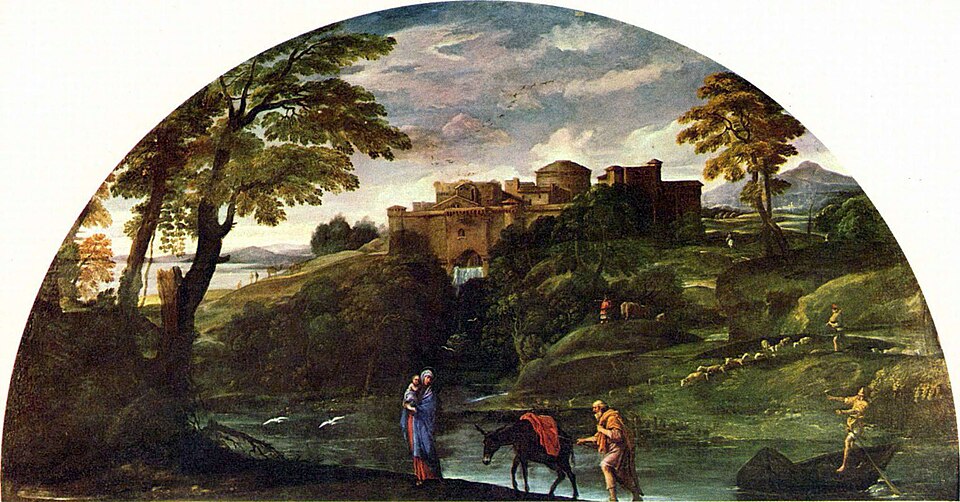
In this sense, the “secret” is methodological rather than sensational: Carracci’s works were designed to be read through their environments. When an object is detached—when a ceiling panel is cut down, a canvas is moved from its altar, or a drawing is separated from a project—symbolic coherence breaks. Expert revelations often restore the lost grammar of the ensemble: the clue was always there, but the surrounding syntax had been removed.
Craftsmanship and Materials
Annibale Carracci’s craft is inseparable from his capacity to shift between media—oil on canvas, fresco, and a prodigious output of drawings. Each medium offers a different kind of evidence for “hidden clues.” In drawings, one may find underthoughts: alternative poses, marginal notations, rapid corrections. In oil paintings, one may uncover pentimenti—visible or technical—where Annibale Carracci revised composition, signaling a conceptual change. In fresco, the day-by-day work of giornate records planning decisions and sometimes reveals the collaboration of assistants, which can itself become a clue to authorship or chronology.
In decorative programs, Carracci’s use of illusion is materially based. The renderings of frames and figures in the Farnese ceiling hinge on the careful stacking of plaster inlay, sinopia or underdrawing, calibrated application of paint to suggest parchment, bronze or marble, and photo-realistic depiction of veins and striations. To a specialist in decorative arts, this is not merely painterly skill, but a continuous dialogue with working stuccatori, gilders and woodcarvers in Rome. His painted “marbles” and “bronzes” may be appreciated in the context of contemporary furniture mounts and architectural ornament as parallel attempts at convincing surface.
Pigments and binders can also reveal some secrets. The use of expensive pigments ultramarine in certain areas, lakes for the modeling of warm flesh tones, or earth pigments in architectural Trompe-l’oeil indicates patronage decisions and specific conditions of display. Contemporary technical examination (crosssections, microscopy) can reveal whether certain translucent glazes are original or have been darkened by overlying varnishes, which can be significant where a ‘secret’ is dependent on an area of the paint being more reflective and lively than it appears today. Sometimes, the optical secret is not iconographical but illuminative: a once-brilliant highlight intended to reflect candlelight at a certain position in a gallery space, now subdued by age-yellowed resin varnishes or clumsy heavy-handed overpainting.
Below is a schematic summary of material clues and what they can reveal in Annibale Carracci-related study:
| Evidence Type | Where It Appears | What It Can Reveal | Typical Methods |
|---|---|---|---|
| Pentimenti | Oil paintings | Revision of meaning, repositioned figures, compositional changes | Infrared reflectography, X-radiography |
| Giornate edges | Frescoes | Work sequence, assistant participation, pace of execution | Raking light, close visual mapping |
| Paper type & watermark | Drawings | Geographic origin, dating, collecting history | Transmitted light, watermark databases |
| Pigment stratigraphy | Paint layers | Original palette vs. restorations; intended effects | Cross-sections, Raman/FTIR |
Craftsmanship, finally, is also a cultural artifact: Carracci’s technical choices reflect a theory of vision. His modeling of flesh and drapery aims to persuade the eye that bodies occupy real space, while his decorative illusions insist that art can create architecture. In a mature Carracci scheme, “clues” are embedded precisely where technique meets meaning: at the edge of a fictive frame, in the shadow that makes a painted relief appear tangible, or in the drawn contour beneath a painted sleeve.
Historical Locations, Museums, and Archives
A “hidden Annibale Carracci clue” can truly be addressed only by anchoring it to the sites at which his work remains and its diurnal record is in tact. In Rome, the Palazzo Farnese continues to serve as a primary vantage at which to read Annibale‘s ambitions in its decoration. The ceiling is an archive of spectacle: it is a definite image-maker of the Farnese family‘s classical ambitions and position as poltical subjects. Despite the differences in function of the space and its correspondingly different access derivatives over time, the site remains central to research owing to the ensemble‘s meaning being dependent on architecture and circulation.
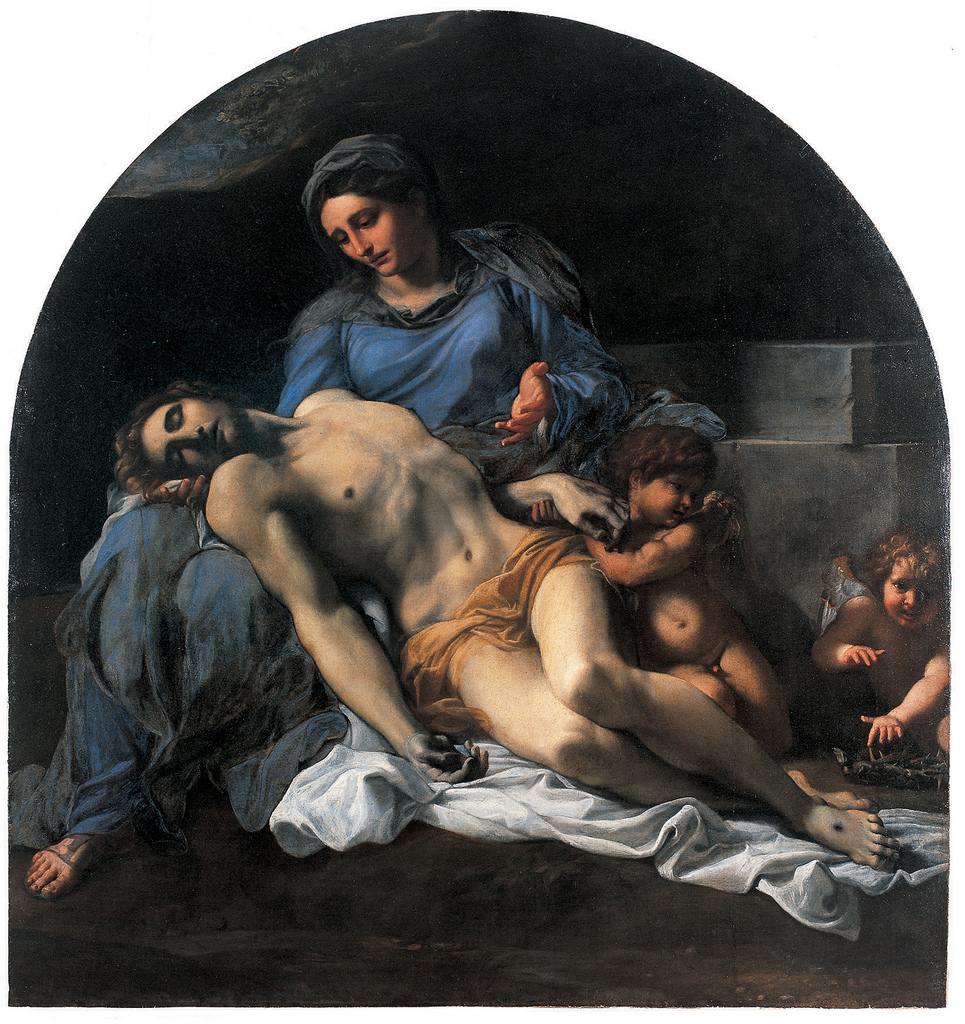
However, Bologna, Carracci’s home ground, is just as critical: it supplies the surviving works and provides an essential gravitational field for understanding the academy’s intellectual environment. Churches, civic collections, and the memory of commissions in Bologna preserve paintings that document the birth of Carracci’s young style. Researchers generallyflesh out the storyby triangulating local archival evidence (payments, minutes of confraternities), stylistic comparisons, and the Carraccians’ subsequent influence on Bolognese painting. What turns out to be aBologneseregion “clue” something that one recognizes only when a Bolognese patron’s devotions are reinstated in the historical context.
In terms of museum holdings, Carracci’s drawings and paintings are dispersed across major European and American collections, and this dispersal itself is a scholarly tool. Drawings in print rooms—often catalogued with varying degrees of certainty over centuries—can suddenly clarify a decorative cycle when a sheet is reattributed or reunited conceptually with related studies. Likewise, paintings in major museums provide comparative anchors for facture, pigment behavior, and compositional habits. The study of Annibale Carracci is therefore intrinsically trans-institutional: experts cross-reference catalogues raisonnés, old inventories, conservation files, and digitized archives to assemble a coherent picture from scattered evidence.
Archival research is the quiet engine behind many “reveals.” Early inventories, correspondence about commissions, and records of restoration campaigns frequently contain the decisive hint—an old description of a now-lost detail, a mention of a carton delivered, or an appraisal that notes an unusual emblem. The modern expert’s task is to weigh such texts against the object’s material testimony. Where museum conservation departments make technical reports accessible, they become, in effect, contemporary archives—repositories of stratigraphic and imaging data that allow future scholars to revisit conclusions.
Collector Perspective: Provenance, Taste, and the Cabinet Tradition
Collectors have long shaped Carracci’s survival and interpretation, particularly through the early modern and eighteenth-century “cabinet of drawings” tradition. Annibale’s drawings, prized for their inventive vitality, were ideal cabinet objects: portable, intimate, and demonstrative of artistic intellect. That intimacy fostered an attribution culture where connoisseurs developed sharp opinions about touch, line, and compositional logic. At the same time, it created conditions for confusion: workshop sheets could be absorbed into Annibale’s name, while autograph sketches might be demoted if they appeared too experimental or fragmentary.
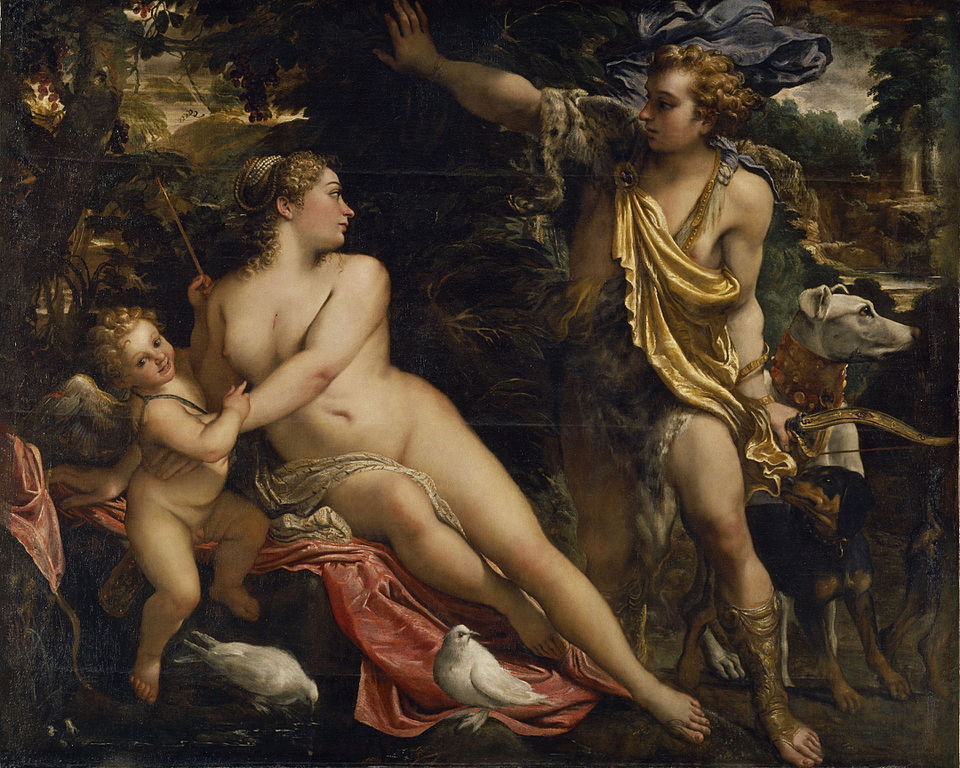
From a collector’s standpoint, the “hidden clue” often emerges through provenance reconstruction. A drawing that carries an old collector’s mark, an inscription in a seventeenth-century hand, or a mount type associated with a known cabinet can reposition a sheet within a historical network. Such evidence is not decorative trivia; it is historical data. It can help determine whether a sheet was prized early (suggesting recognized authorship) or whether it surfaced later in markets where Carracci’s name became a magnet for value.
Collectors also influence how Carracci’s work is physically preserved. Mounting practices, trimming, and re-lining decisions—often undertaken to suit display preferences—have altered objects in ways that modern scholars must reverse-engineer. A trimmed drawing may have lost the very marginal notation that served as a “clue.” A painting transferred, reduced, or heavily revarnished may obscure key passages. The decorative arts perspective insists that such interventions are part of the object’s biography: not merely damage, but evidence of changing taste and custodianship.
Finally, collector demand has historically privileged certain Annibale Carracci categories—high-finish drawings, mythological cabinet pictures, and major altarpieces—while leaving other materials understudied, such as workshop copies, fragments from decorative schemes, or utilitarian designs connected to ephemeral decoration. Yet it is precisely in these overlooked materials that “lost” clues often reside. When a humble study is recognized as the missing connective tissue between a fresco and a finished painting, it shifts both scholarship and collecting priorities.
Restoration Insights: What Technical Examination Can (and Cannot) Prove
Restoration is where “secrets” are often made legible, but the conservation ethic requires that revelations on this scale be undertaken with care. It is one of the most effective ways of recovering contrast, following the original compositions and, where overcleaning, it has the potential to distort a sense of spatial recession through flattening the modeling or to distort the whole composition through removal of original scumbles. In Carracci’s work, which is integrally concerned with the importance of flesh tones and atmospheric passages of light and dark in the construction of meaning, the difference between overcleaned discoloured varnish and a warm and delicate glaze is crucial, and the conservation departments are dependent on trial testing, gel solvents, microscopy and a comparative study of documented stable passages.
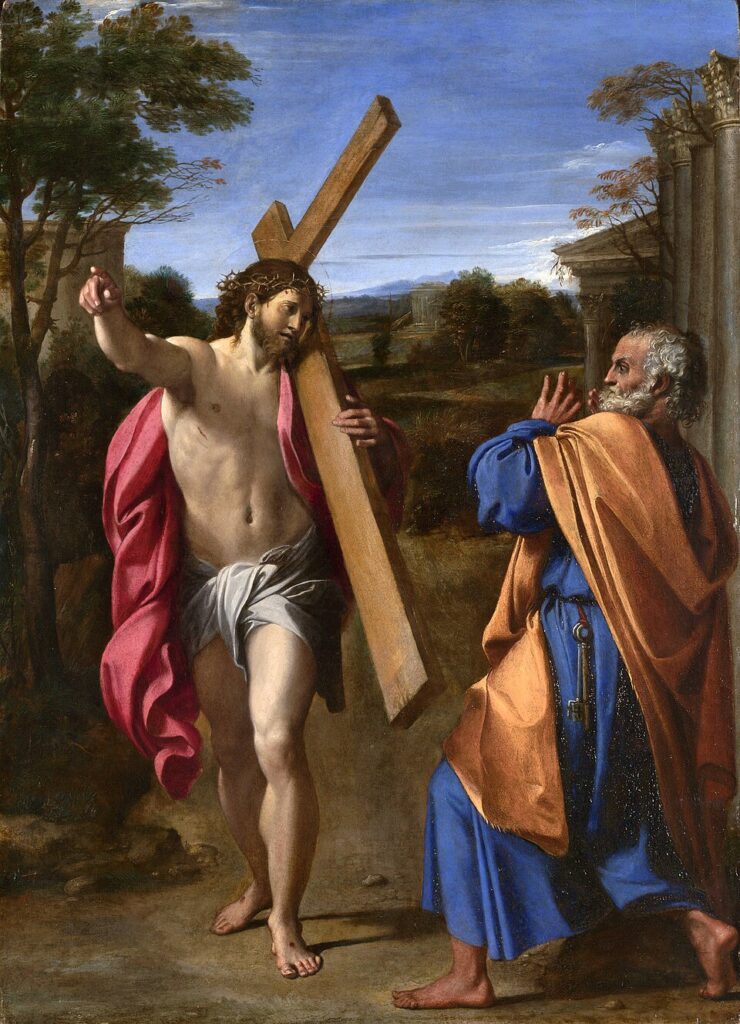
Technical imaging has radically helped Annibale Carracci acquisition. Radiograph imaging is able to inform on the painter’s creative process whether Carracci used firm planning contours, was painting while developing the form with hatching, or changed the position of figures. X-ray also shows last-minute compositional changes, incremental updates to objects, and in some cases discovered pre-existing compositions. These revelation have iconographical consequences an emptied scabbard may be a substitution of one mythological identity for another; a change of devotee pressure/exigency as indicated by the commissioner or censor. The “hidden clue” is one object, elided scabbard, sword, book, and so on from the top-surface to the level below.
Fresco conservation raises distinct issues. The legibility of Carracci’s decorative illusions depends on the stability of the plaster support and the coherence of retouching campaigns. Historical restorations may have “regularized” damage by repainting shadows or contours, inadvertently changing the intended optical effect. Modern conservation typically aims for distinguishable integration—retouching that reads correctly at viewing distance but remains identifiable upon close inspection. In this framework, revelations can be double-edged: uncovering original passages may also expose the extent to which previous interventions had become part of viewers’ expectations.
Yet technical evidence is not an oracle. It can establish sequences of layers, identify materials, and reveal hidden forms, but it cannot alone confirm authorship in a workshop context where assistants shared methods. Nor can it fully reconstruct original viewing conditions: candlelight, distance, and architectural sightlines shaped Carracci’s effects. Responsible expertise therefore triangulates: technical findings are weighed alongside stylistic judgment, documentary sources, and the logic of the decorative ensemble.
“Conservation does not restore an object to an imagined origin; it restores the conditions for interpretation.”
—A principle widely articulated in modern conservation literature and echoed in museum practice.
Market Interest and Collector Demand: Scholarship, Rarity, and Risk
The market reputation of the Annibale Carracci has always been loaded with contradiction: canonical but hard to procure; primary works with ascertained provenance are not generally available for purchase (often, they are in public collections) while works on paper are more obtainable but considerably fraught with attribution issues. The “hidden clue” story intersects with the market because reattribution and/or re-location dramatically affect perceived scholarship value (and secondarily, market value). But of course from the standpoint of antiques and decorative arts, the primary focus is epistemology: what is the object, what is it, and what can be validated.
Collector interest is specifically framed within works that are “readable” and “selfcontained” completed drawings, autonomous mythologies, or portraits without architectural accompaniment. But as decorative fragments are inherently harder to appreciate without an academic canon, in the past two decades they have come into new demand only as adjuncts to larger histories. When those fragments can be situated within a documented decorative scheme by the plasterwork, paint residue, or numismatic parallels, the market can surge, but the specter of stripping, export licenses, and treatment treatments invariably haunts this demand.
Risk is integral to the Annibale Carracci market, particularly for drawings. The Carracci workshop and its followers produced a continuum of quality, and later centuries produced imitations responding to Carracci’s fame. Sophisticated collectors therefore prioritize documentation: old collector marks, early inventory references, and transparent conservation histories. Museums and serious private collectors increasingly expect technical reports even for works on paper, including fiber analysis and imaging where appropriate. In this environment, the “lost master secret” is not a sales hook but a research claim that must withstand peer review.
Below is a non-exhaustive guide to the kinds of evidence that tend to strengthen confidence (scholarly and collecting) in Carracci attributions:
| Confidence Factor | Why It Matters | Typical Source |
|---|---|---|
| Early provenance or inventory mention | Anchors object historically; reduces speculative attribution | Archives, old collection catalogues |
| Technical coherence with period materials | Discourages later forgery hypotheses | Conservation science reports |
| Relationship to known compositions | Positions work within Carracci’s design practice | Comparative museum holdings |
| Condition transparency | Allows assessment of legibility and intervention | Conservation records, treatment history |
Finally, the market value of a Annibale Carracci is a measure of both its intellectual, and decorative, value; if there is to be a consistent demand, this must build up through the shell of the atelier, where the works are not merely “attributed” to the master, but contextualized through a social, religious and decorative chronology of their creation.
The game of the ever meaningful “hidden Annibale Carracci clue” is that the thrill isn‘t in the hunt; it‘s in the fact that what we learn from such artifacts is an instructive delineation of how early modern art worked. Carracci‘s achievement was not merely stylistic reform; it was a promiscuous intelligence of the image its powers of seduction, its staging of signification, its coordination of architecture, patronage, and learned culture. And when experts uncover a hidden device, a suppressed signifier, a cartoon that prefigures a handful of other images, it is not simply authorship that they recover. It is a way of seeing again.
This matters today because Carracci’s works sit at the intersection of disciplines that modern institutions often separate—painting, decorative arts, architecture, collecting history, and conservation science. The “secret” is therefore a reminder that interpretation is collaborative: it depends on archivists preserving documents, conservators reading layers, curators tracking provenance, and scholars reconstructing cultural codes. In an age of rapid image consumption, Carracci’s layered programs model a slower literacy—one in which details are not ornaments but arguments, and craftsmanship is itself a form of knowledge.
Finally, the topic matters because the ethics of stewardship are inseparable from discovery. Every recovered clue raises questions: what was altered, what was lost, what was repaired, and what responsibilities do present custodians bear? Carracci’s legacy, viewed through the combined lenses of decorative arts history and technical study, teaches that cultural heritage is not static. It is an ongoing conversation between material survival and interpretive care—one in which the smallest recovered detail can reopen the largest historical questions.