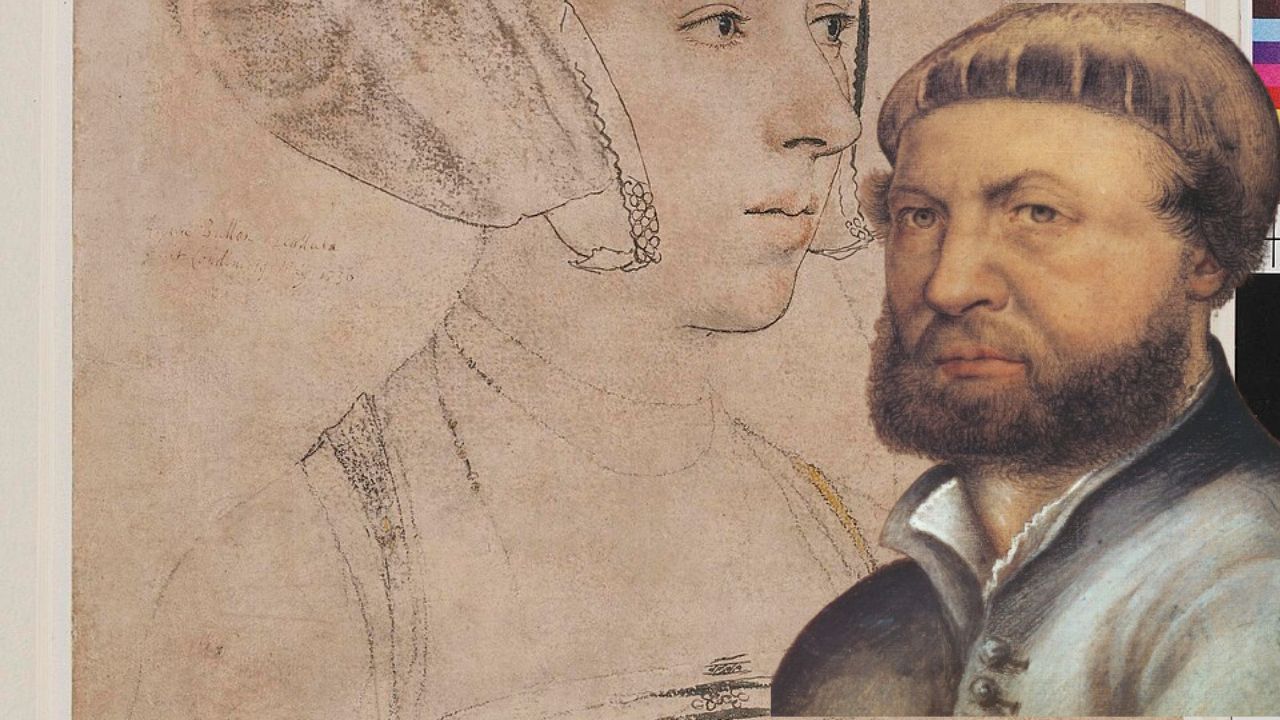
Anne Boleyn has become one of the most scrutinized figures of Tudor England—yet paradoxically, her face remains uncertain. Few topics in Renaissance portraiture generate as much fascination (and disagreement) as the idea of “Anne Boleyn by Hans Holbein.” Holbein the Younger was the most important court artist of Henry VIII’s reign, and Anne’s brief, explosive rise—from courtier to queen to executed “traitor”—makes any plausible Holbein portrait of her historically electrifying. But the real story is more rigorous than romance: it is a case study in how artworks are attributed, how images become myths, and how scholars use documents, stylistic analysis, and institutional collections to distinguish evidence from later invention.
Holbein at the Tudor Court: What We Know from the 1530s
Hans Holbein the Younger (c. 1497–1543) worked in the orbit of power during the Northern Renaissance, moving between Basel and England and eventually becoming King Henry VIII’s court painter. By the early 1530s—when Anne Boleyn was at the height of influence—Holbein was producing portraits, drawings, and designs for the Tudor elite in London, particularly around Whitehall Palace and the circles of Thomas Cromwell. This is the period when a “Holbein portrait” carried political weight, not just aesthetic value.
Institutional collections provide the up-to-date context for the certainly past. The Royal Collection is home to a significant number of Holbein‘s portrait drawings, many for court sitters, and similar depth is available in The Metropolitan Museum of Art as contextualization for Holbein‘s Northern Renaissance practice and portrait realism, of line, costume and physiognomy. Deep holdings of Renaissance decorative arts and portrait traditions at the Victoria and Albert Museum (V&A) can also be a relevant point of departure, for the visual culture of Tudor court imagery, and subsequent reproductions.
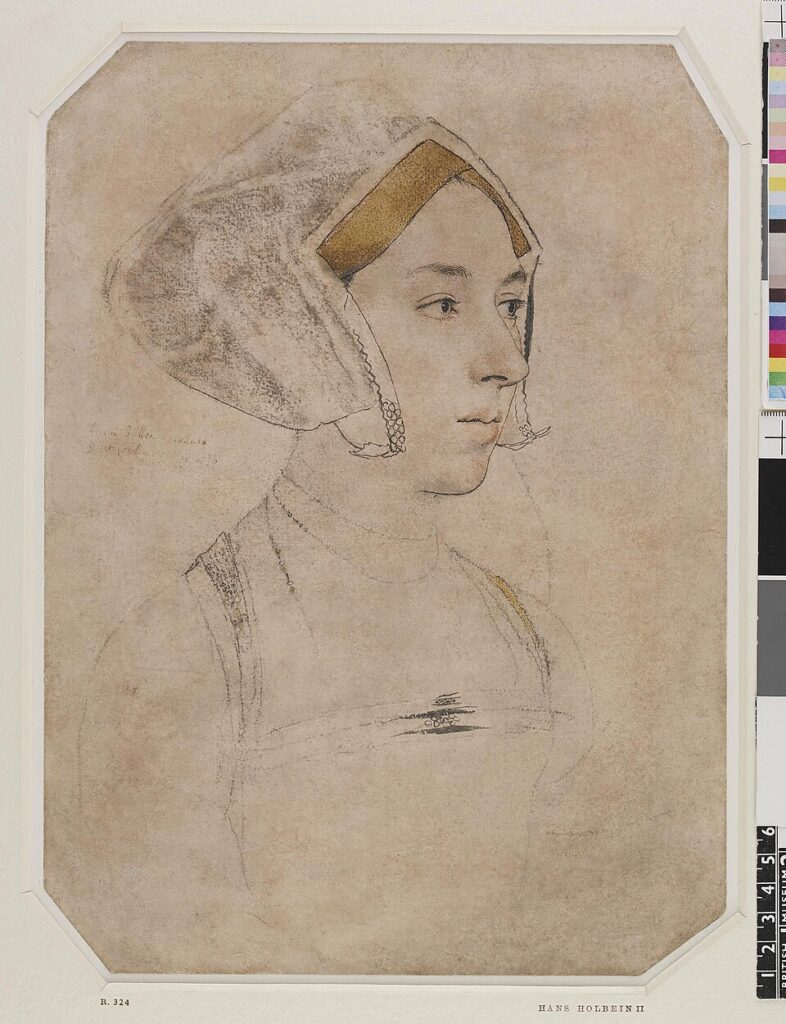
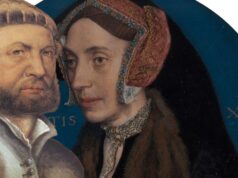
With the “Anne Boleyn by Holbein” question, what is more problematic is the fact that no permanent, fully verifiable painted image of Anne by Holbein exists. Academics tend to point out that the trail of evidence (from contemporary records, to provenance and conducting technical studies) is just as crucial a factor as facial similarity. Consequently, assertions of ‘the real face of Anne’ demands a cautious approach based on the sources, instead of an Internet powwow.
“Anne Boleyn by Hans Holbein”: Attribution, Evidence, and Controversy
The phrase “Anne Boleyn by Hans Holbein” usually points to one of several things: (1) a lost original recorded in later references; (2) a drawn likeness possibly connected to Holbein’s workshop practice; or (3) a later portrait type that tradition labelled as Anne, sometimes retrospectively “upgraded” to Holbein. In Tudor portrait scholarship, this is common: sitters’ names and artists’ names were frequently attached generations later, especially when the subject became famous.
There are numerous approaches Art Historians employ to assess attribution. The First method is comparison of Style, whether the employment of line, modeling or the incorporation of highly detailed costume and landscapes. The Second, is provenance study, where the image was and if it can now be associated with the court of the 1530s, and the Third, technical investigation, where pigment composition and underdrawing techniques are studied systematically and regularly in major museums. Provenance studies are exemplified at the Metropolitan Museum of Art, Inc. The V&A and the Louvre Museum, which have sets of steps and procedures to evaluate connoisseurship and technical study. They highlight that even connoisseurship is an evidence-based conclusion, not a credo.
A learning academic warning can be contained within the language museums use to contextualize authorship procedures. To demonstrate the various vernaculars when they scholar portraits and drawings (with varying degrees of authorial certainty ), the Louvre Museum often writes suppose by or after, and sometimes at the museum archives also writes of the eye that they constructed of the time. For historical works of art display a little distaste it is at times prudent to regard these things as copies and after-the fact like they were always intended to or not the pictorial evidence you want them to be. According to the Smithsonian Institution as part of their lessons on material culture, one needs understand where what you study existed in space and time to determine the motivations for the object’s inception.
Visual Traits and Iconography: What “Anne” Portraits Usually Show
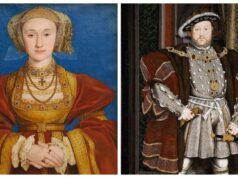
Any of the images popularly recognized as Anne Boleyn has its own established iconography: a French hood, a lavish pattern on the gown and a B shaped pendant on later images; these are a direct reflection of the Anne‘s reputation for French taste, gained while in France, and the court‘s pre-occupation with visual display. But iconography can be deceiving; costume in a number of cases has been copied and updated in later decades, and the B pendants more could be an anachronism than evidence of any historical fact.
The authenticated Holbein images from the 1530s reveal the painter‘s technical strengths: sharp contours, psychologically engaged sitters, and tactile surfaces of garments and gems. When a disputed “Anne” portrait is compared to an authenticated image of the artist, features are examined for congruous face construction; the geometry of the features, and the painter‘s signature economy- Holbein sculpting volume without painterly excess. But similarity, in the absence of secure records, is not proof.
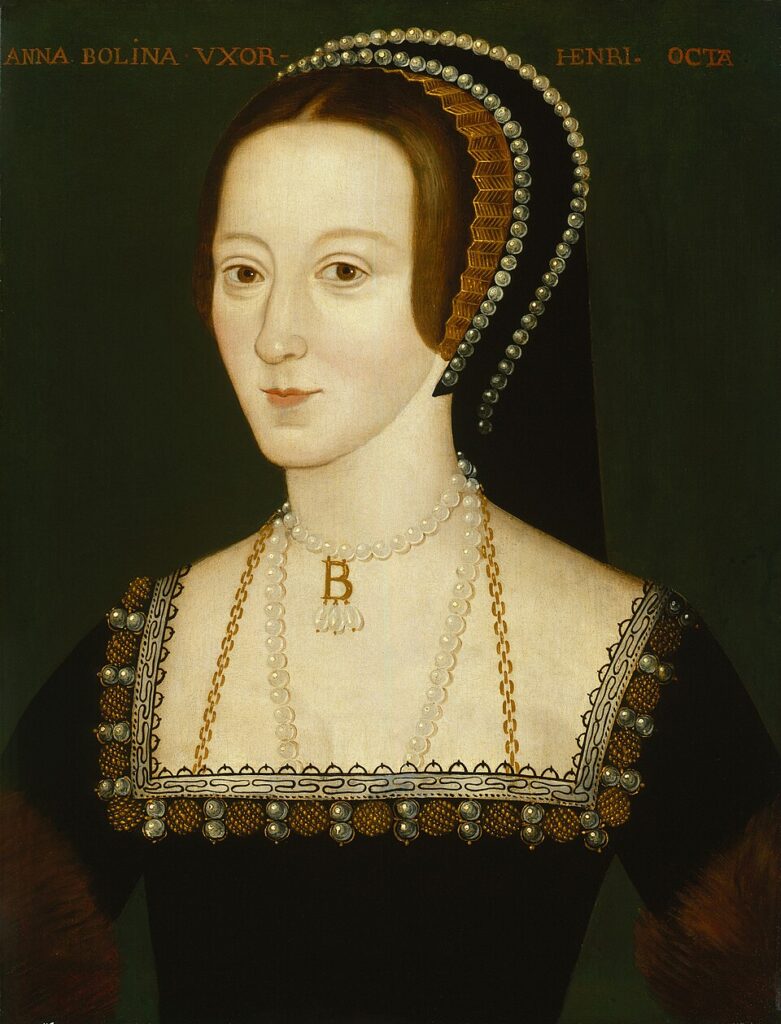
To keep evidence straight, it helps to summarize what scholarship typically regards as more or less reliable indicators:
| Category | What it Means | Reliability for “Anne by Holbein” |
|---|---|---|
| Contemporary documentation | Mentions of a portrait in 1530s records | High, if specific and traceable |
| Provenance | Ownership chain back to Tudor-era circles | High to medium (often broken) |
| Technical analysis | Pigments, panel type, underdrawing consistent with Holbein | High when available |
| Costume/iconography | French hood, jewelry, “B” pendant | Medium to low (often copied later) |
| Later inscriptions | “Anne Boleyn” written on the work centuries later | Low |
As the art historian principle goes, absence of proof is not proof of absence—a Holbein likeness of Anne may have existed and been lost. But the most responsible position is to treat most circulating “Holbein Annes” as hypotheses unless supported by museum-grade research.
Why the Question Endures: Politics, Memory, and Museum Standards
Anne Boleyn’s story sits at the center of seismic historical change: the English Reformation, Henry VIII’s break with Rome, and the rise of new power structures under figures such as Cromwell. A portrait of Anne by Holbein would be more than an image; it would be a material witness to a turning point in 16th-century European history. That is why the question persists—portraits feel like access to the past, especially when archives are fragmentary.
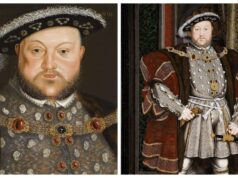
But Tudor royal portraiture also reveals the means by which images are manipulated for political impact. Before the term ‘propaganda’ entered modern political discourse, large-scale royal portraiture did so for monarchs. Holbein‘s legendary image of Henry VIII, most familiar to us from subsequent versions, is a stark reminder of how an individual‘s face can be transformed into a state weapon; hence the focus of reputable institutions on secure cataloguing and clear provenance language. The Metropolitan and the V&A cast their data in such terms, and clarify the interpretation in their catalogue entries and curatorial essays, by distinguishng between the ‘known’, the ‘probable’ and the ‘uncertain’.
Statements from authorities repeatedly single out and stress method. As we are learning about Renaissance portraiture in general, portraits are made objects, always created: by patronage; by symbolism; by convention never neutral images. And the Smithsonian Institution emphasizes: when popular stories lead, the true storyteller‘s job is to hold tight to evidence. This is what a disciplined study of Anne Boleyn entails: respect the cultural longing to ‘see her’, but resist excess.
Frequently Asked Questions
Was there ever a confirmed portrait of Anne Boleyn painted by Hans Holbein?
No universally accepted, securely documented painted portrait of Anne by Holbein survives today. Some works have been proposed, but the evidence (provenance, documentation, technical study) has not produced scholarly consensus.
Did Holbein ever meet Anne Boleyn?
Holbein worked at Henry VIII’s court during Anne’s ascendancy in the early 1530s, so contact is plausible within London court circles. Plausible contact, however, is not the same as confirmed sittings or surviving portraits.
Why do so many images claim to be “Anne Boleyn by Holbein”?
Because Holbein is the most famous painter associated with Henry VIII’s court, and Anne is the most famous queen of the period. Later copies, derivative portrait types, and mislabeled works gained traction over centuries, especially when collectors and publishers sought named sitters.
What should I look for in a credible claim?
Look for museum-level cataloguing: clear attribution terms (“attributed to,” “workshop of,” “after”), technical examination results, and a documented provenance. Collections and scholarship connected to institutions like the Met, V&A, Louvre, and the Smithsonian set reliable standards for how claims are presented.
Where can I study Holbein and Tudor portraiture responsibly?
Start with major museum resources and catalogues: The Metropolitan Museum of Art (essays and collection entries on Northern Renaissance art), the V&A (Tudor visual culture and portrait traditions), the Louvre Museum (drawings and Renaissance connoisseurship frameworks), and the Smithsonian Institution (material culture methodology and historical interpretation).
Conclusion
“Anne Boleyn by Hans Holbein” remains compelling precisely because it sits between desire and documentation: we want a definitive face for a defining Tudor figure, and Holbein is the era’s most credible artist. But the most authoritative answer is careful: while Holbein worked in the right place and time, no portrait can be affirmed beyond dispute without strong documentary, provenance, and technical evidence. Treat the best candidates as informed possibilities—and let museum standards, not romantic certainty, guide the search.