Ancient art paintings are not simply old pictures on old walls—they are the first visual languages of humanity. Long before written history became widespread, people used pigment, stone, plaster, and precious minerals to record belief, power, daily life, and the divine. From Paleolithic caves lit by fire to imperial murals commissioned by kings and priests, ancient paintings reveal how societies understood the universe and their place within it. These works still command attention because they are both intimate—handprints, animals, faces—and monumental, tied to temples, tombs, and states that organized the ancient world.
1) Origins and Purposes: From Cave Walls to Sacred Narratives
The history of ancient art paintings starts in prehistory. Paleolithic artists in places like Lascaux, France and Altamira, Spain are piled mineral pigment in order to render animals with exquisite study and dynamism. These drawings were not intended to adorn, in the modern sense, the interior of caves, and where they were located (far inside) indicates ritual, narrative, and collective remembrance rather than domestic concern. Most scholars see them as having some connection with hunting, cosmology or initiation rituals seminal images that facilitated understanding in a seasonally-driven, hasthungerscene area.
So it is with civilization: the tradition became institutional. In Pharaonic Egypt wall painting was part of the religion, the social culture. It was so odorous with permanence, with continuity of the identity of the dead, and the continuity of the after-life, that the same conventions of hieratic scale, profile heads, and symbolic colour mark scenes of ploughing and watering the field, of banqueting, and of the presenting of gifts. It was not to be realistic.
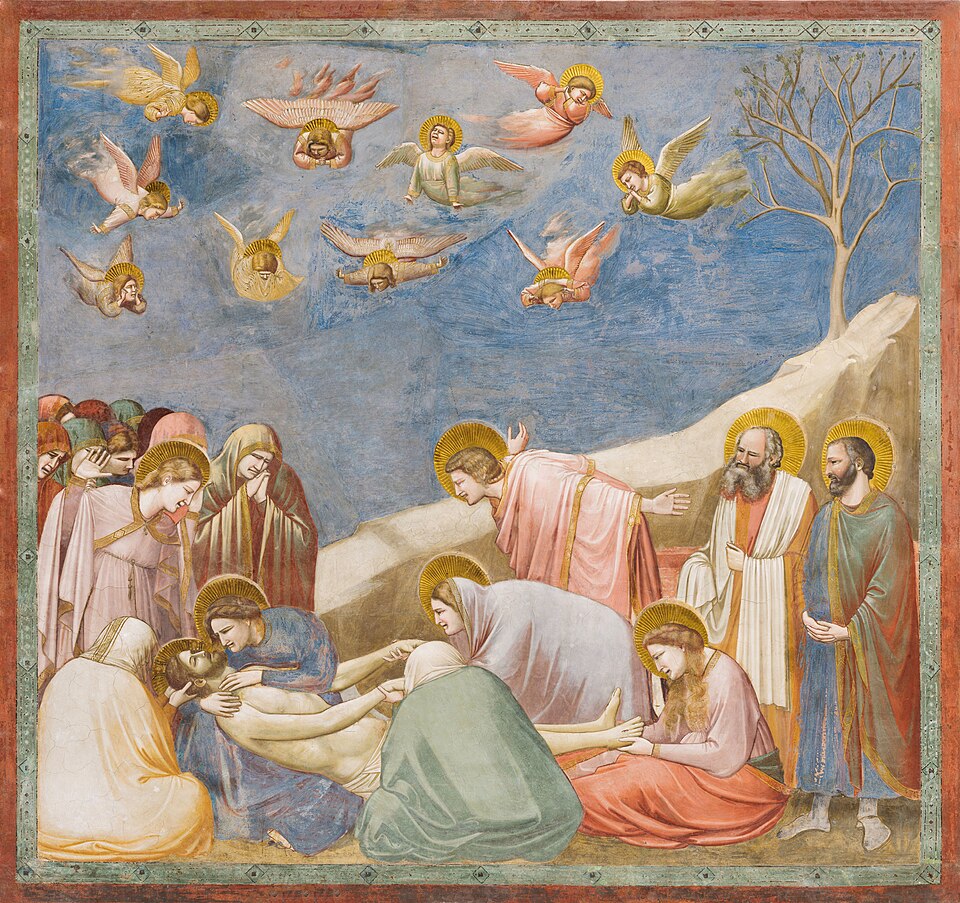
In the classical Mediterranean and beyond, paintings also served political and civic purposes. Greek painters, now mostly known through Roman copies and literary accounts, were celebrated for illusionism and emotional expression. Roman wall painting, preserved dramatically at Pompeii and Herculaneum, transformed domestic interiors into theatrical spaces with architectural vistas, mythological scenes, and still lifes. As the Metropolitan Museum of Art notes in its educational resources on ancient Mediterranean art, Roman painting is central for understanding how images shaped identity, taste, and power within the household as well as the empire.
2) Techniques and Materials: How Ancient Paintings Were Made to Last
Art, obviously, was also engineering as well as estethetic: since the painter had to utilize natural pig- ments, many of which, such as the white of chalk, and various hues of brown and black, derived from carbon and oxide of iron, were relatively cheap; those that were less so, such as Egyptian blue much used especially in Egypt, as it was of a synthetic origin, and cinnabar-red, had also to be obtained, like other new or costly articles, either from a native source or by the large importation from foreign countries, bound in for water, egg, plant gum, or wax, as the region or custom required.
Fresco a process where pigment is applied on wet lime plaster has been a dominant technique in many ancient societies. Due to the chemical conversion of the pigment into the wall as it dries, fresco is very resilient. The two main types are “buon fresco” (true fresco) and “fresco secco” (dry), each with different characteristics. The Pompeian wall paintings exemplify all of this, through a high degree of technological achievement and a consumer-oriented performance culture. Recurrent motifs are evident, with a continual standardisation across different spaces.
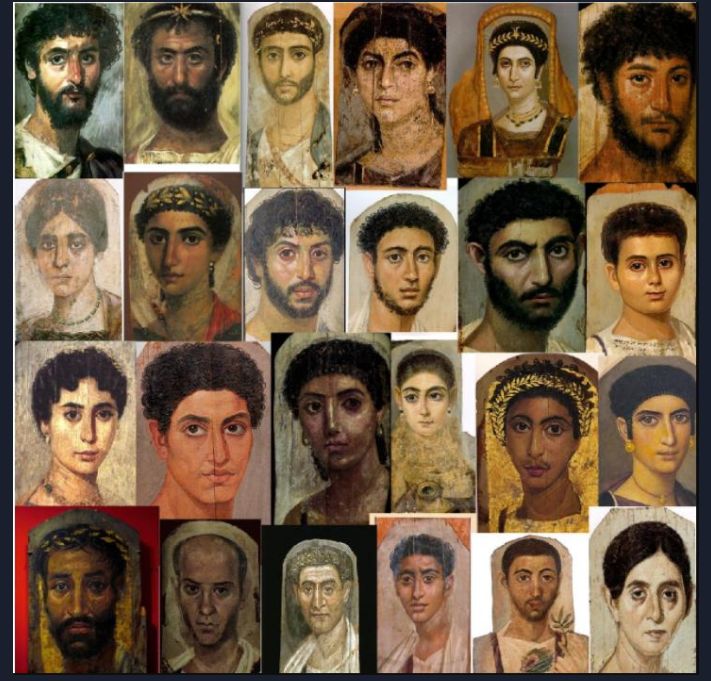
Encaustic painting, which uses heated beeswax as a binder, stands out for its saturated color and lifelike surface. The Fayum mummy portraits (Roman Egypt, c. 1st–3rd century CE) are among the most famous examples, offering a startling sense of individuality. Their survival is partly due to Egypt’s dry climate, but also to the wax medium’s stability. The British Museum and major institutions worldwide have studied these works extensively; they show how ancient painting could bridge ritual purpose (funerary) and personal representation (portraiture).
“Art is a form of language; it expresses ideas and values.” — The Metropolitan Museum of Art (Met educational framing of art as cultural communication)
3) Major Traditions Across Ancient Civilizations
Ancient art paintings are global, not confined to the Mediterranean. In South Asia, the Ajanta Caves (Maharashtra, India) preserve Buddhist mural cycles (primarily 2nd century BCE to 6th century CE) with narrative complexity and refined modeling. These paintings connect patronage, pilgrimage, and monastic learning; they also demonstrate the movement of ideas along trade networks. The depth of gesture and storytelling at Ajanta shows that “ancient painting” encompasses sophisticated visual psychology, not just stylized symbols.
In East Asia, early Chinese painting traditions are visible in tomb murals and silk paintings from the Han dynasty and later periods, emphasizing cosmology, immortality, and moral order. Materials such as ink and brush, though often associated with later literati culture, have ancient roots in calligraphic and pictorial practice. Tomb paintings functioned similarly to Egypt’s: they were both protective and aspirational, mapping the afterlife and reinforcing social rank.
In the Near East and the wider ancient world, painting often intersected with monumental architecture. Palaces and temples used color to intensify relief sculpture, inscriptions, and ceremonial spaces—an important reminder that many ancient “stone” monuments were originally brightly painted. The Louvre Museum, whose collections include extensive holdings from Egypt, the Levant, Mesopotamia, Greece, and Rome, consistently emphasizes in its scholarship and displays that polychromy (the use of multiple colors) was central to ancient visual experience.
“Nothing in the world is as powerful as an idea whose time has come.” — Victor Hugo (often cited in museum contexts as a broader reflection on cultural change; useful when considering how painting accelerated shared belief and identity)
Key Characteristics of Ancient Art Paintings (Summary Table)
| Tradition / Region | Typical Media | Common Subjects | Purpose | Notable Surviving Examples |
|---|---|---|---|---|
| Paleolithic Europe | Mineral pigments on rock | Animals, signs, handprints | Ritual, memory, cosmology | Lascaux, Altamira |
| Ancient Egypt | Pigment on plaster/stone | Afterlife scenes, gods, daily life | Funerary protection, order (ma’at) | Tombs in Thebes, Valley of the Kings |
| Ancient Greece & Rome | Fresco, panel, mosaic-adjacent painting | Myths, portraits, architecture, still life | Status, religion, domestic display | Pompeii & Herculaneum wall paintings |
| Roman Egypt | Encaustic/tempera on wood | Portraits | Funerary identity, realism | Fayum mummy portraits |
| Ancient India | Murals on cave plaster | Jataka tales, Buddhas, courtly life | Teaching, devotion, patronage | Ajanta Caves murals |
| Early China | Tomb murals, silk paintings | Cosmology, immortals, moral scenes | Afterlife guidance, legitimacy | Han tomb paintings (regional finds) |
4) Preservation, Interpretation, and the Role of Museums Today
Ancient paintings are inherently fragile. They are affected by humidity, salt, pollution, oxidisation and are generally very delicate, consequently the majority of surviving examples are by chance of preservation: sealed tombs, buried cities, arid caves. Preservation or restoration has much become a fundamental area of research in ancient art painting. Techniques may include these of pigment analysis, ir reflectography, multi spectroscopic imaging and micro-sampling to analyse and preserve the material surfaces without over-restoring.
Museums are critical to access as well as stewardship. The Met Museum, the Smithsonian Institution and other resources of the United States disseminate conservation research and instructions into public education. The Victoria and Albert Museum (V&A) is primarily famous for fine and decorative arts, but it also preserves a lot of information about disseminates information that provides significant grounding in ancient pigments, craft practices, materials, and processes that could illuminate the space ‘between art and artifact.’.
“Museums are not neutral. They are shaped by the societies that create them.” — a widely used principle in museum studies (reflected across institutional scholarship and curatorial practice)
Frequently Asked Questions (FAQ)
1) What qualifies as “ancient art paintings”?
Generally, it refers to painted works from prehistory through late antiquity (and, in many contexts, early medieval periods), including cave paintings, tomb murals, frescoes, and painted panels from civilizations such as Egypt, Greece, Rome, India, China, and others.
2) Are cave paintings considered art or documentation?
They are both. Cave paintings record animals and symbols, but their location and repetition suggest ritual and cultural meaning. Many scholars treat them as early forms of visual communication with social and spiritual functions.
3) Why do some ancient paintings look “flat” or stylized?
Because many traditions prioritized clarity, hierarchy, and symbolic order over naturalistic perspective. Egyptian painting, for example, uses standardized poses and scale to communicate status and religious meaning consistently.
4) What are the best places to study ancient paintings today?
Major collections and research resources include The Metropolitan Museum of Art, The Louvre Museum, the Victoria and Albert Museum, and the Smithsonian Institution. Additionally, in-situ sites like Pompeii and Ajanta are unmatched for context.
5) How do experts know which pigments ancient artists used?
Through conservation science—methods like X-ray fluorescence (XRF), Raman spectroscopy, and microscopy identify chemical signatures of minerals and binders, helping confirm materials and sometimes trade connections.
Authoritative Sources (Selected)
- The Metropolitan Museum of Art (Heilbrunn Timeline of Art History; collection essays and conservation research)
- The Louvre Museum (collection catalogues and ancient world scholarship)
- The Victoria and Albert Museum (materials, techniques, and historical craft context)
- Smithsonian Institution (conservation science, museum research standards, and public education)
Ancient art paintings endure because they compress vast human histories into color, line, and surface—records of belief, power, and imagination made with astonishing technical intelligence. Studied through archaeology, conservation science, and museum scholarship, they offer more than beauty: they provide evidence for how early societies organized life and envisioned eternity. The closer we look, the clearer it becomes that painting was never peripheral in the ancient world—it was a primary way civilizations made themselves visible.