

These Antique Looking Chairs Instantly Add Character—Without the Price Tag
Antique looking chairs do more than fill a corner—they change the atmosphere of a room by adding the visual “memory” of earlier centuries. A well-chosen chair with the right curves, patina, and proportions can evoke the salons of Louis XV Paris, the disciplined geometry of Georgian London, or the handcrafted honesty of the Arts and Crafts movement. Yet the best results come from understanding what makes a chair convincingly antique in form and finish, and how to choose pieces that are historically informed rather than merely “old-looking.”
What Makes a Chair Look Authentically Antique?
To the eye, a chair that looks “old” announces itself with silhouette, texture, and material. The recognizable shapes are the clues: the curves and cabriole legs of Rococo, with its swoops and curves; the rigid straight lines and formal shapes of Neoclassicism, with its Greco-Roman influences; the solid mass and geometric rigidity of late Victorian and Arts and Crafts furniture. Exhibitions at The Metropolitan Museum of Art and the Victoria and Albert Museum (V&A) point to the ways in which these shapes were more than decoration. Instead, they expressed the aesthetics of a larger artistic era, from Rococo‘s decorative fluidity to Neoclassicism‘s more measured sense of order.
Can You Name the Masterpiece?
Ten masterpieces. Ten questions. How well do you know the history of art?
The materials are also critical. European fine seating throughout history was typically made from hardwoods such as walnut, beech and oak, and later mahogany would become the epitome of 18th century British and colonial taste. Needlework, damask, leather, horsehair stuffings, and webbing all add a historically authentic layer to upholstery. Furniture collections at the V&A will routinely comment on structural elements such as joinery, carving, gilding and veneering that differentiated true historical techniques from modern shortcuts.
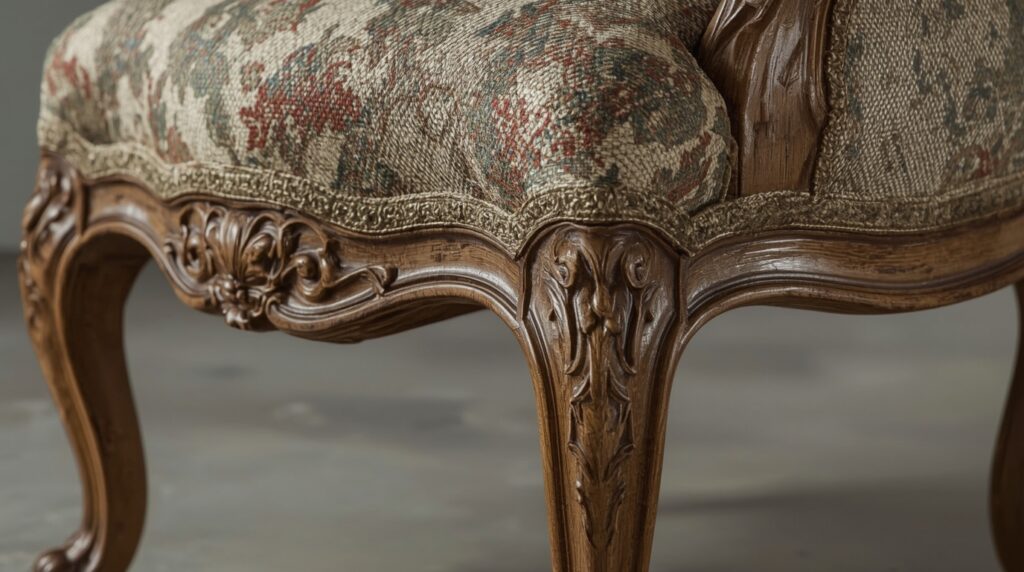
Lastly, finish and wear should look believable i. E., the marks of age “look earned.” Genuine antique finishes feature naturalistic and “honest” aging: smoothed and worn areas from handling, micro-crazing in lacquer, tarnish in brass nails, and wear from direct sun in fabric. You can create a brand new chair that looks old with realistic finishing waxes, oils (hand rubbed, of course), and shellac as long as the wear is not excessive and resembles how chairs in use typically age.
Historical Styles That Define Antique Looking Chairs
When you‘re searching for furniture with a classical feel that means business, base your selections on the recognized style and time period. Seating from Louis XV (Rococo) reigned over mid-18th-century France in terms of elegant, flowing bodies with a love of detailed wood carving (especially leaves) and cabriole legs that worked in small salons. Louis XVI and Neo-Classicism (which continued across Europe) was more rectilinear and architectural, with fluted furniture, classical motives like laurels, and rosettes.
Can You Guess the Artist?
Three clues. One artist. How quickly can you identify the painter?
British or North American chairs from the Georgian and Federal periods are often handsome and clearly identifiable the shield back (Hepplewhite), the careful inlay (Sheraton), the measured dimensions. As the Smithsonian Institution shows, the evolution of such designs was linked by transatlantic craft connections and the availability of foreign woods and the changes in home life. The “antique” style here relied on fine lines, not heavy adornment.
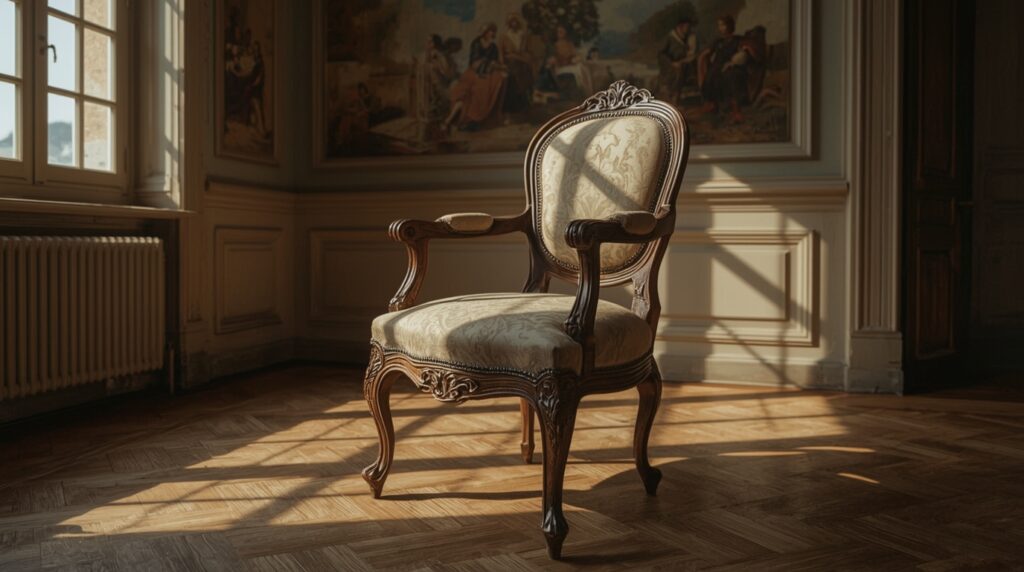
Of course, subsequent design eras are at play as well. During the Victorian era (19th century), styles became characterized by elaborate carving, dramatic silhouettes and a blending of historic revival elements such as Gothic, Renaissance, Rococo all in one space. In protest to the excesses of the Industrial Age, the late 19th to early 20th-century Arts and Crafts movement (whose ranks included William Morris) highlighted exposed joins and an honest treatment of materials. If your chair has hints of mortise-and-tenon joinery, a robust oak construction and a pared-down geometric shape, it might be paying more homage to Arts and Crafts than to “standard antique.”
Construction, Materials, and Finishes: The Details That Signal Quality
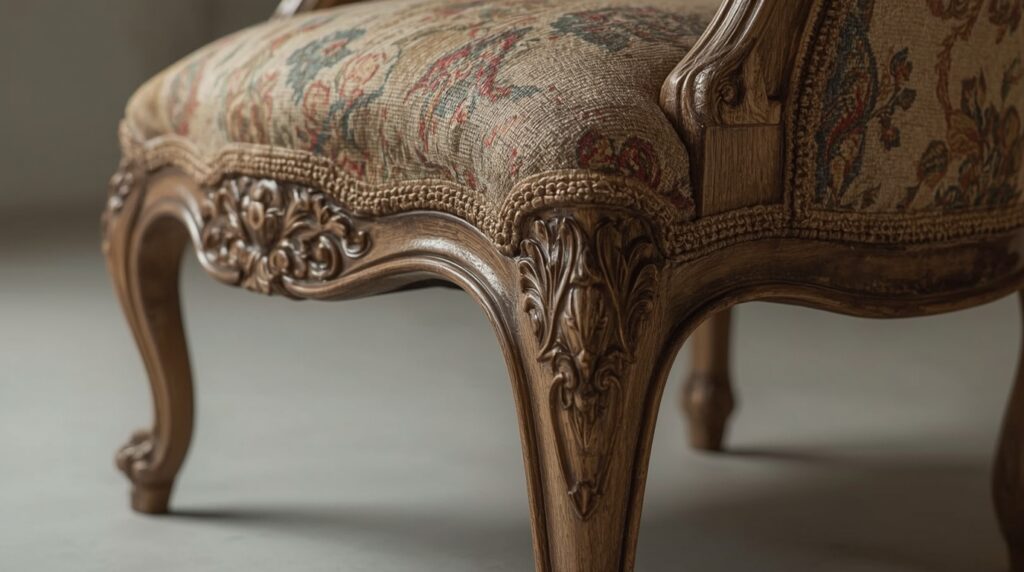
Properly crafted vintage-style chairs mimic antique standards. They should have tight joinery (like mortise and tenon or dowels), well-defined carving instead of molded decoration, and frames that sit solidly without wobbling. Upholstered chairs should also be designed with care for their inner workings (springs or webbing where appropriate) and a seat that doesn’t sound or feel like an empty box. These elements are the same ones you‘ll find discussed by museums in their conservation treatments and collection catalog entries, especially in the furniture collections.
You find hallmark surface treatments as well. A traditional shellac finish (usually achieved by means of the French polish method) creates a richness unmatched by many current polyurethane finishes. Gilded chairs (found in French court society) should wear nicely on raised details like scroll backs and seat-rail carvings, not as “scratches.” Best antique-look distress work will reflect time‘s effects, appearing on front edges of chair arms, the back crest rail, and front seat rails.
As the Metropolitan Museum of Art put it in a teaching guide to furniture study: “Furniture…is a deep history of past living and thinking.” That history is spoken in craftsmanship as well as aesthetics. Opting for old style chairs assembled using historically possible techniques makes for greater authenticity of both appearance and durability, when the chair is meant for frequent use, not just to look pretty.
Choosing Antique Looking Chairs for Modern Interiors
Antique looking chairs succeed when they feel intentional, not themed. Start by deciding whether your room benefits from a statement piece (for example, a Louis XVI-style fauteuil with restrained gilt accents) or a quiet supporting element (a set of simple ladder-back or Windsor-inspired chairs). One strong chair can provide contrast in a contemporary space, while multiples create rhythm in dining areas.
Scale is critical. Historic chairs were often designed for different room proportions and social habits; some period dining chairs sit higher and firmer than modern preferences, while certain salon chairs were built for posture rather than lounging. If you’re mixing eras, unify the room with consistent wood tones or repeated materials (brass, linen, cane). Antique looking chairs pair especially well with modern upholstery when the fabric’s texture is natural—linen, wool, leather—rather than overly synthetic sheen.
Finally, know when to buy authentic antique versus reproduction. A genuine 18th- or 19th-century chair can be a collectible object, but it may require conservation-minded care. A high-end reproduction can deliver period accuracy with modern reinforcement. The Victoria and Albert Museum emphasizes close looking at materials and making; using museum examples as a reference prevents “mashup” designs that borrow incompatible motifs from different periods.
Key Characteristics at a Glance
| Feature | What to Look For | Periods Commonly Associated | Practical Tip |
|---|---|---|---|
| Silhouette | Cabriole legs, shield backs, straight fluted legs | Louis XV, Hepplewhite, Louis XVI | Match the silhouette to your room’s formality |
| Wood & Veneer | Walnut, oak, beech, mahogany; tasteful inlay | Georgian, Federal, Neoclassical | Avoid overly orange stains that feel modern |
| Joinery | Mortise-and-tenon, pegging, solid frame rigidity | Most pre-20th-century styles | Wiggle-test: quality frames don’t rack |
| Finish | Shellac, wax, subtle patina, believable wear | 18th–19th c. inspired pieces | Beware “distressing” that looks random |
| Upholstery | Linen, leather, traditional trims; balanced padding | Rococo through Edwardian | Comfort can be modern, but keep visuals period-correct |
Frequently Asked Questions
Are antique looking chairs the same as antique chairs?
No. Antique looking chairs are new or newer chairs made to resemble historic styles or finishes. True antiques are typically defined in many markets as being at least 100 years old, and their value depends on provenance, rarity, condition, and authenticity.
How can I tell if the “patina” is believable?
Believable patina aligns with touch points: arms, front edges, crest rails, and seat frames. Look for gradual wear and softened edges rather than harsh scratches. If metal hardware is present, oxidation should be subtle and consistent. When in doubt, compare with documented museum examples from institutions like the Louvre Museum, the Metropolitan Museum of Art, or the V&A, which provide images and descriptions of period furniture.
What styles work best in a modern home?
Neoclassical (Louis XVI-inspired) and many Georgian/Federal forms integrate easily because they rely on symmetry and clean lines. For a bolder contrast, a single Rococo-style chair can function as sculptural accent seating.
Should I reupholster an antique looking chair?
Yes, if comfort or fabric condition requires it—just choose historically sympathetic textiles and trims. If the chair is a genuine antique or potentially valuable, consult a conservator or reputable upholsterer experienced with period furniture methods.
Where can I research accurate details before buying?
Start with museum collection databases and furniture study resources from the Metropolitan Museum of Art, Victoria and Albert Museum, Louvre Museum, and the Smithsonian Institution. These institutions document construction, materials, dates, and stylistic context—ideal for validating what you see in the marketplace.
Antique-looking chairs are best when they are at least grounded in true design history Rococo curves, Neoclassical severity, Georgian proportions, Arts and Crafts integrity with authentic construction and finishes to back them up. Look to museums for inspiration. Don‘t go for over-the-top distressing at the expense of quality joinery. Select designs appropriate for your architecture and lifestyle.
AI Notice: Some visual content in this article may have been created or enhanced using artificial intelligence (AI) for artistic, editorial or illustrative purposes. Learn more about our approach in our AI & Editorial Principles.


