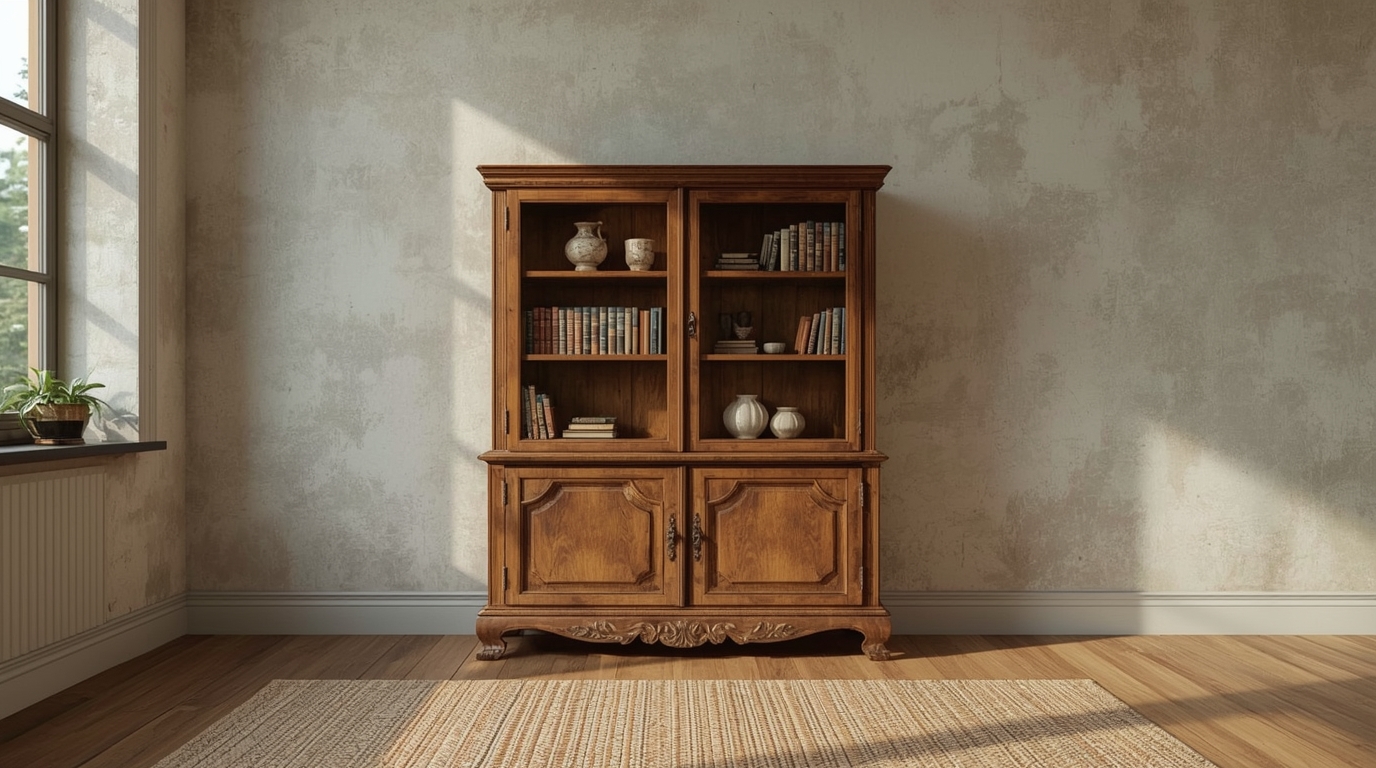

Why Everyone Wants a Vintage Round Dining Table and Chairs Right Now
A vintage round dining table and chairs can transform an ordinary room into a place with presence—where people linger, conversations flow naturally, and the furniture itself carries a sense of history. Unlike many modern sets designed primarily for efficiency, a well-chosen vintage round table invites equality (no “head” of the table), encourages eye contact, and often showcases craftsmanship that is difficult to replicate today. When you understand the periods, materials, and construction methods behind vintage pieces, you can buy with confidence—and build a dining space that feels both personal and enduring.
Why a Vintage Round Dining Table and Chairs Still Matters
For centuries round tables have a place in European American households and domestic life, especially as formal dining rituals intensified in the 18th and 19th centuries. While round and oval tables gained prevalence with the rise of etiquette and salon culture in Britain and France, pedestal tables in a round shape graced Federal and later Victorian interiors across the Atlantic. Today, museums like the V&A and The Met display antique pieces that exemplify what dining environments looked like, demonstrating both social etiquette and technological prowess, from hand-cut joinery to finely-grained veneering.
Can You Name the Masterpiece?
Ten masterpieces. Ten questions. How well do you know the history of art?
Part of what makes vintage furniture desirable is the materials and craftsmanship that went into making pieces. For example, traditional round tables were often made from solid, dense hardwoods like oak, walnut, mahogany, or cherry for strength and looks. The joinery mortise and tenon, dovetails, pegged joinery that fits snugly usually outlives the shortcuts found in newer construction. Collections of furniture, from museums like the Smithsonian Institution to thedecorative arts collections in European and American museums, reveal that furniture making was both a craft and an art, organized into shops and styles.
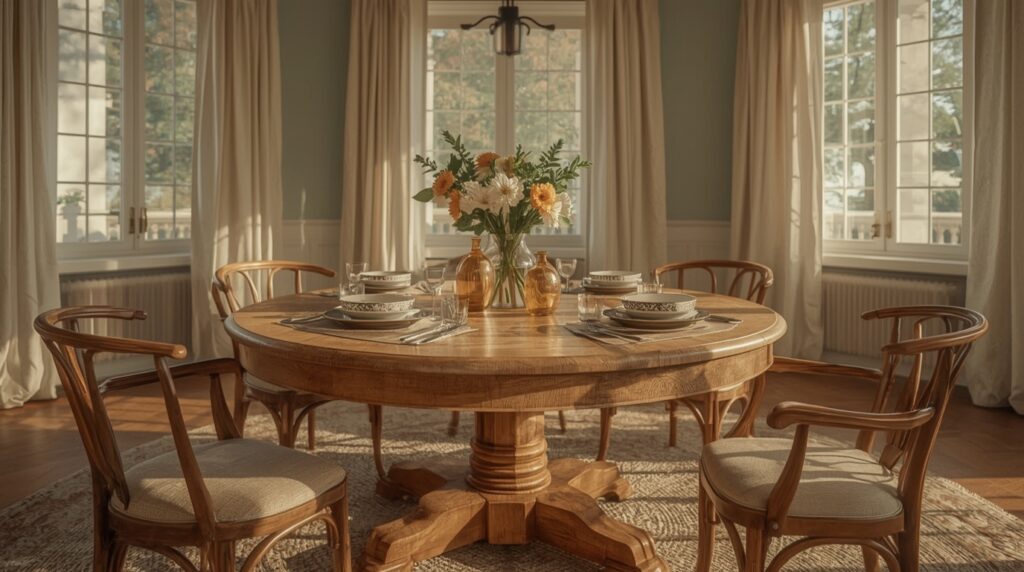
What‘s more is there‘s a functional reasoning behind why we dine on a round surface; it can‘t be beaten. The round table top is ideal as it creates less clutter in small spaces, and pedestal bases can allow for easier seating and create more knee room. Nowadays many homes are smaller, so you can find your vintage round dining table and chairs feel quite contemporary in its usability, but without the “copycat” look of reproductions.
Recognizing Authentic Period Styles and Their Hallmarks
If you’re shopping for a vintage round dining table and chairs, it helps to connect visual cues to historical periods. In the Georgian era (1714–1830) and Regency (1811–1820) Britain, you’ll often see refined proportions, elegant pedestal bases, and high-quality mahogany or satinwood veneers. French traditions—especially Louis XVI (1774–1792) and later Empire (early 1800s)—tend toward neoclassical restraint or bold, monumental forms. Institutions like the Louvre Museum and the V&A contextualize these styles through decorative arts collections that show how furniture echoed architecture, politics, and taste.
Can You Guess the Artist?
Three clues. One artist. How quickly can you identify the painter?
In the United States, Federal (c. 1780–1830) and Victorian (c. 1837–1901) influences shaped dining furniture. A common vintage form is the pedestal table with a round top and, sometimes, extension leaves. Later, early 20th-century movements shifted aesthetics again: Arts and Crafts (c. 1880–1920) favored honest construction and visible joinery; Art Deco (1920s–1930s) introduced geometric ornament, luxe veneers, and streamlined silhouettes; Mid-century modern (c. 1945–1970) prized clarity of form, often pairing round tops with tapered legs or sculptural bases.
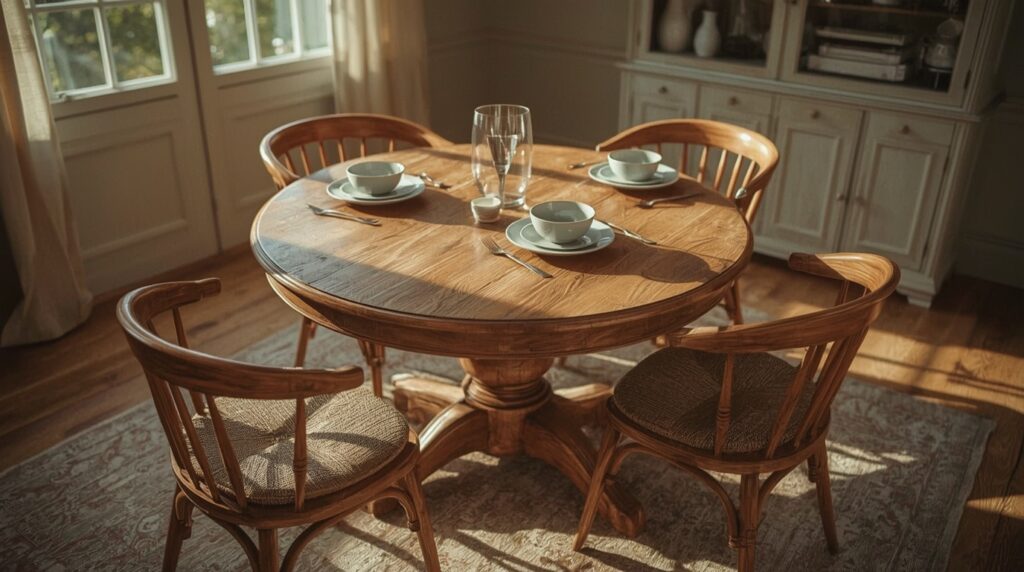
Authenticity is not just about “old”—it’s about coherent design and construction consistent with a period. The Met, for example, describes how American furniture reflects “regional practices and changing tastes,” emphasizing that careful observation of materials and workmanship matters. When a seller claims a piece is “Regency” or “Art Deco,” look for the supporting evidence in the form itself: the timber, the turning profiles, the veneer layout, and the joinery that aligns with that era’s tools and conventions.
Materials, Construction, and a Practical Authenticity Checklist
Begin with the wood. Many of the finer antiques, tables and chairs, have solid hardwood bases with the appropriate veneer. Search under the table, beneath the chairs, and in the frames for a patina of age: matching patination, worn spots on stretchers, and tool marks common to the time. Veneer can also be a sign of refinement, particularly in 18th–19th-century pieces, if it is book matched, well-edged, and not bubbled or patched haphazardly.
The construction is what differentiates between the vintage sets that last from the lookalike decorative ones. A chair feels balanced and sturdy, not wobbly; its joints should be solid and any repair needs should be clearly communicated. You‘re buying a pedestal table that should stand firmly without leaning, and the base should be wide enough to fit the top (large top, big base). Extension leaves should function smoothly and align precisely. Even a refinished table is one that has been restored to preserve crisp profiles, not softened by endless sanding.
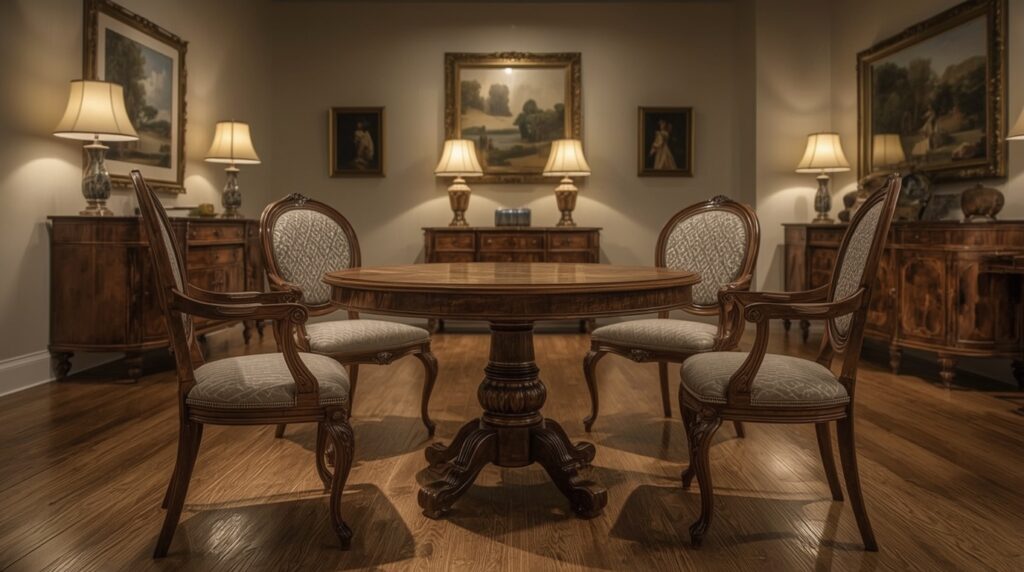
A handy reality check is proven provenance and documentation. Professional dealers, well-regarded auction houses and antique shops are more likely to get a date of manufacture right and to be honest about condition. Request that paper trail, if there is one: invoices, past appraisals, maker‘s labels, anything. According to the V&A‘s resources for students of furniture and design history, learning about “materials and processes” is key to spotting valuable objects which means you‘re already halfway to avoiding expensive mistakes.
Key Characteristics at a Glance
| Feature | What to Look For | Common Period Signals | Why It Matters |
|---|---|---|---|
| Table base | Pedestal, tripod, or four legs | Pedestals common in 19th c.; sculptural bases in mid-century | Stability, legroom, authenticity |
| Wood & veneer | Solid hardwood frames; quality veneer work | Mahogany/walnut in 18th–19th c.; exotic veneers in Art Deco | Durability and value |
| Joinery | Mortise-and-tenon, pegged joints, tight corner blocks | Visible craftsmanship in Arts & Crafts | Long-term strength |
| Chair design | Seat height, back support, consistent set | Matching sets more common later; mixed sets can be period-appropriate | Comfort and coherence |
| Surface/finish | Patina, consistent wear, careful restoration | French polish in some older pieces; lacquer in Deco | Condition and originality |
Styling, Comfort, and Long-Term Care (Without Losing Value)
A vintage round dining table and chairs can be styled to feel either historically faithful or deliberately eclectic. For a classic look, pair a round pedestal table with chairs that share the same visual language—similar wood tone, comparable scale, and sympathetic lines. For a modern approach, many designers mix: a traditional round table with simpler mid-century chairs, or a set of mixed vintage chairs unified by upholstery. The round shape makes this easier because the table reads as a central “object,” while chairs can become a curated ring of forms.
Comfort is where many buyers hesitate—and rightly so. Some antique chairs were built for posture and formality more than lounging. If you plan long dinners, prioritize ergonomic back shape, stable frames, and seat dimensions that suit your household. Upholstery can be updated responsibly: keep original frames, preserve any significant decorative elements, and use quality fabrics. When restoring, minimal intervention is often best for value—repair rather than replace, and document what was done.
Care should be practical and preservation-minded. Use placemats, coasters, and felt pads; avoid prolonged direct sunlight that can fade wood and textiles. Maintain stable humidity where possible to prevent cracking or veneer lifting. Museums such as the Smithsonian routinely emphasize preventive conservation—controlling light, handling, and environment—because it reduces the need for invasive repairs. A vintage dining set can absolutely be used daily, but it should be used with the same respect you’d give any well-made object with decades of life behind it.
“American furniture reflects a complex interplay of regional practices, available materials, and changing tastes.” — The Metropolitan Museum of Art (collection and educational materials on American decorative arts)
“The study of materials and techniques is essential to understanding and caring for furniture.” — Victoria and Albert Museum (design and furniture history resources)
Frequently Asked Questions
What age qualifies as “vintage” for a round dining table and chairs?
In common market usage, “vintage” often refers to pieces roughly 20–100 years old. Older than that is typically sold as “antique.” Sellers vary, so ask for an approximate date and the reasoning behind it.
Is a pedestal base better than four legs for a round table?
Often, yes—especially for seating flexibility. A pedestal can allow more chairs without leg collisions. However, very large round tops need a substantial pedestal (or multiple supports) to avoid wobble.
Should I avoid refinished vintage tables?
Not necessarily. A careful refinish can be appropriate if the original finish was severely damaged. Value tends to be highest with original finishes in good condition, but structural integrity and usability also matter. Ask what was done and whether edges and details were preserved.
How can I tell if chairs are original to the table?
Look for consistent wood species, matching wear, and comparable design language. True “matched sets” may have maker’s marks or a shared provenance, but many period homes mixed seating. A coherent, stable grouping can be just as legitimate as a factory-matched set.
What are the most trusted places to research period styles?
Start with museum collections and essays from institutions such as The Met, the V&A, the Louvre, and the Smithsonian Institution. Their object records and educational resources provide reliable dates, materials, and historical context.
Choosing a vintage round dining table and chairs is both a design decision and a small act of stewardship. By learning the hallmarks of real periods, examining materials and construction, and caring for the set thoughtfully, you can bring home furniture that is not only beautiful, but historically grounded and built to last—an everyday gathering place with genuine character.
Authoritative sources consulted: The Metropolitan Museum of Art; Victoria and Albert Museum; Louvre Museum; Smithsonian Institution (decorative arts and conservation education materials and collection records).
AI Notice: Some visual content in this article may have been created or enhanced using artificial intelligence (AI) for artistic, editorial or illustrative purposes. Learn more about our approach in our AI & Editorial Principles.