
Vintage Chesterfield Sofa for Sale: How to Spot a True Bargain Today
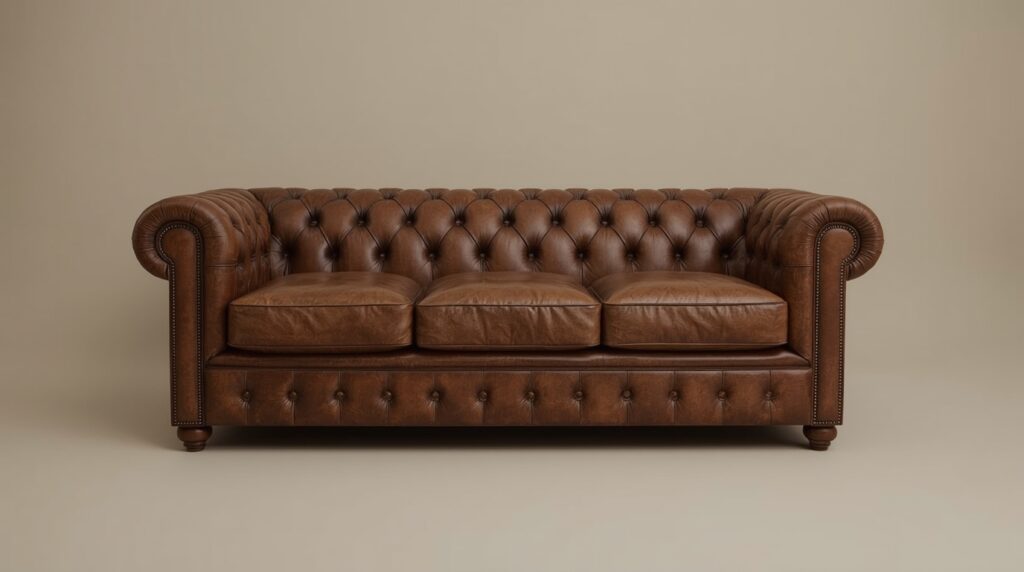
Vintage chesterfield sofas don’t just fill a room—they anchor it. With their deep button tufting, rolled arms, and low, commanding silhouette, they evoke the private clubs of 19th‑century London, the formality of Edwardian drawing rooms, and the patina of use that modern replicas can’t convincingly imitate. If you’re searching for a vintage chesterfield sofa for sale, you’re likely looking for more than seating: you’re looking for provenance, craft, and a piece of design history that still works hard in a contemporary home.
What Makes a Vintage Chesterfield Sofa Distinctive
A Chesterfield has a particular lexicon of shapes: back and arms are the same height, while arms curve gracefully and roll in on themselves; the back, and usually the seat, are heavily tufted originally by hand-buttoned a structural technique for filling the stuffing and making that distinctive quilted effect. Older styles feature hand-tied springs and thick wadding, which makes them mold and settle “like a favorite armchair.”
Can You Name the Masterpiece?
Ten masterpieces. Ten questions. How well do you know the history of art?
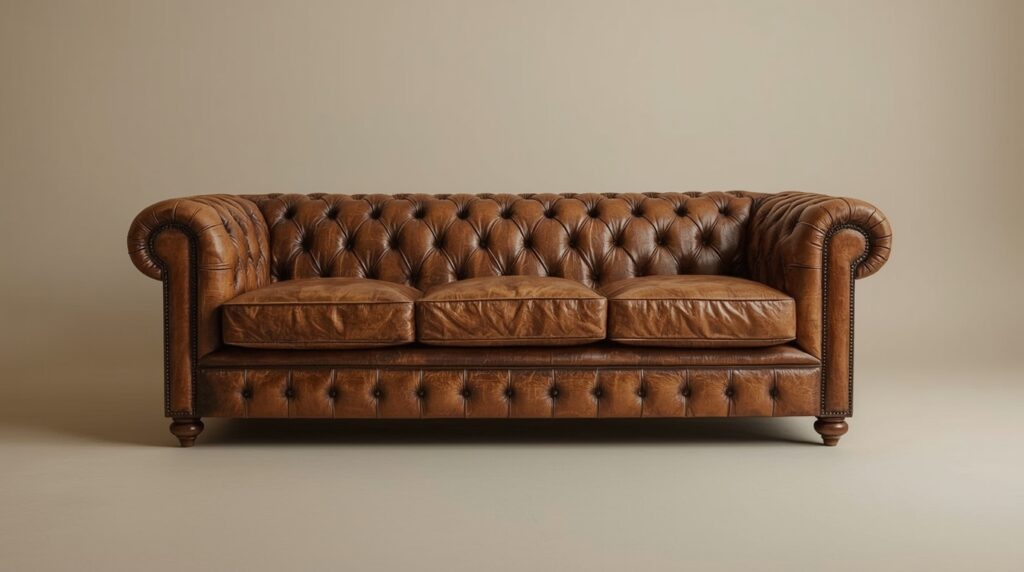
“Vintage” generally means old, plus real materials and construction. Your real vintage Chesterfield will be Victorian (late 1800‘s), Edwardian (early 1900s) or a mid-century restoration that gave an existing frame a second life. Real vintage pieces will have solid wooden frames (often beech if British made), rich aniline or semi-aniline leather, and signs of human touch variations in button-tufting, naturally varying leather grain, and old repair marks to show its history.
Museums frame the “how” and “why” of these items. Here, the Victoria and Albert Museum (V&A) in London‘s enormous British furniture and decorative arts collection tells the story of how upholstery, leather-working, and home interiors changed during the 18th and 19th centuries. The museum‘s understanding of traditional cabinet-making provides context for why the particulars of the Chesterfield‘s spring and webbing system, and its upholstery, are every bit as important as its recognizable appearance (Victoria and Albert Museum, Furniture and Woodwork collections).
A Brief History: From Georgian Britain to Global Icon
However, the Chesterfield is most strongly identified with the British Georgian and Regency preference for upholstered formal seating, and the style rose to prominence throughout the 19th century due to the growing popularity of clubs. (Although popular legend suggests that it was created for the 4th Earl of Chesterfield, historical fact is that by Victorian times, deep-buttoned upholstered seating made of leather was firmly established as a marker of prestige in men’s professional and social organizations throughout Britain, especially in urban areas.)
Can You Guess the Artist?
Three clues. One artist. How quickly can you identify the painter?
The lineage of that design can be traced in museum collections throughout Europe and the United States. The Metropolitan Museum of Art covers the evolution of European furniture forms and upholstered seating to show the interplay between craft, material, and fashion over the centuries. The Louvre Museum explains the development of European decorative arts and interiors for wealthy interiors, which is helpful when thinking about why certain silhouettes and surfaces are used as stand-ins for luxury and permanence.
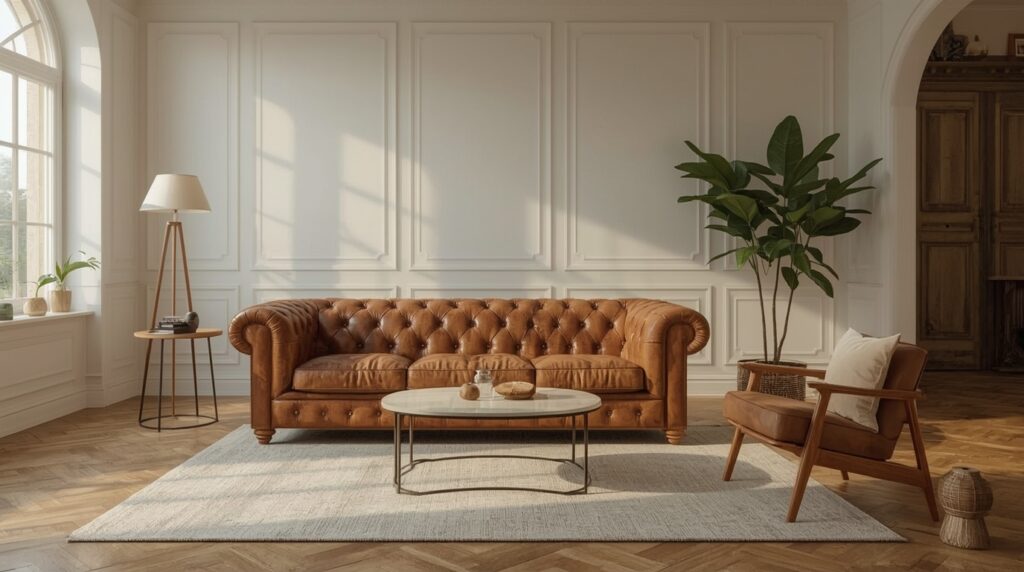
The Smithsonian Institution in the U. S. provides an opportunity to see the diffusion of European-based furniture shapes into the American home via commerce, immigration, and notions of the ideal household. Chesterfield sofas found a place particularly in law offices, studies and sitting rooms where one might want to project the power of one‘s influence. As the Smithsonian‘s collecting philosophy illustrates, such items are to be preserved by the union of use, material endurance and culture value.
How to Evaluate a Vintage Chesterfield Sofa for Sale (Authenticity, Condition, Value)
Start with the frame and suspension. Ask whether the sofa has an original hardwood frame and whether it uses hand-tied coil springs or later replacements. A professional inspection can determine if the frame has been repaired, if joints are sound, and whether the seat platform has sagging that indicates failed webbing or compromised springs. In vintage upholstery, “good bones” matter more than surface wear because leather can be conserved and replaced, but structural weakness is costly.
Next, evaluate the leather honestly. Natural leather will show wrinkles, grain variation, and patina—especially on arm fronts and seat cushions. Cracking can be cosmetic (finish loss) or structural (dry rot). Smell and touch are revealing: overly glossy surfaces may indicate heavy pigment coating or recent refinishing. Reupholstery is not inherently bad—many excellent vintage frames were reupholstered in the mid‑20th century—but value depends on transparency: what is original, what is restored, and how.
Finally, verify claims and pricing with documentation. If a seller asserts “Victorian” or “English club original,” request photos of the underside, close-ups of tacks, springs, and frame marks, plus any receipts for restoration. Consider commissioning an independent appraisal for higher-value purchases. As the V&A’s furniture scholarship implies, construction methods and materials are key signals of period and quality; style alone is not proof (Victoria and Albert Museum, research and collections guidance).
Key Characteristics at a Glance
| Feature | What to Look For | Why It Matters |
|---|---|---|
| Arms & back height | Arms and back at the same height | Core Chesterfield silhouette |
| Tufting | Deep button tufting, often diamond pattern | Indicates traditional upholstery technique |
| Frame | Hardwood (often beech), solid joinery | Longevity and restoration potential |
| Suspension | Hand-tied springs (older); quality coil systems | Comfort and structural integrity |
| Leather | Thick hide, visible grain, natural patina | Authenticity, aging behavior, value |
| Nails/trim | Hand-applied studs or quality tackwork | Craft signal; can help date pieces |
| Provenance | Seller records, restorations, appraisals | Supports authenticity and pricing |
Where to Buy: Dealers, Auctions, and Institutional-Quality Standards
The most secure route still involves finding a respected vintage dealer. Because their business relies on the truth of their descriptions and their disclosure of the condition, they have plenty to lose if they misrepresent an item. Seek out dealers who offer condition reports, high quality images of the item, and history of restoration. They will tell you what‘s up a button is missing, trim is worn, there are new casters, it‘s a leather repair. This is a good proxy for knowledge.
Auctions can be great if you do your homework. Know your auction language “in the manner of” and “later” and “reupholstered” and “composite” mean very different things. Ask for more photos and try to view the item in person. When you‘re considering auction prices, remember buyer‘s premium, shipping, and conservation costs. What looks like a steal may come undone when you find out you need to do a whole lot of work on it.
For the collector who hopes to buy in a museum-inspired manner, one might look to standards museums use for their collections: provenance, material integrity and reversible conservation. The Metropolitan Museum of Art, V & A, and Smithsonian collectors all rely on detailed inventory and evidence-based provenance lessons that can apply to private collection. The Met, in its general curatorial guidance, highlights the need to closely examine and understand materials when evaluating objects of decorative art (The Metropolitan Museum of Art).
Care, Conservation, and Ethical Restoration
A vintage Chesterfield lasts when cared for like a valuable material object, not disposable furniture. Keep it away from direct sunlight and heat sources that dry leather and accelerate cracking. Maintain stable humidity when possible, and vacuum gently with a soft brush to remove grit that abrades leather. Use leather products sparingly and avoid silicone-heavy conditioners that can seal the surface unnaturally.
Restoration should be deliberate. Replacing a few buttons or stabilizing seams is routine conservation; stripping and recoloring leather is more invasive and can reduce historical character. If cushions are uncomfortable, consider rebuilding inserts while preserving the original frame and tufted back. The best restorers aim for interventions that are structurally sound yet visually sympathetic, leaving evidence consistent with age.
When in doubt, consult specialists who work with heritage upholstery. Many conservators follow principles similar to those used in museum contexts: minimal intervention, compatibility of materials, and clear documentation. Institutional practice—common across major museums—treats furniture as layered history, where later repairs may themselves become part of an object’s narrative when done well and recorded accurately.
Authoritative Quotes and Sources
- “A museum is a place where one should lose one’s head.” — René Huyghe, former curator at the Louvre (often cited in museum studies literature; reflects the idea that objects can powerfully shape perception).
- “The V&A’s collections are a source of inspiration and knowledge.” — Victoria and Albert Museum (institutional mission statement language reflected across V&A public materials).
- The Metropolitan Museum of Art describes its role as collecting and studying works “to inspire and educate the public” (The Met mission and curatorial resources).
Credible institutional sources consulted:
- The Metropolitan Museum of Art (European Decorative Arts resources): https://www.metmuseum.org
- Victoria and Albert Museum (Furniture collections and research): https://www.vam.ac.uk
- Louvre Museum (Decorative Arts context): https://www.louvre.fr
- Smithsonian Institution (collections and research resources): https://www.si.edu
Frequently Asked Questions
How can I tell if a vintage chesterfield sofa for sale is genuinely old and not a replica?
Check construction: hardwood frame, traditional springing, hand-applied tufting, and natural leather patina. Ask for underside photos and restoration records. Replicas often use thinner leather, stapled construction, and simplified suspension.
Is reupholstery a deal-breaker for value?
Not necessarily. A high-quality reupholstery on an excellent vintage frame can be desirable, especially if disclosed and professionally executed. Value depends on the quality of the underlying frame, the honesty of the listing, and whether the look remains faithful to the sofa’s period character.
What’s the most common expensive problem in older Chesterfields?
Frame and suspension failure. Leather repairs can be manageable; rebuilding a compromised frame, replacing webbing, or re-springing can be costly. Prioritize structural soundness over cosmetic perfection.
Which eras are most sought-after?
Late Victorian and Edwardian examples are prized for traditional craftsmanship and established proportions, but well-made mid‑20th‑century Chesterfields can be superb. Demand also depends on size (apartment-friendly two-seaters often command premiums).
How should I transport a vintage Chesterfield safely?
Use professional movers experienced with antiques. Avoid dragging; lift from the base, not the arms. Wrap to protect leather from abrasion,
Buying a vintage chesterfield sofa for sale is an investment in design history as much as comfort. Focus on structure, materials, and documented restoration, and use museum-informed habits—close looking, evidence, and conservator-grade care—to choose a piece that will age beautifully for decades to come.
AI Notice: Some visual content in this article may have been created or enhanced using artificial intelligence (AI) for artistic, editorial or illustrative purposes. Learn more about our approach in our AI & Editorial Principles.