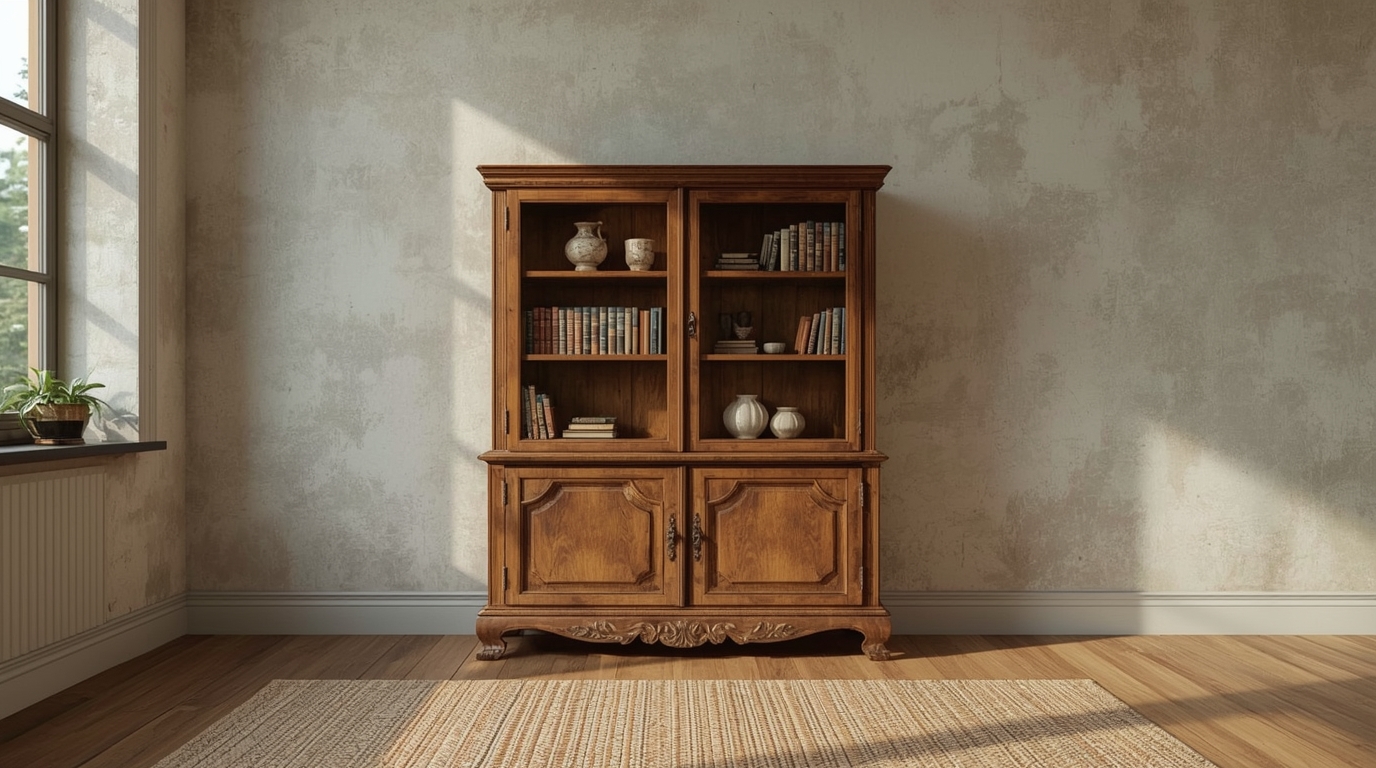

Is This Antique French Provincial Bedroom Set the Missing Piece in Yours?
There‘s an element that old French provincial bedrooms sets can claim that most contemporary bedrooms could use gravitas. Their curves, rounded corners, and patina are not a distressed effect. They are evidence of years (sometimes centuries) of use, repair, and fashion trends. Bringing a provincial bedroom set into your space brings not only wood but also a regional savoir-faire reflective of French country living, from the Loire Valley to Provence, and the long arc of Parisian fashion in miniature.
What Defines an Antique French Provincial Bedroom Set?
An antique French provincial bedroom set typically includes a bed (often with carved headboard and footboard), one or two nightstands, a commode or chest of drawers, and sometimes an armoire. “Provincial” does not mean crude; it means made outside Parisian court workshops, frequently by regional ébénistes and menuisiers who adapted fashionable forms—Louis XV, Louis XVI, Régence—into sturdier, more practical furniture.
Can You Name the Masterpiece?
Ten masterpieces. Ten questions. How well do you know the history of art?
Over time, such pieces usually have provenance leading back to the 18th century (Louis XV and Louis XVI era) or 19th century, with regional cabinet makers turning out furniture in revival styles. While provincial craftsmen sometimes used local hardwoods, and their construction was less complex than court pieces, they were certainly capable of expert joinery. Think mortise and tenon construction, pegged joinery, handcrafted dovetails, and hand-planed surfaces. Some pieces may have later modifications, like updated hardware, refinished surfaces, or relined drawers, and these are a normal part of an object‘s life.

In a museum, the distinction between “French” and provincial furniture styles makes more sense. The V&A in London states, ” eighteenth-century French furniture styles are characterized by very clearly articulated design languages that provincial cabinet-makers both imitated, adding local touches to carving, proportions and choice of timber, while provincial styles, like that of the Auvergne, were recognizable variants of accepted French forms”. Collections at The Met and others show how these French styles were transmitted through regional interpretations and not in a vacuum.
Historical Roots: From Louis XV Rococo to Louis XVI Neoclassicism
The French provincial style, so popular with today‘s buyers, with its serpentine lines, cabriole legs, and carved blossoms, dates back to the reign of Louis XV (circa 1730–1774) the era of rococo, with its love of curvilinear motion. Yet in country workshops, those motifs were adapted: The carving might be shallower, the decoration less frequent, the proportions perhaps a little heavier to endure daily life. And it‘s that “simplification” which makes provincial pieces feel so peaceful in a bedroom.
Can You Guess the Artist?
Three clues. One artist. How quickly can you identify the painter?
By the time of Louis XVI (c. 1774–1792), neoclassicism was already in swing, favoring straight legs, fluting, rosettes, and geometric styles. Rural variations still often have a bit of curve, but tempered and more subdued. An armoire with pilasters and a simple, understated cornice; a commode with tapered legs and a symmetrically laid out array of drawers. If a piece has classically-inspired details that look decidedly “folk” rather than refined, it was likely made in the provinces.

And the French Revolution itself, and 19th century revivalism. Village furniture shops were still alive, but in older vernacular styles forlocal tastes, and for a new audience of collectors. The big museum collections, such as the Louvre‘s, collect high-style French decorated arts as a touchstone; it‘s best to consider provincial furniture as a sort of sister culture not gilded, more homelike and surprisingly resilient.
Materials, Construction, and the Patina That Matters
Authentic provincial bedroom sets frequently use oak, walnut, cherry, beech, and fruitwoods, chosen for availability and workability. Walnut is especially prized for its warm color and crisp carving; oak appears often in sturdy armoires and beds. Secondary woods (drawer sides, backs) may be pine or poplar. The point is consistency: an antique set typically shows logical material choices aligned with region and function.
Construction details are crucial for evaluation. Look for hand-cut dovetails (often slightly irregular), pegged mortise-and-tenon joints, drawer bottoms set into grooves, and backs assembled with visible tool marks. Hardware can be original (forged iron, early brass) or replaced, but replacements should make sense historically. Machine-cut uniform dovetails, staples, or modern plywood often signal later reproduction or heavy restoration.
Patina is not merely “shabby charm”; it is evidence. The Smithsonian Institution, in its public-facing conservation guidance, emphasizes that original surfaces and finishes are part of an object’s historical integrity, and overly aggressive refinishing can erase that record. In bedrooms, you’ll often see softened corners, worn drawer pulls, and oxidized varnish or wax—features that, when consistent and believable, support authenticity and value.
Key Characteristics at a Glance
| Feature | Typical Provincial Expression | What It Suggests |
|---|---|---|
| Woods | Walnut, oak, cherry, beech; secondary pine/poplar | Regional sourcing and practicality |
| Silhouette | Louis XV curves or Louis XVI restraint | Date range and stylistic influence |
| Joinery | Hand-cut dovetails, pegged joints | Pre-industrial or early industrial craftsmanship |
| Carving | Floral/scroll motifs, often simplified | Provincial interpretation of Paris styles |
| Finish | Waxed, aged varnish, layered paint over time | Authentic use-history; avoid “factory distressing” |
| Common Pieces | Bed, armoire, commode, nightstands | Bedroom storage traditions in French homes |
How to Authenticate and Buy with Confidence
Start by asking for provenance: dealer invoices, estate documentation, or at least a coherent history of acquisition. While many legitimate antiques lack perfect paperwork, reputable dealers can explain why they date a piece to a period—construction, wood movement, tool marks, and stylistic vocabulary. If the seller’s story is vague and the surfaces look uniformly “antiqued,” be cautious.
Then inspect condition with a conservator’s mindset. Old wormholes can be normal in European furniture, but active infestation is not. Check drawer runners, backboards, and undersides—areas less likely to be cosmetically “improved.” If a set is painted, look for multiple paint layers and age-appropriate wear; a single-layer chalk paint finish may be decorative but not antique.
Finally, align your purchase with museum-level thinking about preservation. As the V&A’s collections and interpretive materials repeatedly underscore, original materials and evidence of making are central to meaning and value. A responsible dealer should welcome close inspection and disclose restorations—replaced feet, new bed rails, relined drawers—so you can decide whether the set suits your priorities: display authenticity, daily use, or a balance of both.
Styling and Care in a Modern Bedroom
Provincial sets excel when you let their forms breathe. Pair a carved walnut bed with plain linen bedding, muted walls (stone, flax, soft gray), and minimal contemporary lighting so the furniture remains the focal point. Avoid matching everything too tightly; even historically, “sets” were often assembled over time. A single armoire can anchor a room, while nightstands and a commode can be complementary rather than identical.
For care, prioritize gentle conservation. Dust with a soft cloth; avoid silicone polishes that can contaminate surfaces and complicate future restoration. For waxed finishes, occasional re-waxing with a high-quality paste wax may be appropriate, but do not overdo it; too much wax builds residue. Keep antiques away from direct heat sources and manage humidity to reduce cracking and veneer lifting.
If you intend daily use, consider discreet, reversible upgrades. Mattress supports can be added without drilling original wood; felt pads can protect floors; and a conservator can stabilize joints without aggressive rebuilding. Museums such as The Metropolitan Museum of Art and the Smithsonian model this ethos: interventions should preserve as much original material as possible and remain legible to future caretakers.
“The care of museum collections is guided by the principle of preserving original material and evidence of manufacture whenever possible.” — Smithsonian Institution, collections care and conservation guidance (public education resources)
“Furniture surfaces—original finishes, tool marks, and wear—are part of an object’s significance and should be approached with caution.” — Principles consistent with conservation standards reflected in V&A conservation and collections interpretation materials
Frequently Asked Questions
Are antique French provincial bedroom sets always from Provence?
No. “French provincial” is a broad market term for furniture made outside Paris in many regions—Normandy, Brittany, the Loire Valley, Burgundy, and Provence among them. Regional wood species and carving habits can sometimes hint at origin, but exact attribution is not always possible.
What period is most common for authentic sets?
Many surviving pieces date from the late 18th to 19th centuries, often reflecting Louis XV or Louis XVI influence. Truly matched “sets” from the 18th century are rarer; bedrooms were frequently assembled gradually.
Is painted provincial furniture still considered antique?
Yes—if the underlying construction and age are consistent. Some pieces were historically painted, and many acquired paint layers over time. The key is whether the paint history looks authentic and whether stripping would destroy evidence of age.
How can I tell reproduction from antique quickly?
Look underneath and inside drawers. Modern plywood, staples, perfectly uniform machine dovetails, and artificially uniform wear are red flags. Honest antiques show irregular tool marks, age-appropriate oxidation, and consistent construction logic.
Should I refinish an antique set to “restore” it?
Usually not, unless a qualified conservator recommends targeted treatment. Over-refinishing can reduce historical value and erase patina. Stabilization, gentle cleaning, and minimal intervention are typically preferred.
If you want a truly unique rare antique French Provincial bedroom suite you want to tick all the boxes for provenance, vernacular artisanship, and unpretentious beauty. If you begin with a foundation in construction, preservation and the aspirational element that you experience at The V&A, The Met, The Louvre and The Smithsonian then you cannot help but make sound acquisitions. Everything purchased should simply exist to tell a story.
AI Notice: Some visual content in this article may have been created or enhanced using artificial intelligence (AI) for artistic, editorial or illustrative purposes. Learn more about our approach in our AI & Editorial Principles.