Why Antique Secretary Writing Desks Are Suddenly So Valuable (And How to Spot One)
Of all the antiques to be found relating to domestic life, the secretary writing desk has got to be the most revealing; the secretary desk is a piece of furniture, a filing cabinet, and a status symbol, all in one object. Open the fall-front and you can almost feel the scratch of quill on paper, the sealing of wax, and the careful folding of a private message in a hidden compartment. Where other antiques may serve a purely decorative role in the modern-day home, a secretary desk is one of the few antique forms that is still ready to be used, an item that will anchor any room, yet still tie you to the past that made it.
What an Antique Secretary Writing Desk Is—and Why It Matters
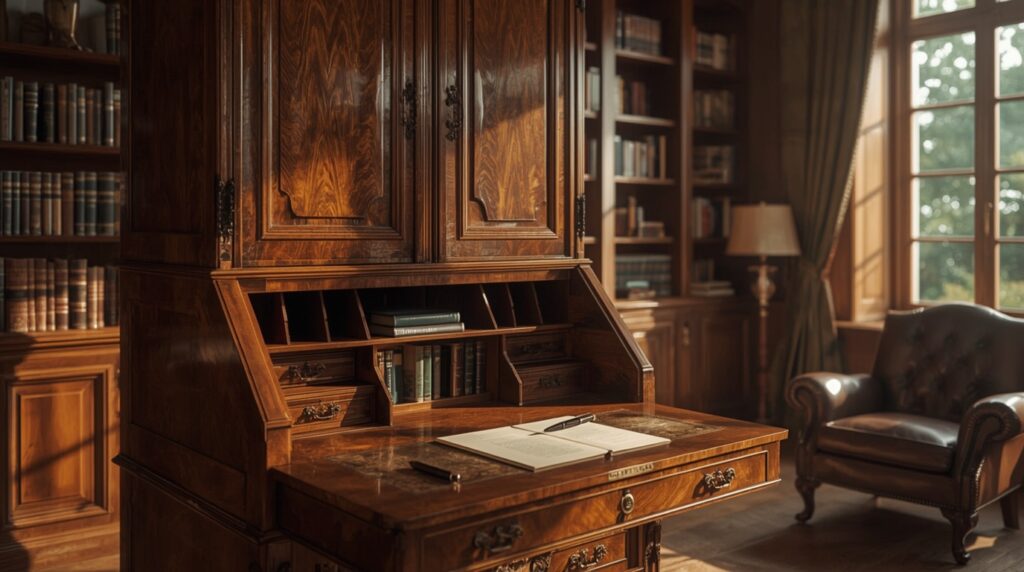
A secretary writing table (usually shortened to secretary) is a particular type of case furniture, characterized by having a writing surface (most frequently a fall-front or drop-front panel) set over drawers or a cabinet base. The interior of a secretary is generally equipped with pigeonholes, small drawers, and, occasionally, secret compartments. In the UK and Europe the term is related to the secretaire in French, as well as the terms bureau and secretary bookcase (as also is the escritoire). The Metropolitan Museum of Art (New York) and the Victoria and Albert Museum (V&A) have example examples of such items.
Can You Name the Masterpiece?
Ten masterpieces. Ten questions. How well do you know the history of art?
Secretaries thrived because the government, commerce, and private correspondence had grown; by the 18th century, account keeping was growing in importance as did letter writing and learning; as a result, writing desks became a fixture in every literate house hold. In the 19th century, the secretary accounted for professionalization, the rise of the middle class. This was particularly true in Britain, France, and in the United States. The interior configuration of the desk, I should note, recalls a time before digital archiving where paper was a scarce resource and privacy was highly valued.
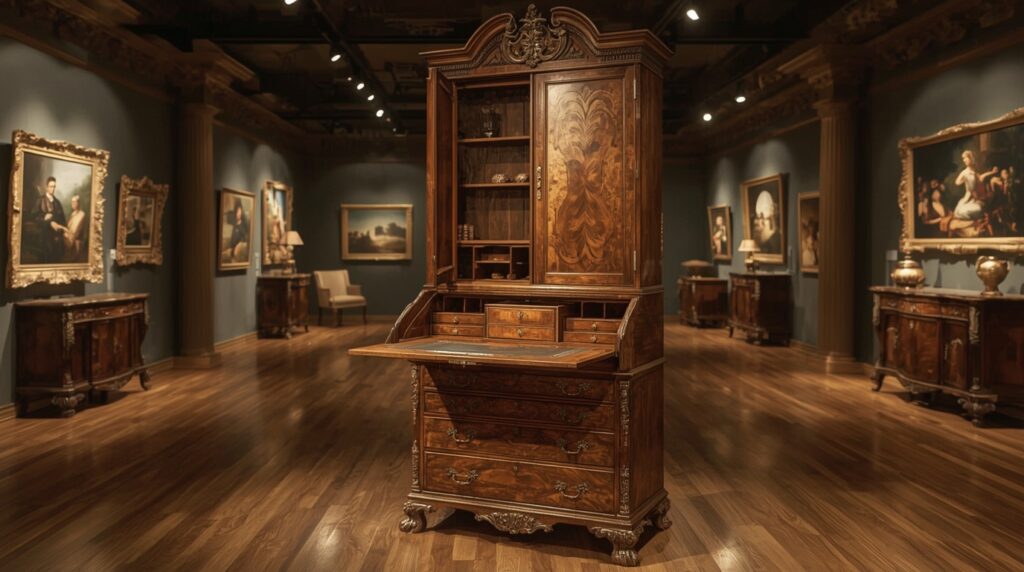
When museums interpret works like this, the story is a tale of both craft and culture. The V&A, in its own generalist take on furniture curation, points out that these items represent “the art of furniture in all its facets, as well as an insight into the social customs and domestic environment of the time.” The Smithsonian, too, commonly refers to household items as “material culture” that tell “the story of daily life in America, as reflected in the objects people made and used.”
Key Historical Styles, Periods, and Regional Traditions
The secretary form is strongly associated with the 18th-century Georgian period in Britain and the American Colonial and Federal periods, when case furniture construction and fine veneers reached new sophistication. Mahogany, walnut, oak, and later satinwood were common, with regional differences in proportion and ornament. American secretaries—particularly in Boston, Philadelphia, and Newport—often display locally developed approaches to carving, shell motifs, and block-front or serpentine façades, reflecting both Atlantic trade and emerging national taste.
Can You Guess the Artist?
Three clues. One artist. How quickly can you identify the painter?
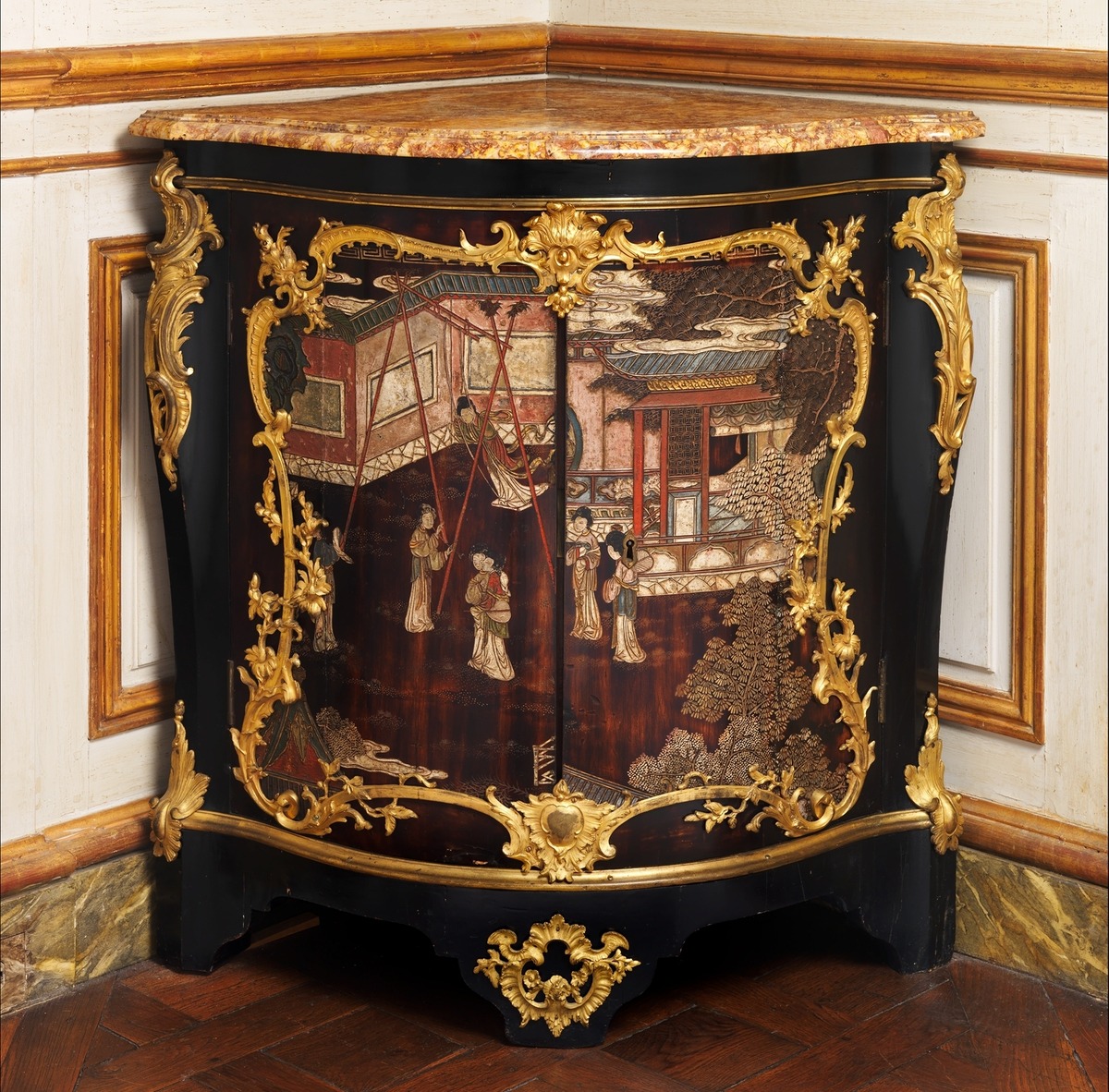
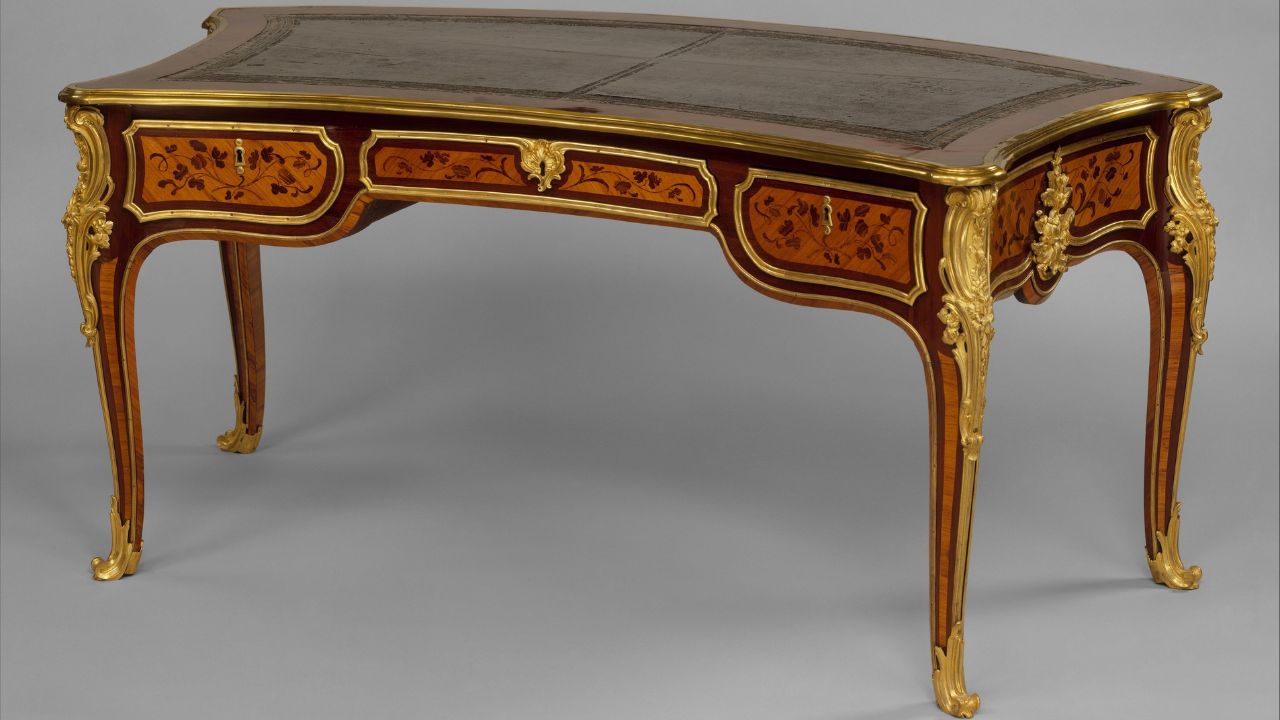
In France, the secrétaire à abattant (fall-front secretary) became a refined expression of Louis XVI neoclassicism and later Empire style, frequently featuring gilt-bronze mounts and carefully bookmatched veneers. This lineage is well represented in European museum collections, including the Louvre Museum, whose decorative arts holdings place French furniture within the broader political and artistic programs of the ancien régime and Napoleonic period. Even when not gilded or palace-grade, the French secretary tends to emphasize architectural clarity and formal symmetry.
By the Victorian era (mid-to-late 19th century), secretaries and secretary bookcases expanded in variety and mass availability, paralleling industrial production while still allowing for high-end bespoke work. You’ll see more machine-assisted turning, standardized drawer runners, and broader distribution through urban cabinet shops. Yet the best Victorian secretaries remain impressive for their complexity—interiors that resemble miniature office suites, with multiple tiers of drawers, document slots, and hidden releases.
Construction, Materials, and Identifying Features (with a Collector’s Eye)
How a piece of furniture is made is also your best friend in dating a secretary writing desk. Hand-cut dovetails (which may be uneven), early saw marks, wooden drawer runners, and dated hardware all give you clues that style alone can‘t provide. The use of “secondary woods” (the ‘wood under the skin’ like pine, drawer backs and sides, framing) is often a giveaway too (pine in Britain and North America, oak in parts of the Continent). While some hardware and screws might have been replaced, look for signs of sensible use.
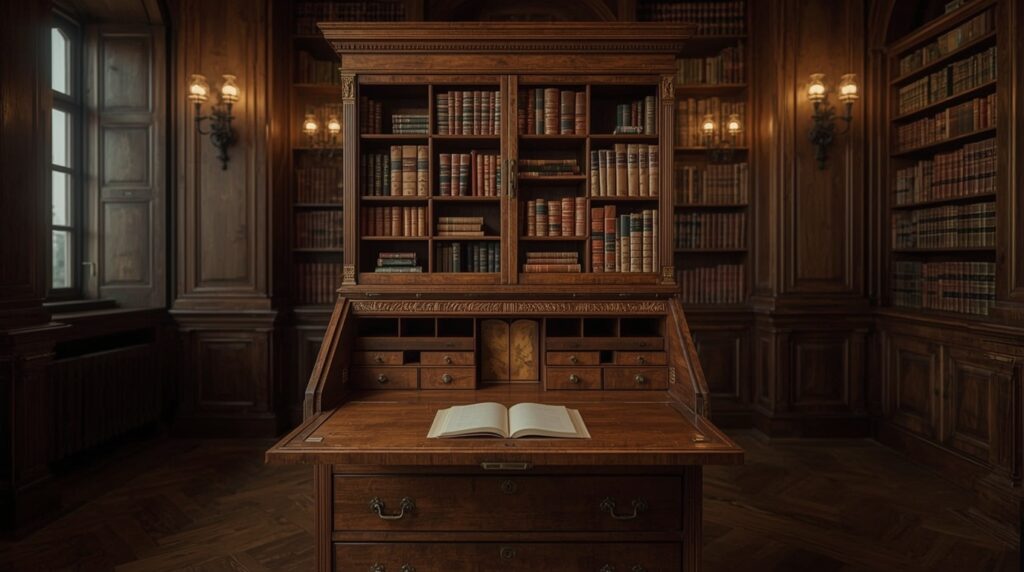
The inside of a secretary is often where you can clearly see quality craftsmanship: hand-planed finishes, dove-tailed drawer sides (sometimes tiny!), and neatly-made pigeonholes. Hidden compartments are a specialty of the secretaire: some have a catch built into a drawer, while others open when a tiny drawer is removed or a wooden panel moves. They weren‘t a joke they provided a place to stash cash, sensitive correspondence or legal documents when household security wasn‘t as reliable as it is today.
Yes, condition and novelty can be important. But so, too, is the evidence of honest, accumulated wear. A patinated surface, rounded edges on the fall-front where a million hands were placed, an ink stain or two in the writing cavity these can all be indicators of real, lived age (even if they can be faked). As the Met so ably points out in its furniture studies and gallery signage: it‘s all in the details how it‘s made, the tool marks, the materials.
Table: Key Characteristics of an Antique Secretary Writing Desk
| Feature | What to Look For | Why It Matters |
|---|---|---|
| Writing surface | Fall-front/drop-front or pull-out slide | Defines the “secretary” function and typical period design |
| Interior fittings | Pigeonholes, small drawers, hidden compartments | Signals quality, intended use, and often regional tradition |
| Joinery | Hand-cut dovetails, mortise-and-tenon framing | Strong clue to age and craftsmanship |
| Woods & veneers | Mahogany, walnut, oak; bookmatched veneer | Helps date and place the piece; indicates status level |
| Hardware | Period brasses, escutcheons, locks (often replaced) | Originality affects value; replacements can be acceptable if sympathetic |
| Proportions | Tall case, balanced façade, bracket/bun feet | Style cues (Georgian, Federal, Empire, Victorian) |
Provenance, Value, and Caring for an Antique Secretary Desk Today
Provenance—documented ownership history—can elevate a secretary desk from “old furniture” to a traceable historical artifact. Bills of sale, estate inventories, family letters, or links to known cabinetmakers can significantly affect value and scholarly interest. Even without celebrity ownership, a desk tied to a specific place (for example, a Philadelphia shop tradition or a French provincial workshop) gains interpretive weight, and reputable dealers often collaborate with conservators and appraisers to verify such claims.
Value is shaped by authenticity, condition, rarity, and desirability of style. A heavily restored surface may reduce appeal to purist collectors, while structural repairs performed by a qualified conservator can be positive. When comparing pieces, prioritize integrity of the case, the fit of the fall-front, and the completeness of the interior. If the desk retains its original compartments, door locks, and matching brasses, it may command a premium. For high-value examples, seek a written condition report and consult an accredited appraiser.
Care should balance preservation and livability. Avoid placing the desk near radiators, HVAC vents, or strong sunlight, which can crack veneers and fade finishes. Use a blotter or leather writing pad to protect the fall-front surface; never apply silicone-based polishes. Conservation guidance aligns with museum practice: stabilize the environment first, clean gently, and repair only as necessary with reversible methods—principles widely used across institutions like the Smithsonian and major decorative-arts collections.
Authoritative Quotes and Sources
“Furniture…is among the most direct evidence of how people lived, worked, and represented themselves.” — The Metropolitan Museum of Art, Furniture collection interpretation (see The Met’s Heilbrunn Timeline of Art History and collection essays)
“Museums preserve objects not only for their beauty, but for what they reveal about the society that made and used them.” — Victoria and Albert Museum (V&A), collections and curatorial approach (see V&A Furniture collections and museum mission statements)
Credible sources to consult for further verification and context
- The Metropolitan Museum of Art (Heilbrunn Timeline of Art History; furniture collection entries): https://www.metmuseum.org/
- Victoria and Albert Museum (Furniture collections; period rooms and object records): https://www.vam.ac.uk/
- The Louvre Museum (Decorative Arts; French furniture traditions): https://www.louvre.fr/
- Smithsonian Institution (Material culture and collections research): https://www.si.edu/
Frequently Asked Questions (FAQ)
1) What’s the difference between a secretary desk and a secretary bookcase?
A secretary desk usually refers to a case piece with a fall-front writing surface and drawers below. A secretary bookcase typically adds an upper section with glass doors or open shelves above the writing compartment, creating a tall, library-like form.
2) How can I tell if my secretary writing desk is truly antique (100+ years old)?
Check construction: hand-cut dovetails, early tool marks, appropriate screws, and period secondary woods. Examine whether the interior fittings look hand-fitted rather than modular. When in doubt, consult a qualified appraiser or furniture conservator and compare to documented museum examples.
3) Are hidden compartments common, and do they increase value?
They are fairly common in 18th- and 19th-century secretaries, especially higher-quality ones. They can increase interest and sometimes value, particularly if original and mechanically sound, but overall condition and authenticity still matter most.
4) Should I refinish an antique secretary desk?
Refinishing can reduce value if it removes original surface and patina. Conservation-grade cleaning and minimal, reversible repair are usually preferred. If the piece is already heavily altered or in poor finish condition, a sensitive restoration by a professional may be appropriate—document everything.
5) What woods are most associated with antique secretary desks?
Mahogany is strongly linked with Georgian and Federal taste; walnut appears frequently in earlier and regional work; oak is common in some European and Victorian examples. Many pieces combine a fine primary wood with secondary woods like pine.
An antique secretary-desk is not just a beautiful artifact it is a pocket museum in miniature of how people kept records, maintained privacy, and demonstrated style in Georgian, Federal, Neoclassical, and Victorian times. Maintained with appropriate reverence to structure, ownership, and conservatorial practices, this is a piece of furniture whose history is accessible and practical.
AI Notice: Some visual content in this article may have been created or enhanced using artificial intelligence (AI) for artistic, editorial or illustrative purposes. Learn more about our approach in our AI & Editorial Principles.