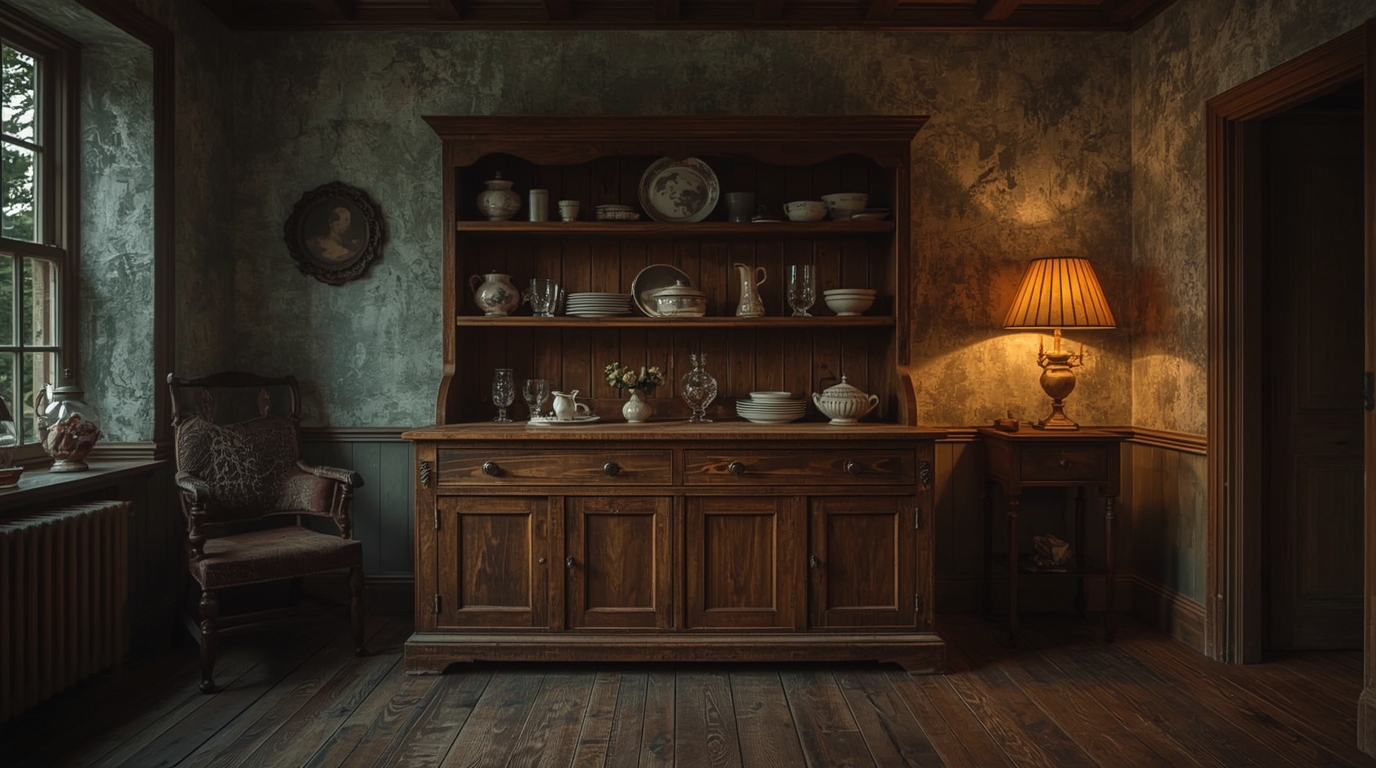

Antique Bedroom Furniture Sets: Timeless Finds That Transform Any Room
Antique bedroom furniture sets are more than a coordinated collection of bed, dresser, and nightstands—they are surviving evidence of how people slept, stored clothing, and expressed status across centuries. When you run your hand along a hand-planed mahogany rail or see the mellow depth of an old walnut veneer, you’re touching the intersection of craftsmanship, trade routes, and design movements that shaped domestic life from Paris to London to Philadelphia. For collectors and homeowners alike, the appeal is immediate: antique sets bring authenticity, visual gravity, and a sense of continuity that modern reproductions rarely achieve.
What Counts as an “Antique Bedroom Furniture Set” (and Why It Matters)
If you are in the furniture industry, we‘re talking about furniture that‘s 100+ years old, but there is no legal universal definition that‘s the same in the US, the UK, and beyond. A true antique bedroom set generally comprises of a bed (four-poster, sleigh, or iron frame), a chest of drawers, and a nightstand (or two). Depending on the time, a full suite might also feature a armoire/wardrobe, washstand, or vanity. We owe the “set” idea to the industrial era and the rise of department stores.
Can You Name the Masterpiece?
Ten masterpieces. Ten questions. How well do you know the history of art?
Age is important because the kind of wood, joinery, and scale are very time and place-specific. Beds from the Georgian and Federal eras might have carved posts and subtle classical detailing; Victorian-era bedroom suites tend to have elaborate carving and a more robust presence; Art Deco beds from early 20th-century France might reflect a more geometric balance and veneers. Museums pay attention to these differences because they represent cultural evidence rather than stylistic quirks, an attitude that you can well imitate when making your next antique purchase.
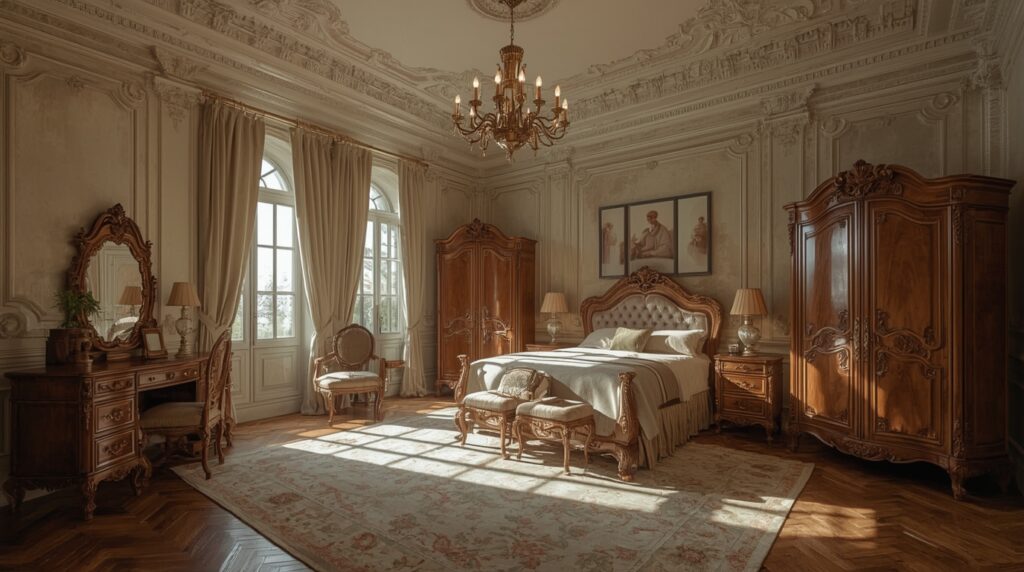
These institutions including The Metropolitan Museum of Art (New York), the Victoria and Albert Museum (London), the Louvre Museum (Paris) and the Smithsonian Institution (Washington, D. C.) keep domestic objects on hand exactly for the reason that they show social history: how homes operated, how goods passed through empires and how style concepts diffused. Exploring museum holdings sharpens one‘s ability to distinguish original details in a commodity context.
Historical Periods That Shaped Antique Bedroom Furniture Sets
Several major historical periods strongly influence what you’ll see in antique bedroom suites today. In Europe, the 17th–18th centuries (Baroque and Rococo) produced lavish carving and gilt surfaces, while the late 18th century Neoclassical movement (including Louis XVI in France) favored symmetry, straight lines, and classical references. In Britain and its colonies, Georgian (1714–1830) and Regency (1811–1820) design brought refined proportions and high-quality mahogany; in the United States, the Federal period (c. 1780–1830) often shows delicate inlay and lighter, classical ornament.
Can You Guess the Artist?
Three clues. One artist. How quickly can you identify the painter?
The 19th century broadened access to furniture while intensifying style variety. Victorian-era sets (especially after the 1840s) commonly feature dark woods, bold carving, and large case pieces reflecting changing storage needs. Many bedrooms also included washstands and mirrored dressing tables—objects tied to hygiene practices before modern plumbing became widespread. If your set includes a marble-topped washstand or a pitcher-and-bowl shelf, it can be a telling clue to mid-19th-century domestic routines.
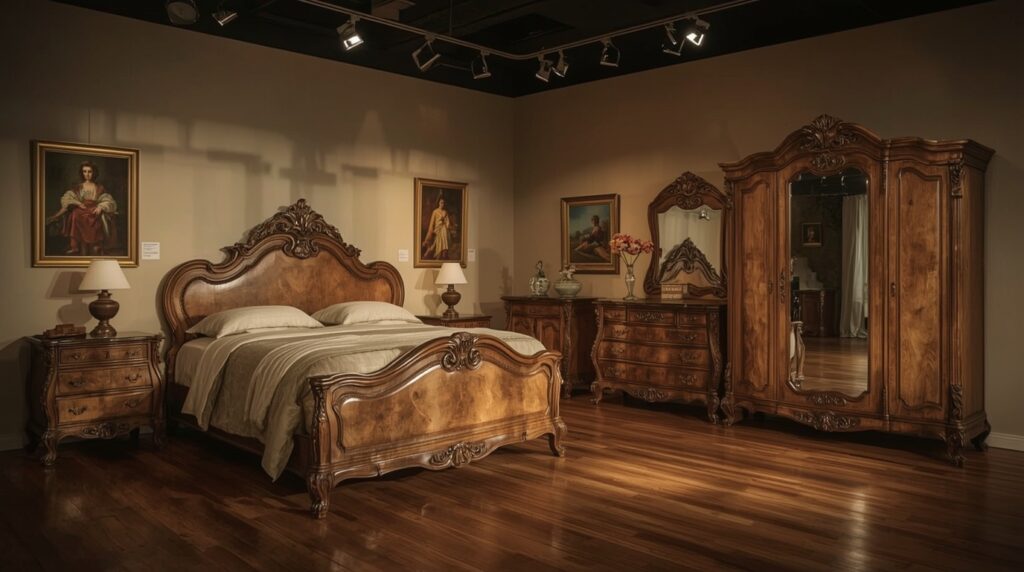
By the early 20th century, Art Nouveau (c. 1890–1910) and Art Deco (c. 1920s–1930s) translated modernity into furniture: flowing lines in the former, geometry and exotic veneers in the latter. Paris, London, Vienna, and major American cities became hubs for these trends. Studying period examples in museum collections helps establish what is “of the era” versus later revival—an important distinction when values differ dramatically.
Materials, Construction, and Authenticity: How Experts Evaluate a Set
Age is not validated with a single characteristic, but a collection of clues. Early wood construction, hand-cut dovetails that are sometimes uneven, early screw forms, oxidation on non-visible areas, and tool marks will all bolster a claim of age. Veneering itself isn‘t necessarily a red flag the best pieces of antiques often employed veneer in decorative ways but the veneer should also fit the era in question (thick veneer, the substrate, and wear). Also, a patina that looks too uniform might be a result of harsh refinishing.
Condition and authenticity and in those terms, both contribute to value and condition. Bedroom sets frequently have been put together over the years. Pieces match in appearance but were not originally designed to go together. This doesn‘t mean a set isn‘t valuable, but it should be disclosed, and the price should reflect it. Original hardware (escutcheons, handles, casters), locks, and mirror plates can provide important clues, and later replacements or additions should be noted. A bed‘s frame may have been reworked to accept a contemporary mattress. Some adjustment is fine; drastic modification dilutes the historical narrative.
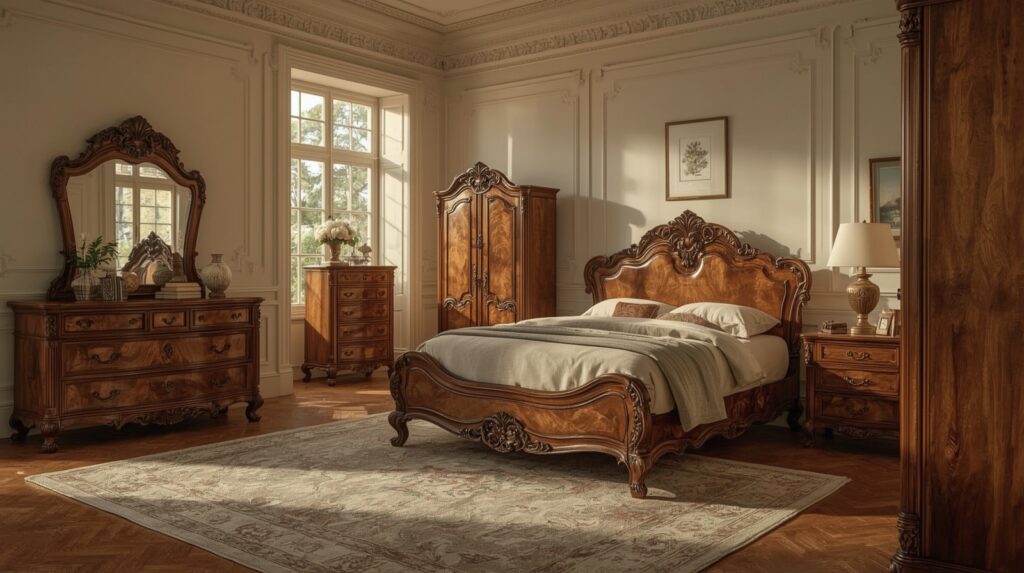
And this is why the museum point of view is so important. The Victoria and Albert Museum reports that “furniture can tell us about the society that produced it about taste, technology and trade.” (V&A collections and research writings on furniture history). This professional attitude means provenance, construction, and materials all leave traces and evidence you should demand (in the form of condition reports and close-up shots of joins, backs, and any history of repair) when buying.
Buying Antique Bedroom Furniture Sets: Provenance, Ethics, and Practical Fit
Start with your goal: historical integrity, daily use, investment, or a blend. If you want a set that functions in a contemporary bedroom, measure doorways, stair turns, and ceiling height before you fall in love with a tall armoire or tester bed. Antique case pieces were sometimes built for larger rooms and different storage habits; a monumental Victorian dresser can overwhelm a modern space, while a refined Federal chest may feel perfectly scaled.
Provenance and ethical trade are increasingly important. Ask sellers where the pieces came from, whether any elements are later additions, and whether the wood species raises regulatory concerns (for example, certain rosewoods are restricted under CITES in many jurisdictions). Reputable dealers and auction houses typically provide condition notes and will answer material questions. If the set claims an association with a known maker or a specific house, ask for documentary support—not just a story.
It also helps to calibrate your expectations using authoritative public collections. The Metropolitan Museum of Art and the Smithsonian Institution publish object entries that describe materials, joinery, and stylistic context; these can be used as comparison points when you’re evaluating similar forms on the market. As the Smithsonian often emphasizes in its interpretive approach, everyday objects—beds, chests, dressing tables—are primary sources for understanding lived experience, not merely decoration.
Key Characteristics by Period (Quick Reference)
| Period / Movement | Approx. Dates | Common Woods & Materials | Typical Bedroom Pieces | Visual Signatures | Practical Notes |
|---|---|---|---|---|---|
| Georgian / Regency (UK) | 1714–1830 | Mahogany, walnut, satinwood veneer | Four-poster beds, chests, night tables | Balanced proportions, restrained carving, brass hardware | Often adaptable to modern bedding with minimal change |
| Federal (US) | c. 1780–1830 | Mahogany, cherry, inlay | Bedsteads, chests, dressing tables | Delicate inlay, classical motifs | Look for fine joinery; many regional variations (Boston, Philadelphia) |
| Victorian (UK/US) | 1837–1901 | Walnut, mahogany, oak; marble tops | Large dressers, washstands, wardrobes | Heavy carving, dark finishes, ornate details | Verify structural soundness; drawers may need conservation |
| Art Nouveau / Art Deco (Europe/US) | 1890–1940 | Exotic veneers, lacquer, metal accents | Vanities, wardrobes, platform beds | Curvilinear (Nouveau) or geometric (Deco) forms | Veneer condition is crucial; restoration should be expert-level |
Frequently Asked Questions
Are antique bedroom furniture sets safe to use daily?
Often yes, if structurally sound. Beds may need updated rails or discreet reinforcement, and drawers may require tuning. Have a conservator or experienced restorer assess joints, wood movement, and previous repairs—especially for large wardrobes and beds that bear weight.
How can I tell if a “set” is original or assembled later?
Look for consistent materials, matching hardware styles, and similar wear patterns. Differences in wood tone inside drawers, mismatched dovetail styles, or slightly different moldings can indicate a married set. Ask for documentation and inspect the backs and undersides where evidence is clearest.
Does refinishing ruin value?
It can. Heavy sanding removes tool marks and patina that signal age. Many collectors prefer gentle cleaning and conservation over full refinishing. When in doubt, choose reversible, minimal interventions and keep records of any work done.
What periods are most collectible?
Collectibility varies with taste and rarity, but high-quality Georgian/Regency, Federal, and well-documented French styles (Louis XV/Louis XVI) remain consistently sought after. Art Deco suites also have strong demand. Condition, provenance, and design quality often matter more than the label.
Where can I study authentic examples?
Start with online collections from The Metropolitan Museum of Art, the Victoria and Albert Museum, the Louvre Museum, and the Smithsonian Institution. Their catalog entries often include dates, materials, and curatorial notes that help you recognize period-appropriate construction and ornament.
Bedroom furniture suites from another era are a blend of artistry, history and practicality not equaled by many other objects in your home. Search your chosen genuine era(s) Georgian, Federal, Victorian or Art Deco check the materials and construction and you can purchase with confidence. Check the museums: Met, V&A, Louvre, Smithsonian, as many bedroom furniture suites can be seen at these world-class institutions. After all, matching pieces of furniture aren‘t just visually appealing; they are part of your home‘s story connecting it to a past craftsmanship, society and way of living.
AI Notice: Some visual content in this article may have been created or enhanced using artificial intelligence (AI) for artistic, editorial or illustrative purposes. Learn more about our approach in our AI & Editorial Principles.