

Why Everyone’s Hunting This Vintage Rattan Coffee Table With Glass Top
A vintage rattan coffee table with a glass top is one of those rare objects that instantly changes the temperature of a room: it feels lighter, brighter, and somehow more relaxed—without looking careless. The appeal isn’t just “boho” nostalgia. It’s a piece rooted in the intertwined histories of modern design, global craft traditions, and the mid‑century appetite for indoor‑outdoor living. When you bring one into your home, you’re not only choosing a functional surface; you’re choosing a material story shaped by colonial trade routes, postwar design optimism, and the enduring intelligence of woven structure.
Why Rattan Became a Design Classic (and Why Glass Completes It)
Rattan is a climbing palm native to tropical regions of Southeast Asia—particularly Indonesia, Malaysia, and the Philippines—and it has been used for centuries in furniture and basketry. Its strength-to-weight ratio, flexibility when steamed, and renewable growth made it a practical material long before it became a fashionable one. European demand for cane and rattan increased alongside global trade in the 18th and 19th centuries, and by the early 20th century rattan was moving from verandas into mainstream interiors.
Can You Name the Masterpiece?
Ten masterpieces. Ten questions. How well do you know the history of art?
In the 20th century, rattan and cane were embraced for their modern silhouette and casual elegance. Museums and major collections treat wicker and rattan as serious design artifacts rather than mere resort décor. The Victoria and Albert Museum (V&A), for example, documents furniture and material culture that traces how craft techniques moved between regions and social classes—an essential context for understanding why woven furniture became so widely adopted in Western interiors.

The glass top is more than a practical add-on: it reframes rattan as architecture. Glass provides a stable, easy-to-clean surface while showcasing the weave below—turning structure into ornament. This pairing also reflects broader 20th‑century design preferences for transparency and lightness, aligned with modernism’s focus on space, air, and functional clarity.
“The history of design is inseparable from the history of materials and making.” — Victoria and Albert Museum (V&A), collections and research framing on design history
Source: Victoria and Albert Museum (V&A), Collections & Research (institutional materials)
Identifying a True Vintage Rattan Coffee Table with Glass Top
“Vintage” typically signals a piece that is several decades old—often mid‑20th century (roughly 1940s–1970s) for rattan tables commonly found today. Authentic vintage examples often show hand-wrapped joints, subtle variation in reed thickness, and an overall irregularity that differs from perfectly uniform mass production. Look underneath: older pieces frequently have pegged or wrapped connections and visible craftsmanship where uprights meet stretchers.
Can You Guess the Artist?
Three clues. One artist. How quickly can you identify the painter?
A key clue is the patina. Natural rattan darkens with age, light exposure, and handling; it develops a honeyed tone that is difficult to fake convincingly. Check high-touch areas such as the rim, corners, and lower stretchers. Honest wear—small scuffs, smoothness where hands often rested—can indicate age, while uniform “distressing” can suggest recent manufacture.
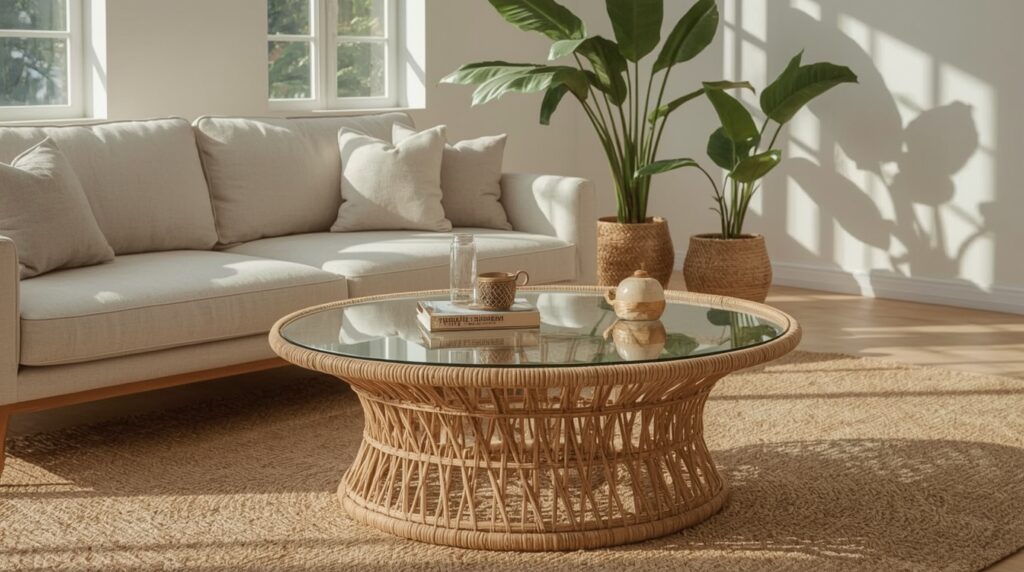
Glass matters too. Many vintage tables were designed for a removable glass insert or rested a cut pane on a woven rim. Ideally, the glass should be tempered (especially for everyday use), with edges finished safely. If the glass is original, it may show slight waviness or edge wear consistent with age. If replaced, that’s not necessarily negative—upgrading to safe, properly cut glass can preserve the table for long-term use.
Key Characteristics at a Glance
The following table summarizes what buyers, collectors, and decorators typically evaluate when choosing a vintage rattan coffee table with glass top.
| Characteristic | What to Look For | Why It Matters |
|---|---|---|
| Material (frame) | Rattan poles, cane, reed wrapping at joints | Indicates authentic woven construction and durability |
| Weave quality | Tight, even tension; minimal gaps; secure ends | Predicts longevity and resistance to loosening |
| Joinery | Hand-wrapped binding; stable intersections | High-quality joinery prevents wobble over time |
| Patina | Warm tone; natural variation; localized wear | Signals age and authenticity |
| Glass fit | Proper size; stable seating; ideally tempered | Prevents rattling, chips, and safety hazards |
| Structure | No major cracking; minimal soft spots | Structural health is more important than cosmetic flaws |
| Provenance (if available) | Maker marks, receipts, regional attribution | Adds confidence and potential collectible value |
Museums such as the Smithsonian Institution emphasize the importance of material knowledge and construction details in understanding decorative arts and design objects. That same attention to how something is made is what separates a merely “cute” piece from a lasting, investment-worthy one.
Source: Smithsonian Institution, decorative arts and design education resources (institutional materials)
Styling and Placement: Making Vintage Rattan Look Intentional (Not Themed)
A vintage rattan coffee table with glass top thrives when you let it do what it does best: lighten visual weight. In a living room with heavy upholstery or dark wood casegoods, rattan acts like a “breathing space.” The glass top enhances that effect, keeping sightlines open and reflecting ambient light—useful in smaller apartments and low‑light rooms.
To avoid a themed “tiki room” look, balance textures and eras. Pair rattan with one strong counterpoint: a wool rug, a linen sofa, or a lacquered side table. The mix of natural fiber and crisp finishes feels modern rather than costume-like. This approach mirrors how design history is often presented in institutions like The Metropolitan Museum of Art, where objects are contextualized among materials and styles to show dialogue across time rather than a single-note aesthetic.
Source: The Metropolitan Museum of Art (The Met), collection presentations and interpretive materials
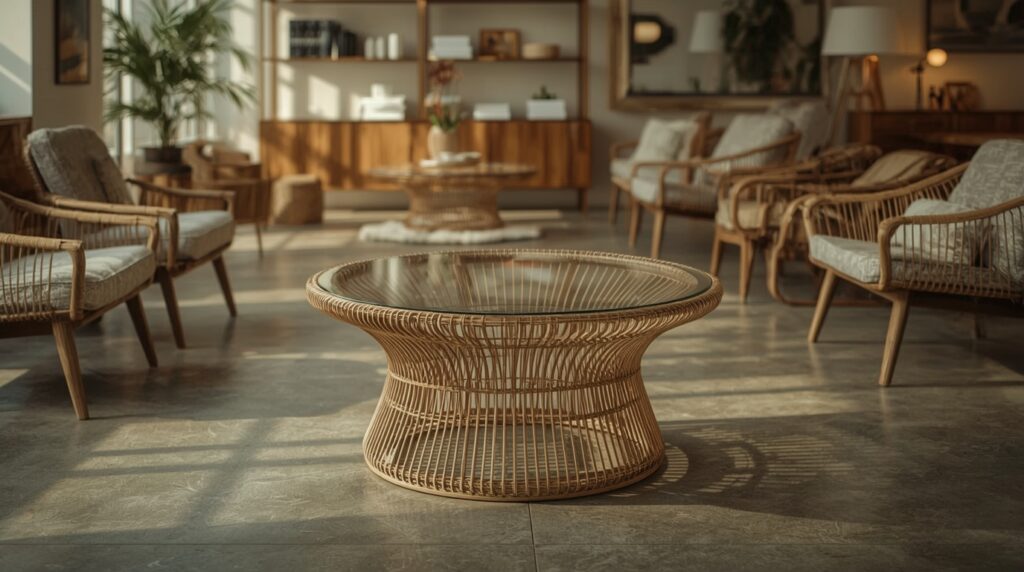
Practical placement matters. Because rattan is lightweight, it can shift on slick floors; a rug anchor helps. Keep it away from constant moisture or HVAC blasts that can dry fibers. If you use it daily, consider felt pads under the legs and ensure the glass sits securely—small clear bumpers can prevent sliding and reduce vibration.
Care, Conservation, and What Restorers Actually Recommend
Rattan is resilient but not indestructible. The biggest enemies are prolonged humidity swings, direct sun, and rough handling that stresses the fibers. For regular care, dust with a soft brush and vacuum gently with a brush attachment. For deeper cleaning, use a barely damp cloth and dry immediately; avoid soaking. If you see mildew, address it promptly with careful ventilation and conservative cleaning rather than saturating the piece.
If strands lift or bindings loosen, repair is usually possible. A skilled conservator or caning/wicker specialist can rewrap joints, replace reed binding, or stabilize splits. The goal is not to make the table look “brand new,” but to preserve integrity. Major museums treat conservation as an ethical practice focused on longevity and minimal intervention—a philosophy widely reflected in conservation departments at institutions such as the Louvre, where preserving original material is central to stewardship.
Source: The Louvre Museum, conservation and collections care (institutional materials)
Finally, consider the glass as part of preservation. Tempered glass reduces risk, and a properly fitted top prevents point pressure on the rattan rim. If the table has an inset ledge, measure precisely. If it’s a flat-on-top design, ensure the rim is even and stable before placing weight on it.
“Conservation is about understanding materials and stabilizing them for the future.” — Conservation framing commonly articulated by major museum conservation departments
Sources: Institutional conservation overviews from The Louvre Museum, The Met, and the Smithsonian (collections care and conservation pages)
Frequently Asked Questions
1) How can I tell if my rattan coffee table is truly vintage?
Look for hand-wrapped joints, natural patina, minor asymmetries in weave, and signs of age where the table is handled most. If possible, ask for provenance (purchase records, maker attribution) or compare construction details with documented mid‑century examples.
2) Is a glass top safe on rattan?
Yes—if it’s properly fitted and ideally tempered. Add clear bumpers to prevent sliding and avoid placing heavy point loads (like standing on it or dropping weight onto one corner).
3) What’s the difference between rattan, wicker, and cane?
Rattan is a material (the vine/palm). Wicker is a weaving method (it can use rattan, reed, or other fibers). Cane often refers to the thin outer skin of rattan used in weaving—commonly seen in chair seats and panels.
4) Can I refinish or paint a vintage rattan table?
You can, but it may reduce collector value. If you do, choose breathable finishes and avoid clogging the weave with heavy paint. Many restorers prefer gentle cleaning and targeted repairs over complete refinishing.
5) What interior styles work best with a vintage rattan coffee table with glass top?
It fits coastal and bohemian spaces, but also works in mid‑century modern, contemporary minimal, and eclectic interiors—especially when balanced with structured textiles and a few contrasting materials (metal, wool, or lacquer).
A vintage rattan coffee table with a glass top endures because it solves multiple design problems at once: it’s light, functional, historically grounded, and visually sophisticated. Treated with basic care and paired thoughtfully, it offers something rare—genuine material character, shaped by real craft traditions and 20th‑century design history, that still feels perfectly at home in today’s living spaces.
Authoritative sources referenced: The Metropolitan Museum of Art (The Met); Victoria and Albert Museum (V&A); The Louvre Museum; Smithsonian Institution (institutional collections, conservation, and interpretive materials).
AI Notice: Some visual content in this article may have been created or enhanced using artificial intelligence (AI) for artistic, editorial or illustrative purposes. Learn more about our approach in our AI & Editorial Principles.


