Mozart’s The Magic Flute: The Hidden Story Behind Its Most Haunting Moments
Wolfgang Amadeus Mozart’s The Magic Flute (Die Zauberflöte) is one of the rare works that can feel instantly enchanting and intellectually demanding at the same time: a fairy-tale opera that also serves as a moral drama, a musical manifesto of the late Enlightenment, and a showcase of Mozart’s theatrical genius at the end of his life. Premiered in Vienna in 1791—just weeks before Mozart’s death—it has never left the world’s stages, because it speaks to audiences on multiple levels at once: as spectacle, as comedy, as philosophical allegory, and as some of the most memorable music ever written for the theatre.
Origins and Historical Context (Vienna, 1791)
The Magic Flute was composed at the end of a period of late-Enlightenment culture in the capital of the Habsburg Empire, influenced by the reforms of Joseph II and an increase in public demand for German opera. In contrast with the Italian court opera of the day, it‘s a Singspiel a German theatrical form incorporating sung arias and choruses with spoken dialogue that was intended to appeal to a wider public. The opera premiered on September 30, 1791 at the Theater auf der Wieden in Vienna. That venue wasn‘t a formal court opera house, but rather, a theater aimed at mass entertainment, and the resulting hybrid of moral fantasy and slapstick is a wonderful, one-of-a-kind mix.
Can You Name the Masterpiece?
Ten masterpieces. Ten questions. How well do you know the history of art?
Mozart wrote the music in tight cooperation with the theater director and librettist Emanuel Schikaneder. He himself sang the role of Papageno. In addition to a deep foundation in the Viennese popular stage tradition, their collaboration also mirrors the Age of Enlightenment. Reason, ethical development and human dignity are inherent in the trials the protagonists endure. While on the face of it a straightforward story of princes, queens and magic instruments, the opera‘s structure is in fact the rigorous examination of moral questions.
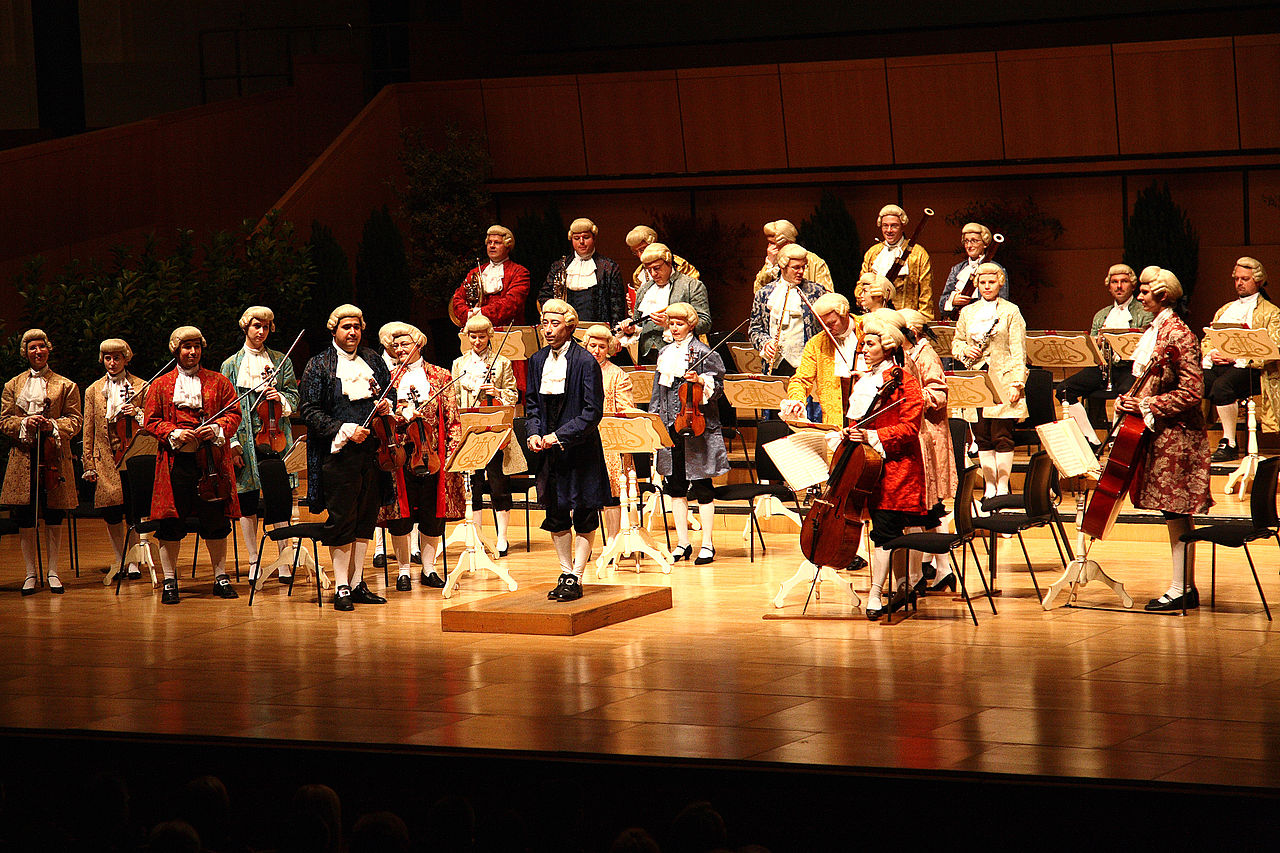
There is no separating the opera‘s longevity from its opening night success. By weeks after it first opened, it was already in repertory, and Mozart himself was known to attend shows, noting with pride the audience‘s reaction. Contemporary research and curatorial work has made us more aware of how the operatic life of Vienna influenced the opera‘s production and how it was received. The V&A‘s vast holdings of European stage and performance culture provide a powerful glimpse into how operas like these were put into physical form in terms of costumes, scenographic treatments the physical context for The Magic Flute‘s initial (and continued) success in 1791.
Story, Symbols, and Enlightenment Themes
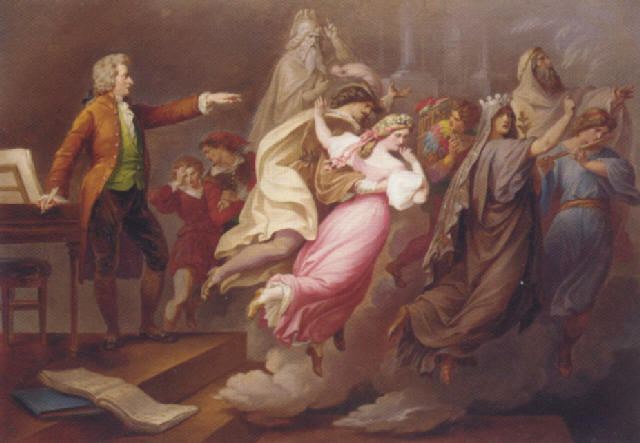
This whole moral universe of the opera exists at the narrative level, as Prince Tamino and bird-catcher Papageno face deception, danger and initiation. Tamino sets out to rescue the Queen of the Night‘s daughter Pamina, only to find the Queen has lied to him and Sarastro‘s kingdom stands for another ethical truth. None of the opera‘s famous twists and turns are so much narrative gadgets as they are the operative motor for its ethical agenda, and they demand that characters and audiences hold their initial feelings to the test.
Can You Guess the Artist?
Three clues. One artist. How quickly can you identify the painter?
The symbols give the work a striking coherence. The magic flute is not just a prop; it‘s a symbol of harmony music to tame savagery, impose order on disorder. Papageno‘s bells represent comic joy and the simple pleasures that stand in contrast to the trials faced by Tamino and Pamina. The opera repeatedly charts a journey from darkness to light, reflecting the Enlightenment‘s faith in education and the Enlightenment‘s faith in reason and humanity‘s fallibility.
That‘s why these themes are common in any serious encyclopedic reference for the opera, and why The Magic Flute has become universally recognized as an opera with comedy, and philosophy, woven together. Britannica calls it, “one of the most popular works in the operatic repertory,” loved for its music and its entertainment value. And that‘s not by chance; the opera is layered so that different audiences can get to the core through varying pathways: Kids, through fantasy; theatergoers, through the humor; and armchair philosophers, through its symbolic and moral blueprint.
The Music: Innovation, Character, and Vocal Fireworks
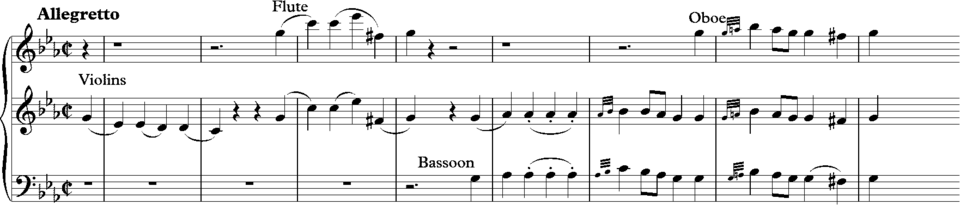
Mozart’s score is a masterclass in characterization through musical style. The Queen of the Night’s arias—especially “Der Hölle Rache”—use extreme coloratura and high tessitura to project brilliance and fury, while Sarastro’s music sits in a resonant low register that signals authority, stability, and gravity. These musical decisions are not decorative; they are dramaturgy. Mozart tells you who a character is—what they represent—before the libretto fully explains it.
The opera also demonstrates Mozart’s gift for integrating popular idioms with sophisticated composition. Papageno’s music often feels folk-like and direct, inviting empathy through simplicity. By contrast, the ceremonial scenes associated with Sarastro’s community employ choruses and stately textures that suggest institutional order. The resulting stylistic range is immense, yet unified by Mozart’s sense of proportion and his instinct for melody. The Metropolitan Museum of Art has observed—speaking broadly about Mozart’s operatic achievement—that he had an extraordinary ability to fuse drama and music; it is precisely this fusion that makes The Magic Flute feel theatrically inevitable.
Finally, Mozart’s ensemble writing deserves special emphasis. Duets and finales create moral and emotional community onstage—characters hear each other, reconcile, and change. Pamina’s music, in particular, balances lyric vulnerability with inner strength, and her trajectory is central: she is not merely “rescued,” but tested and transformed. This is one reason the opera continues to speak to modern productions that aim to foreground agency and ethical growth rather than fairy-tale passivity.
Performance, Design, and the Opera as a Visual Spectacle
From its first performances, The Magic Flute was conceived as a spectacular stage event. Scene changes, magical effects, processions, and emblematic imagery are written into the work’s DNA. Understanding the opera means thinking beyond the score: it belongs to the world of late 18th-century theatrical craft, where painted backdrops, machinery, and costume iconography communicated meaning quickly to large audiences. This is one reason museum collections matter for opera history: they preserve the material evidence of how performance looked and felt.
Institutions such as the Victoria and Albert Museum and the Louvre Museum hold major collections of decorative arts, prints, drawings, and performance-related objects that provide context for the opera’s visual language—classical symbolism, ceremonial costume, and the Enlightenment-era taste for allegory. While not all objects are directly tied to The Magic Flute, these collections help scholars and designers reconstruct the aesthetic environment that shaped how audiences recognized temples, night skies, exoticized “Turkish” elements, and ritual imagery on stage.
The opera’s continued vitality is also linked to its adaptability. Directors can stage it as children’s fantasy, as political allegory, or as a critique of power—without breaking the piece. The Smithsonian Institution, in its broader educational mission, emphasizes how performing arts intersect with social history and material culture; The Magic Flute is a textbook case of that intersection, because every new production reveals as much about the present (values, anxieties, visual codes) as it does about 1791 Vienna.
Key Characteristics at a Glance
| Aspect | Key characteristics |
|---|---|
| Genre | German Singspiel (spoken dialogue + musical numbers) |
| Premiere | 30 Sept 1791, Theater auf der Wieden, Vienna |
| Composer | Wolfgang Amadeus Mozart (1756–1791) |
| Librettist | Emanuel Schikaneder |
| Musical highlights | Queen of the Night coloratura arias; Sarastro bass arias; rich ensembles and choruses |
| Core themes | Enlightenment ideals, moral initiation, truth vs deception, harmony through music |
| Iconic objects | Magic flute; Papageno’s bells |
| Enduring appeal | Works as fairy tale, comedy, and philosophical drama simultaneously |
Frequently Asked Questions
1) Is The Magic Flute a children’s opera or a serious philosophical work?
It is both. The fairy-tale surface and comic scenes make it accessible, while the initiation structure and ethical testing align it with Enlightenment-era moral drama. This dual design is part of its longevity.
2) Why is the Queen of the Night’s music so difficult?
Mozart uses extreme high notes and rapid coloratura to express volatility, brilliance, and menace. The virtuosity is not just vocal display; it is characterization by musical means.
3) Was The Magic Flute written for the aristocracy?
Not primarily. It premiered at a public theatre in Vienna and uses the Singspiel format, which appealed to broader audiences than court opera. Its popularity was immediate and sustained.
4) What do the magic flute and bells represent?
They dramatize music’s power: the flute suggests harmony, order, and reconciliation, while the bells express pleasure and comic enchantment. Both are theatrical devices with symbolic weight.
5) Where can I learn more from credible institutions?
Start with major reference essays and collection materials from institutions such as The Metropolitan Museum of Art, the Victoria and Albert Museum, the Louvre Museum, and the Smithsonian Institution, alongside scholarly reference works like Encyclopaedia Britannica and academic opera histories.
Conclusion
The enduring power of The Magic Flute lies in its remarkable fullness of form. It is a crowd-pleasing entertainment that carries a moral case within its music. It is a dazzling theatrical production built on exacting musical narrative. And it is a piece drawn from a unique moment the Enlightenment of Vienna yet inexhaustible in performance. Mozart and Schikaneder fashioned an opera in which one can take delight and in which one is compelled to search for meaning: that is the wellspring of this great opera.
AI Notice: Some visual content in this article may have been created or enhanced using artificial intelligence (AI) for artistic, editorial or illustrative purposes. Learn more about our approach in our AI & Editorial Principles.