Death of Marat by Jacques Louis David: How One Painting Invented Political Martyrdom
The death of marat by jacques louis david is not just a picture of a murdered man. It is a lesson in how to persuade visually. It is the point where art stopped merely documenting an event and started manufacturing political sainthood.
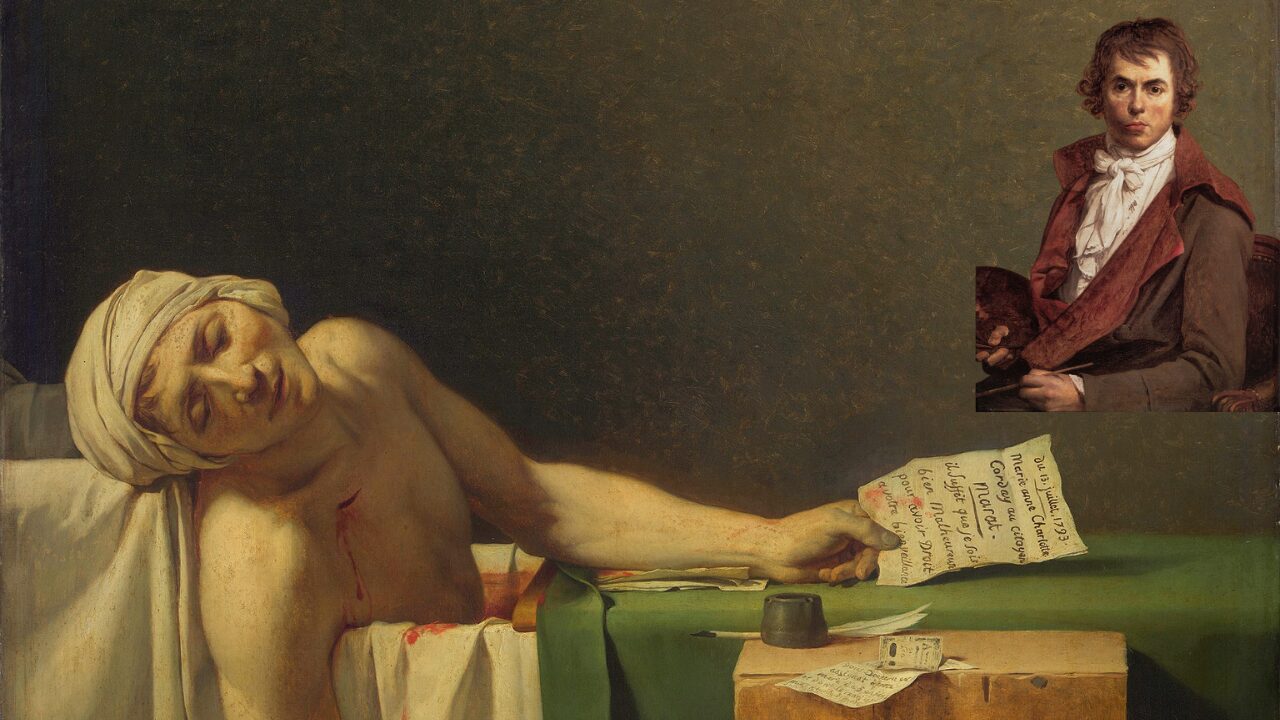
Painted in 1793 at the climax of the French Revolution, the picture shows a barely alive Marat, lying back in his bathtub, lead still in hand and note laid on a primitive wooden box. No screams. No blood. No gore. Just peace.
Can You Name the Masterpiece?
Ten masterpieces. Ten questions. How well do you know the history of art?
And that calm is the secret.
This article contends that the death of marat isn t a historical painting — It is a political tool. It is the beginning of modern control of Images, in which aesthetics are above the facts and martyrdom created through composition.
To beholding again what it was to understand this picture is to see how power recomposes memory.
Revolution, Radicalization, and Assassination
Can You Guess the Artist?
Three clues. One artist. How quickly can you identify the painter?
In 1793, France was breaking apart. The monarchy had been overthrown. King Louis XVI was dead. Radical Jacobins led the way. They were under the control of people like Maximilien Robespierre.
Jean-Paul Marat: as editor of L‘Ami du Peuple, he was one of the most venomous of all revolutionaries. He demanded executions. He called for the purification of the Republic. He was both feared and loved.
On July 13, 1793, Charlotte Corday is said to have gained admission to Marat‘s apartment by claiming to have information about enemies of the revolution. Marat, who was diseased in an eruption of the skin, was writing from his medical bath when Charlotte Corday drew a knife and thrust it in his chest.
A few hours later, Jacques Louis David was summoned. was Jacques Louis David — friend, political supporter, and fellow member of the Jacobin Club — was summoned.
Davids not a painter of body.
He has painted a martyr.
What were the Jacobins fighting for?
The Jacobin Club was the most powerful and extreme of all the political clubs of the French Revolution, responsible for directing the policy and ideology of the Revolution, and leading to the Reign of Terror.
Established as the Society of the Friends of the Constitution in 1789, the Club first consisted of Parisian deputies meeting at a dissolved Dominican (Jacobin) monastery. The meeting place, down a street called Jacobin, is where the club got its name. The Club‘s debates and discussions began with the aim of reform, but transformed into a strong, revolutionary body demanding republicanism, popular sovereignty, and the abolition of the monarchy.
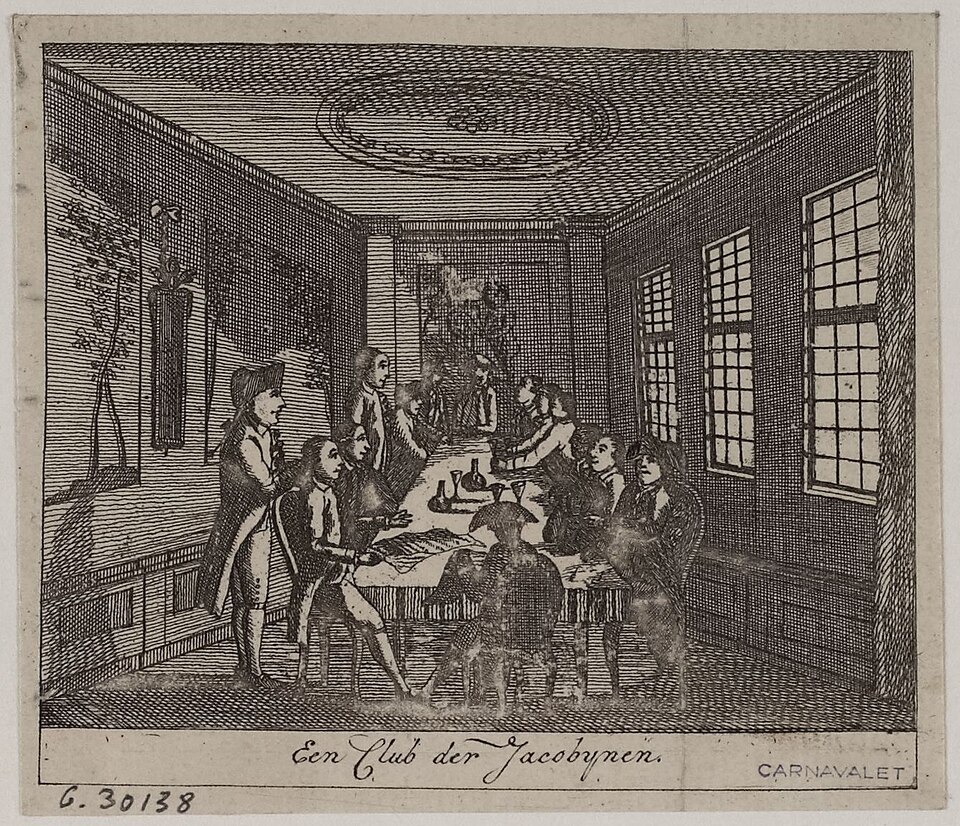
Under the leadership of Maximilien Robespierre, equality before the law, expanded male suffrage, and a strong center of power, built to safeguard the Revolution, became priorities. In 1793-94, between Robespierre‘s control of the dominant Jacobins in the Convention, all enemies of the Revolution were condemned to death by revolutionary tribunals and derived to the guillotine.
This network became an organization, employing a system of affiliated societies around the country. For all their importance, the Jacobins were soon disbanded after Robespierre‘s downfall (Thermidorian Reaction) in 1794, and their leaders imprisoned or executed. Today ‘Jacobin’ refers most often to extremism, centralization and rigid ideology.
How Simplicity Becomes Sacred?
The power of the death of marat is in what David excised.
There is barely any background, the upper half of the canvas spread out into a black abyss. The space becomes absent, a emptiness of immense proportions. Minimalist in its simplicity, this echoes the Neoclassical standard of restraint but also acts as a message of ideological clarity. The structure is reminiscent of Christian iconography, pieta compositions specifically, but there is an absence of a cross, a halo, of religious symbolism.
This is secular sainthood, turned on its head.
| Element | Visual Function | Political Effect |
|---|---|---|
| Dark background | Eliminates distraction | Focus on sanctified body |
| Horizontal body placement | Calm equilibrium | Martyrdom, not violence |
| Soft lighting | Caravaggio-inspired | Sacred realism |
| Letter in hand | Proof of duty | Moral righteousness |
| Wooden crate inscription | “À Marat, David” | Artist as witness |
The Body of Marat: Idealization and Erasure
Actually he had a horrible skin disease. It was inflamed and ulcerated. Old reports tell he looked too delicate.
Despite everything he is practically classical in the painting.
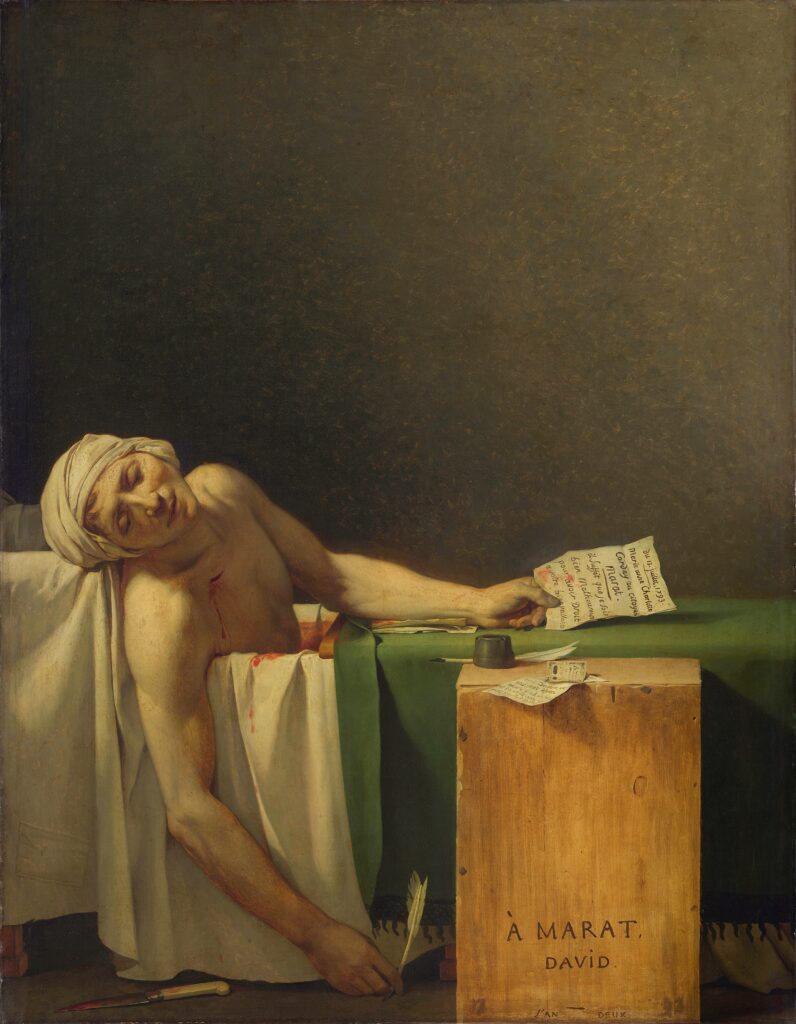
The torso could be taken directly from a piece of classical sculpture. The arm hangs loosely, its relaxation reminiscent of Michelangelo‘s Christ. The wound is almost elegant in its simplicity. It is barely glistening with blood.
This is the point at which the machinery of propaganda is set into motion.
David substituting the real Marat with an ideal body — not sick, notfracture, not controversy — but a pure body.
The death of marat, by jacques louis david, can see as his translation of political radicalism into moral sacrifice.
Caravaggio and Classical Borrowing
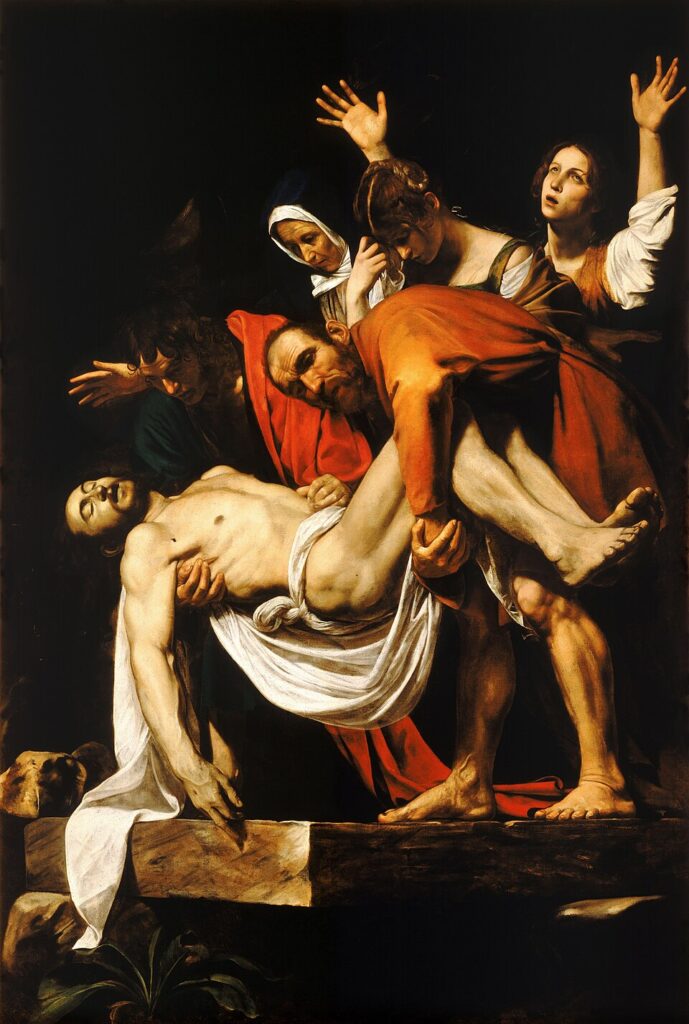
The death of Marat can be likened to Caravaggio‘s use of chiaroscuro, the violent but restrained illumination sculpts the back lit body with darkness.
Baroque intensity is filtered through the rigors of Neo-classic restraint by David.
Whereas Romanticism would later come to celebrate excess of emotion, David confines each and every contour.
The result is a hybrid:
Classical Restraint
Classical Restraint was proponents of the principle of free consideration of all evidence, whether proved or not, and the prior rule was that there should be a free suspension of judgment and attempt to reduce reasoning to certainty.
Baroque drama
Pro-revolution messages
This synthesis is making the painting timeless–and terrifyingly successful.
The Letter: The Script of Innocence
The most significant aspect leading to the death of Marat is the letter held in his hand. It reads as though Corday had called out for assistance.
This poem is inserted here by David consciously. Marat is now portrayed as kind and considerate even when unwell and not working– helping the people.
It is a narrative of the proof.
Without it, a vacant radical is introduced.
With that a betrayed humanitarian: orà
Image and text= reinforcement of ideology.
This sort of statement would later encapsulate state propaganda from Napoleon to the 20th century.
David and Revolutionary Power
Louis Jacques David was not a impartial viewer. He voted for the death of Louis XVI. He set up revolutionary festivals. He held political office.
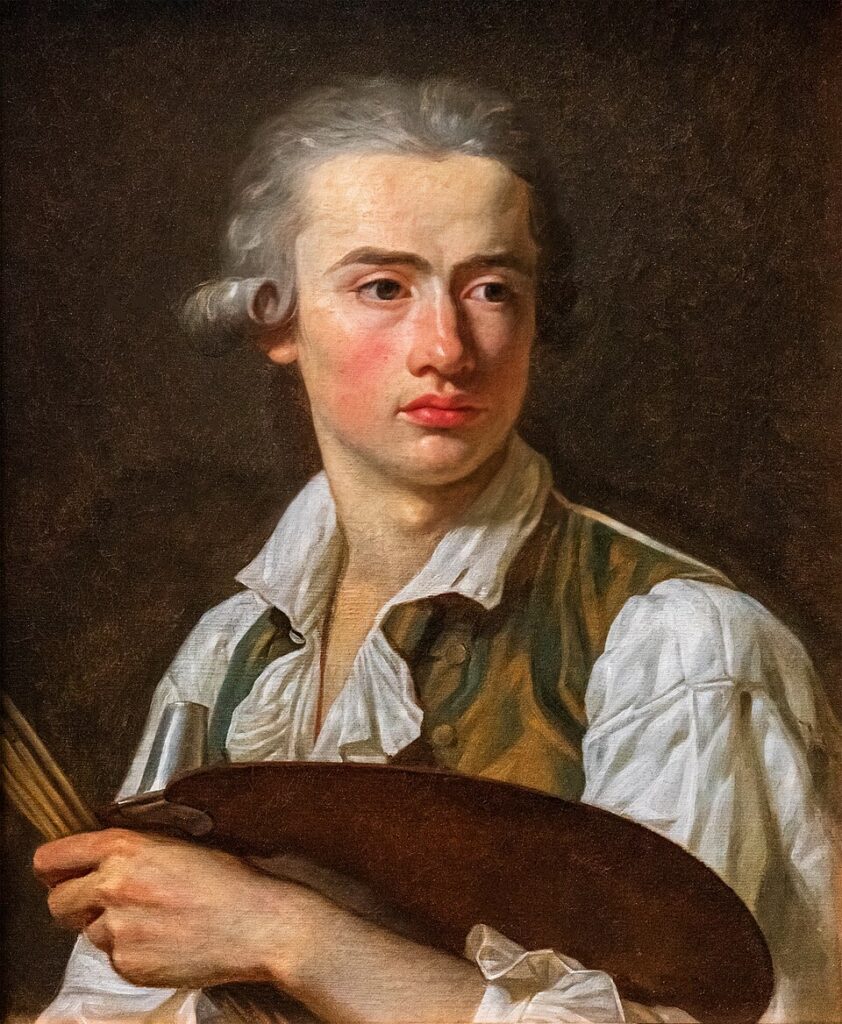
Painted quite quickly after the assassination, the death of marat was displayed publicly as a revolutionary relic.
Day II, The preservation of the Marat‘s bathtub (restored after the injuries).
David knew spectacle.
What was in the air was not art adorned onto politics, but, rather, art replacing religion as the architecture of belief.
Institutional Anchoring and Legacy
The death of marat is now at the Louvre Museum, under the country‘s patrimony.
Its influence is vast:
It has helped to shape modern attitudes.
It was affecting the art of political portraiture.
It became an example of a decision to use a controlled emotional narrative.
It has also been referenced in recent art and cinema and the political imagery.
It is still disturbing because it‘s not orderly.
It is peaceful.
And there‘s quiet martyrdom too.
All the original paintings by Jacques Louis David are very institutional.
The death of marat itself is not for sale and never will be.
However:
Preparaion studies are known from the 1980s none of which have exceeded the EUR1-3 million mark.
School of David works can command anywhere from EUR80,000 to EUR800,000 depending on quality and attribution.
Examples of academic 19th century copies: range from EUR 10,000 to EUR 150,000].
Liquidity tier:
Bond Goods Available Museum leveland above originals: Ordered and Locked (Most likely starting with “Glue… )
Significant drawing; ultra-blue-chip
School works: moderate cash and liquidity
Copies: market decroration
It is also essential for the collector to be able to differentiate the autograph work and the workshop production.
Authentication and Collector Caution
Common mistakes:
- Confusing neoclassical style with David authorship
- Ignoring provenance gaps during Revolutionary turmoil
- Overlooking pigment analysis
- Over-restoration masking original surface
The School of David produced numerous high-level pupils, including Ingres, complicating attribution.
Scientific analysis and archival documentation are essential.
Restoration Considerations
The restrained color palette makes varnish discoloration immediately visible.
Conservators must balance:
- Preserving original tonal contrast
- Avoiding overcleaning flesh tones
- Maintaining craquelure authenticity
Neoclassical surfaces demand subtle intervention.
Fast Recognition Checklist
To identify authentic compositional influence of the death of marat:
- Minimalist dark background
- Sculptural anatomy
- Controlled lighting
- Emotional restraint
- Political symbolism embedded in objects
- Absence of theatrical chaos
If drama is excessive, it is likely Romantic reinterpretation.
Why the Death of Marat Still Matters?
Marat by Jacques Louis David is where art turns into the state narrative. The death of marat
It proves:
Images outlast events.
Order persuades more than chaos.
Template of ‘revolutionary’ France to contemporary media culture.
Body.
A message.
The Power of a Polished look.
And history rewritten with paint.
The death of marat (1793), by Jacques Louis David is a Neoclassical painting depicting the murdered revolutionary journalist Jean-Paul Marat as he lays wounded by his assassin, Charlotte Corday.
Now in the Louvre Museum, this piece changed the political murder into a secular martyr image and was one of the most influential images of propaganda in western art.
AI Notice: Some visual content in this article may have been created or enhanced using artificial intelligence (AI) for artistic, editorial or illustrative purposes. Learn more about our approach in our AI & Editorial Principles.