
Relief followed the death of Louis XIV in 1715; France breathed again. Not collapse, but release. Architecture, once rigid under Versailles’ weight, began to shift. Its straight-lined gardens, symmetrical lies, and staged order had long served power’s image. Buildings spoke through layout – control first, living second. Spaces performed rather than sheltered.
Surfaces prioritized command over ease. Yet during Louis XV’s reign, a subtler shift took place. Rooms turned inward, trading grand displays for closeness. Quiet spaces grew more valued than showy ones.
Can You Name the Masterpiece?
Ten masterpieces. Ten questions. How well do you know the history of art?
A shift unfolded quietly within Louis XV interiors – no uprising declared, only a subtle reordering took place. Power stepped back from spectacle, exchanging grand displays for more intimate settings. The elite moved away from Versailles’ strict routines, settling into private mansions across Paris. Spaces adapted: smaller dimensions favored dialogue over display.
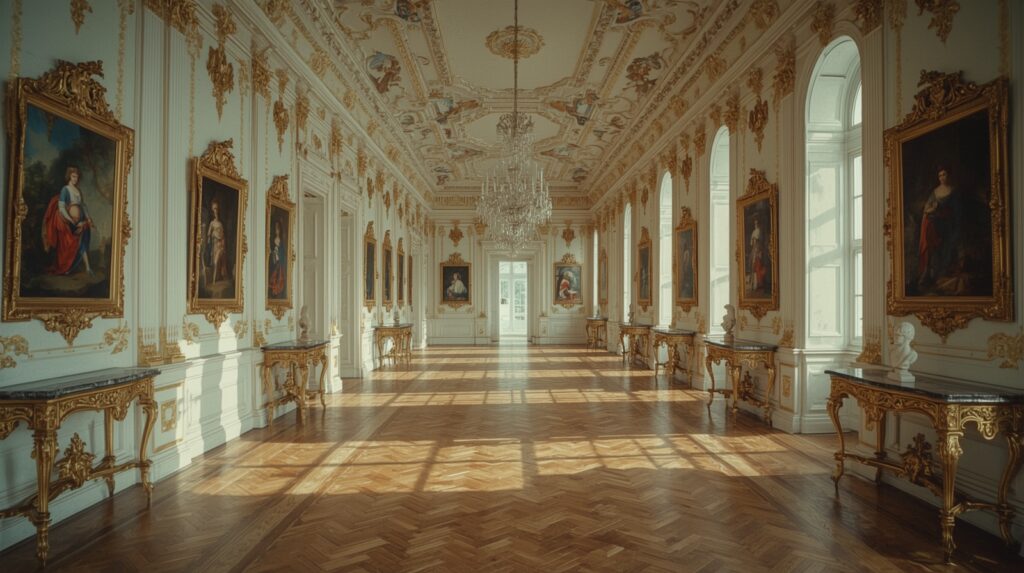
Decoration turned fluid, favoring gentle curves rather than imposing forms. Lighter tones appeared on walls and panels. Balance gave way to deliberate imbalance, embracing irregularity. Ease was no longer dismissed – it evolved into a quiet mark of taste.
Out of this change emerged something close to what people call Rococo today. Still, taste alone didn’t drive the rise of rococo interiors. Power dynamics played their part. With Louis XIV gone, Philippe d’Orléans led a nation less eager to impress through monumental architecture. Authority slipped away from grand palaces. Instead, smaller gatherings in private homes began setting cultural tones. Clever talk, shared ideas, and charm started carrying more weight than gilded walls.
Can You Guess the Artist?
Three clues. One artist. How quickly can you identify the painter?
Luxurious spaces shift toward intimacy under Louis XV. Connected rooms replace grand corridors, offering flow over formality. Wall surfaces favor painted woodwork rather than stone carving. Ornament moves freely across panels – seemingly unplanned but carefully arranged. Balance gives way to liveliness, though control still lingers beneath.
When Versailles Relaxed: The Hidden Politics Behind Louis XV Interior Design
Under Louis XIV, buildings became tools of power. At Versailles, control tightened through space. Courtiers resided within sight of the throne while design obeyed ritual order. Along central lines, ornament mirrored hierarchy. Gilding stretched across ceilings; halls unfolded without end – each detail echoing a ruler framed by divine right.
Long after he passed, power structures began shifting. From that point on, daily routines changed too. The seat of authority moved when Philippe d’Orléans took residence in Paris. Not just a change of address – this move reshaped how things worked. City living brought different ways of using space. Fewer marble halls now echoed with daily life.
Instead, homes of the wealthy took center stage – conversation flourished behind closed doors on quiet streets. Where once grandeur ruled, ideas found room to grow. Gatherings shifted from spectacle to substance, shaped by quieter ambitions.
Out of nowhere, conversation began shaping society in new ways during the opening decades of the 1700s. Led not by men but by figures like Madame de Lambert – and later her successor, Pompadour – these gatherings turned private homes into hubs of thoughtful talk. Because ideas needed space, buildings started changing too.
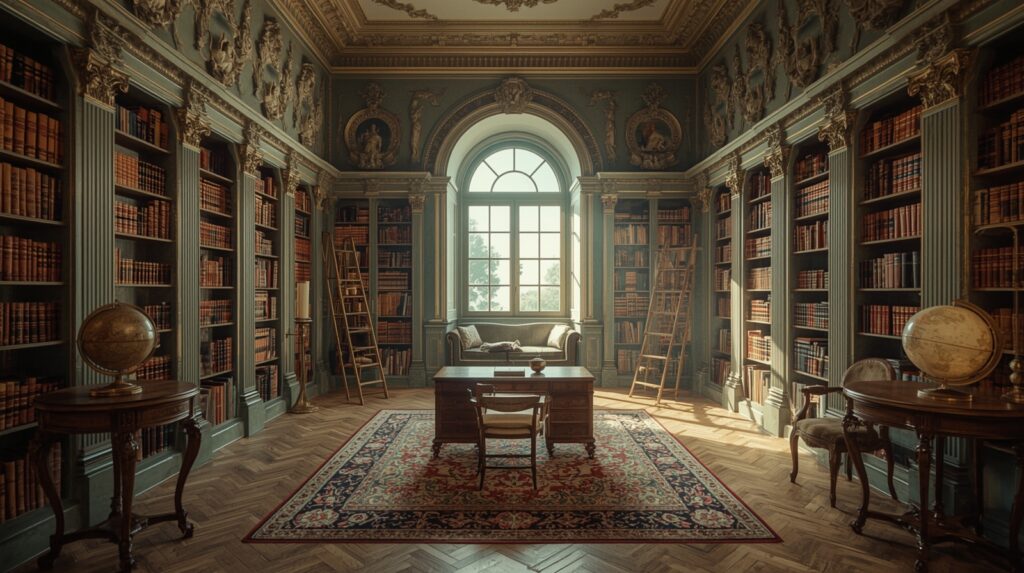
Framed by carved wood, walls began to shift, their flowing outlines softening sharp edges. Lower ceilings replaced the towering heights of earlier styles. Light now entered through larger windows, gently diffused by fabric instead of grand archways. Furniture grouped into intimate sets, moving away from rigid central alignments.
| Louis XIV Interior | Louis XV Interior |
|---|---|
| State ritual | Social exchange |
| Grand galleries | Intimate salons |
| Heavy marble | Painted wood |
| Symmetrical geometry | Asymmetrical ornament |
Change did not come just for show. Instead, much like Enlightenment ideals, it favored dialogue, logic, and personal engagement rather than grand displays. Take the Hôtel de Soubise in Paris – Germain Boffrand reshaped it to reflect such ideas.
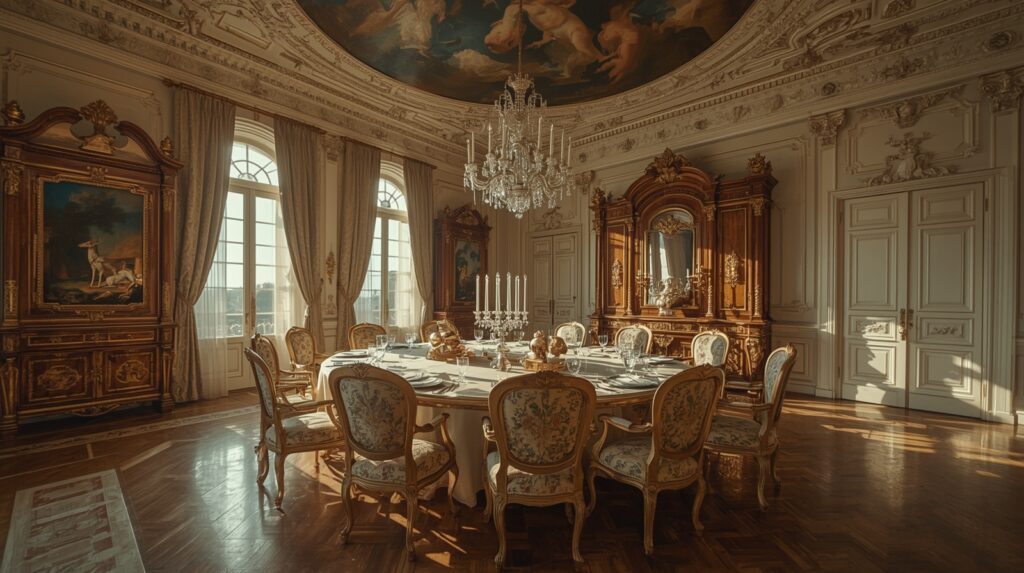
In the Salon de la Princesse, rigid geometry gives way to flowing wall panels, their shapes suggesting something grown, not built.
Subtle shifts in power showed up quietly, though they carried weight. Instead of commanding silence, buildings began inviting engagement. While kings still ruled, their imagery lost its edge. Under Louis XV, rooms reflected a gentler form of control. Choice of materials set this era apart from what came before. Wood paneling took center stage, finished in gentle creams, light blues, or softened greens instead of heavy stone or dark marble. Though gilding still appeared, it traced curves lightly, guiding the eye without dominating the finish.
Delicate shells, leaves, and curving patterns emerged through stucco decoration. Light spread further in small spaces, thanks to strategically placed mirrors. With silk on the walls and stitched fabrics draped throughout, sound lost its sharpness – talks naturally lasted longer.
Floating forms in furniture echoed shifting lines of buildings. With cabriole legs, arched supports, yet softly padded seating came a new attention to how bodies rest. Craftsmen like Jean-François Oeben – then Jean-Henri Riesener – not only shaped wood but wove intricate marquetry, binding ornament tightly into structure through gilded bronze fittings. While design bent toward motion, detail stayed precise.
| Material | Political-cultural meaning |
|---|---|
| Painted boiserie | Visual lightness and accessibility |
| Gilded highlights | Controlled luxury |
| Silk upholstery | Sensory refinement |
| Mirrors | Spatial expansion without monumentality |
The cumulative effect was coherence. Walls, furniture, and decorative objects formed an orchestrated environment where no single element dominated.
How Louis XV Interior Design Turned Power into Comfort
Starting with soft swirls echoing seashells, the rocaille design stood for nature’s unplanned flow. While Baroque favored rigid order to reflect power structures, Rococo leaned into uneven forms that found harmony in motion instead of restraint.
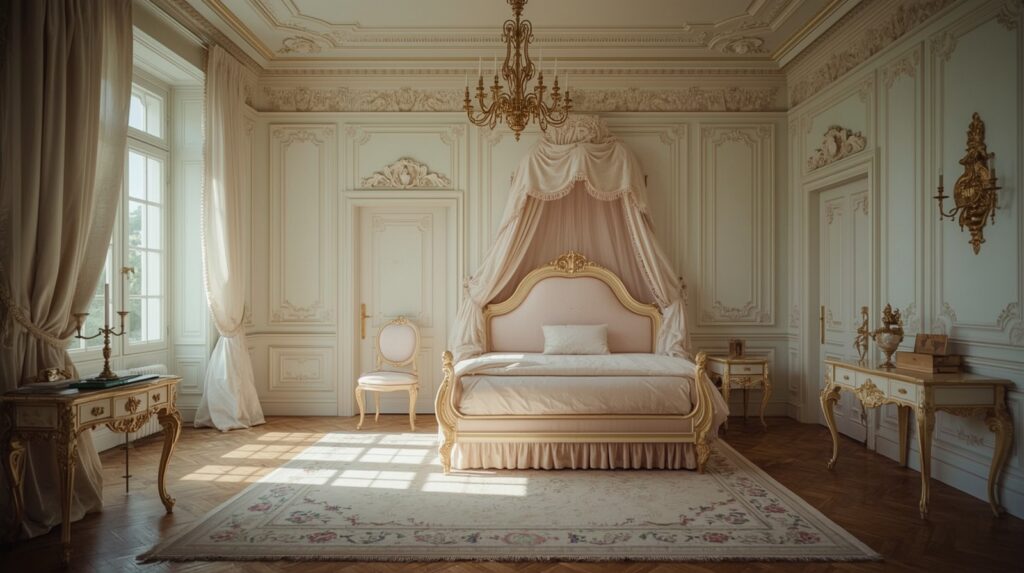
Curving leaf patterns ran along woodwork surfaces. Instead of exact copies of real plants, designs grew more imaginative. Mirror borders came alive with blossoms looping in rhythmic sequences. Such details held grace but never felt stiff. Driven by fascination with natural forms, thinkers and artists favored asymmetry during this period.
Inside Louis XV’s interiors, a quiet change in thinking took root. Ease in sitting began to signal good manners. When people felt physically relaxed, conversation flowed more freely. As rooms grew more graceful, so did the minds within them.
Presence was welcomed by rooms, never forced. Submission stayed absent from their intent. Some preserved spaces reveal how fully formed Louis XV interiors had become. In Paris, the Salon de la Princesse at Hôtel de Soubise stands as a defining moment where Rococo movement merged with architecture. Light filters differently here, where Bavarian air meets French design at the Amalienburg Pavilion outside Munich.
Inside Paris, old homes kept alive by the Musée Carnavalet show how intimacy shaped the look. A quiet balance emerges – refinement rooted in daily life, not grand gestures. Space breathes when ornament serves living, not display. These places speak without shouting, their details felt more than seen.
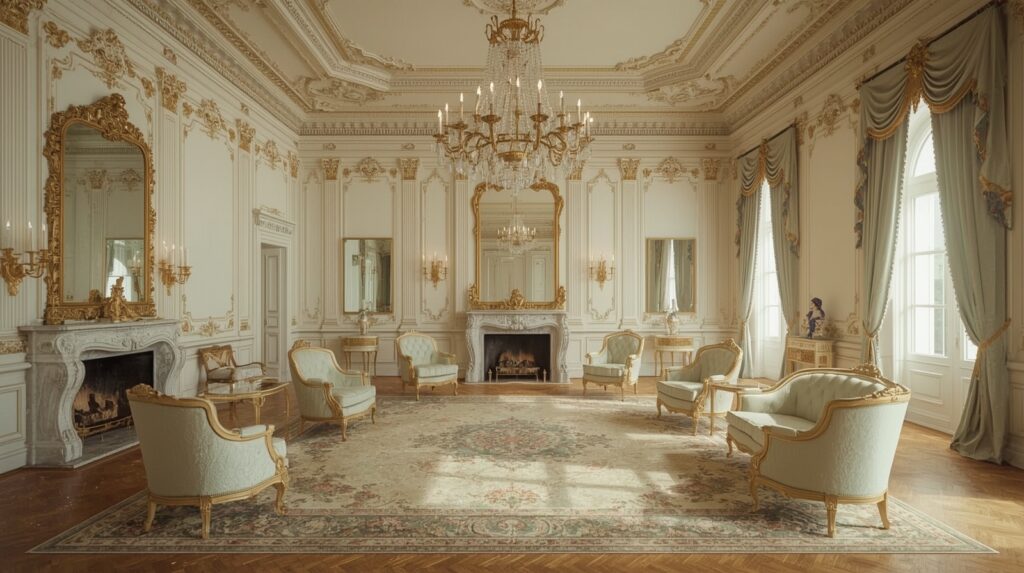
Distance apart, yet linked by a shared sense of grace. Inside spaces show Rococo avoided random ornament. Balance remained, even when layouts leaned off-center, guided by measured relationships instead of rigid symmetry.
Collector mistakes in Louis XV interiors
Today’s versions tend to amplify gold finishes and sweeping curves, confusing Rococo’s subtlety with richness. Surfaces redone too thoroughly usually shine more vividly than they once did. Mixing bulky Baroque furnishings into Rococo spaces happens often – yet upsets visual balance.
While delicate by nature, the style gets misread through heavier forms. Still, size matters most.
True Louis XV interiors choose furnishings sized for people, grouped where talk flows easily. Too-large copies upset how space feels. Seeing balance and limits keeps designs honest to their past shape.
| Common mistake | Historical correction |
|---|---|
| Excessive gilding | Subtle accenting |
| Large open-plan adaptation | Intimate zoning |
| Dark palettes | Pastel tonal range |
Subtlety needs to come first in restoration work. Instead of painting everything the same color, old painted wood should keep its natural shifts in tone. To protect their three-dimensional quality, gilded stucco surfaces demand gentle treatment. Rather than swapping them out, mirrors gain character when small signs of age remain visible.
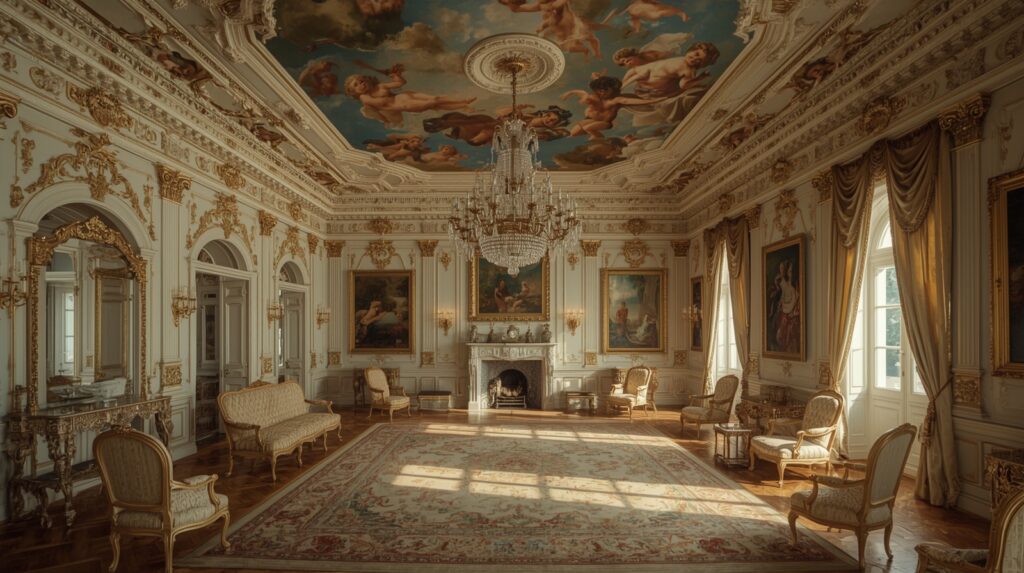
Avoid harsh ceiling lights; instead aim for a gentle spread of illumination. Soft blends matter more than sharp focal points in Rococo design.
Stillness matters more than shine when keeping movement smooth. Flow stays central, even if light dims.
The Quiet Revolution That Created Rococo Interiors
Still sought after, genuine Louis XV furnishings hold steady appeal with buyers focused on verified origins. While German Rococo continues to draw attention in religious settings, original French works fetch greater prices compared to 19th-century continental imitations.
Curved furniture shows up more often now, echoing old Rococo tastes but shaped for today’s living spaces. Pastels replace stark whites, slipping softly across walls and upholstery.
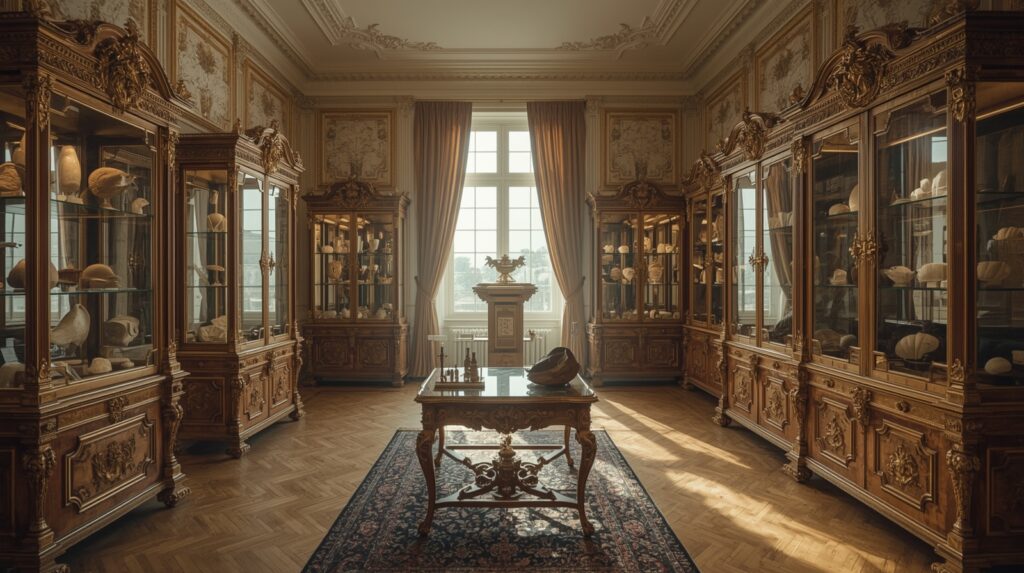
Decorative trim appears again, though less heavy than before, fitted neatly into clean-lined rooms. A shift away from rigid simplicity seems underway, quietly spreading through interior choices. Taste moves toward warmth, perhaps because people feel worn down by too much emptiness in design.
Intimacy marks the lasting appeal of Louis XV interiors – order remains, yet tension fades. Elegance here does not intimidate; instead, it invites quiet observation. A shift pulses beneath these details: design mirrors changing authority. Rigid forms of royal dominance give way, slowly, to lighter gestures. Refinement stays intact even as weight lifts. Conversation, once secondary, now shapes space more than ceremony ever did.
Following came the rococo approach to interior design, reshaping homes into spaces shaped by refined delight. Where symmetry once ruled, imbalance now took hold. Ease began to mirror elegance. Decoration flowed as if grown, not placed.
Stillness settled where grandeur once demanded attention. This quiet shift – Rococo’s true inheritance – lingers just beneath ornament.
Philippe II, Duke of Orléans Took Residence in Paris
Not far from where royal tradition held firm, Philippe II settled into the Palais-Royal after stepping into leadership in 1715. Instead of clinging to Versailles’ polished routine, he turned toward city rhythms. Power began shifting once the seat moved closer to street-level currents. Court formality gave way when conversation flowed among thinkers, bankers, creators. Where one ruled shaped how one governed – that much became clear. Distance had once reinforced authority; now access started to matter just as much.
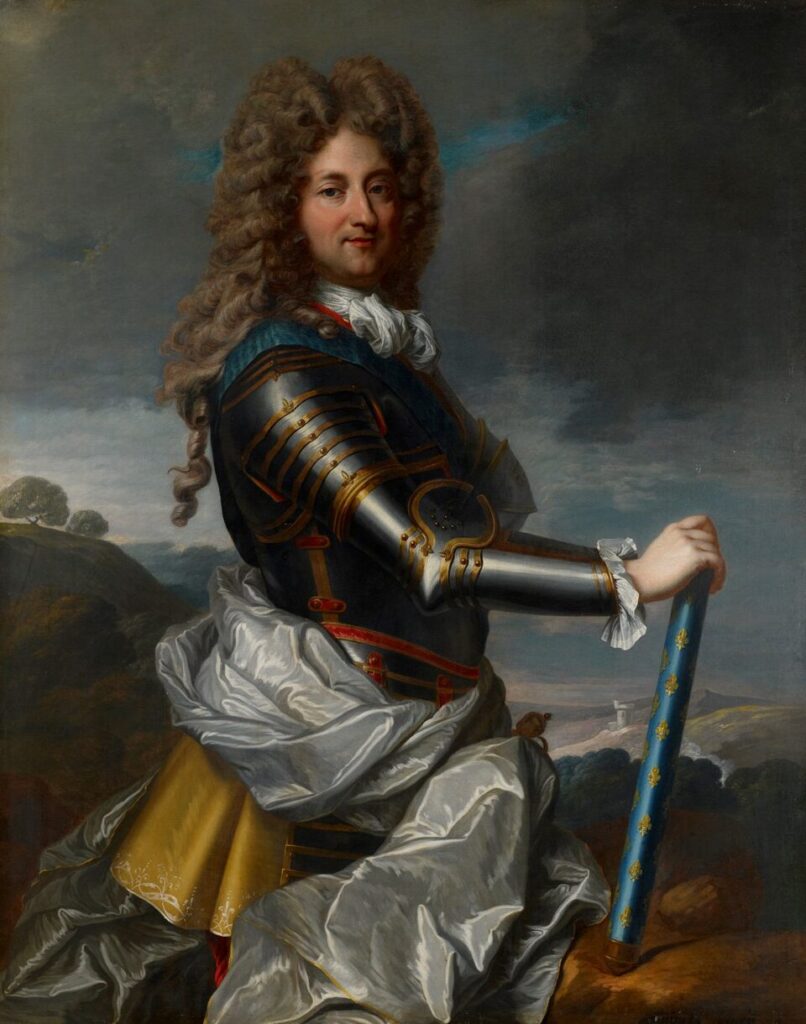
The air around decisions changed, less staged, more alive. Life in Paris brought new voices near the ear of influence. Architecture still spoke of order, yet talk in salons carried different weight. What stood before as ceremony now met commerce, ideas, movement. Below the Regent’s home, salons grew lively while support for artists took new forms, so the first hints of Rococo started softening the heavy grandeur tied to Louis XIV’s era.
Lighter colors crept into rooms, along with cozier layouts where talk flowed easier among friends instead of echoing through vast halls meant for ceremony. This shift bore practical weight too: being in Paris made financial matters clearer, plus contact with fresh intellectual currents more natural. Taste itself seemed less bound by rules, opening room for bold moves in sound, image, and design.
With Philippe d’Orléans settled downtown, power quietly changed posture – less stage, more street – a turn that rippled across Europe’s artistic path long after.
AI Notice: Some visual content in this article may have been created or enhanced using artificial intelligence (AI) for artistic, editorial or illustrative purposes. Learn more about our approach in our AI & Editorial Principles.