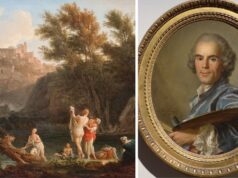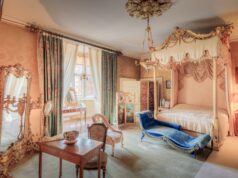
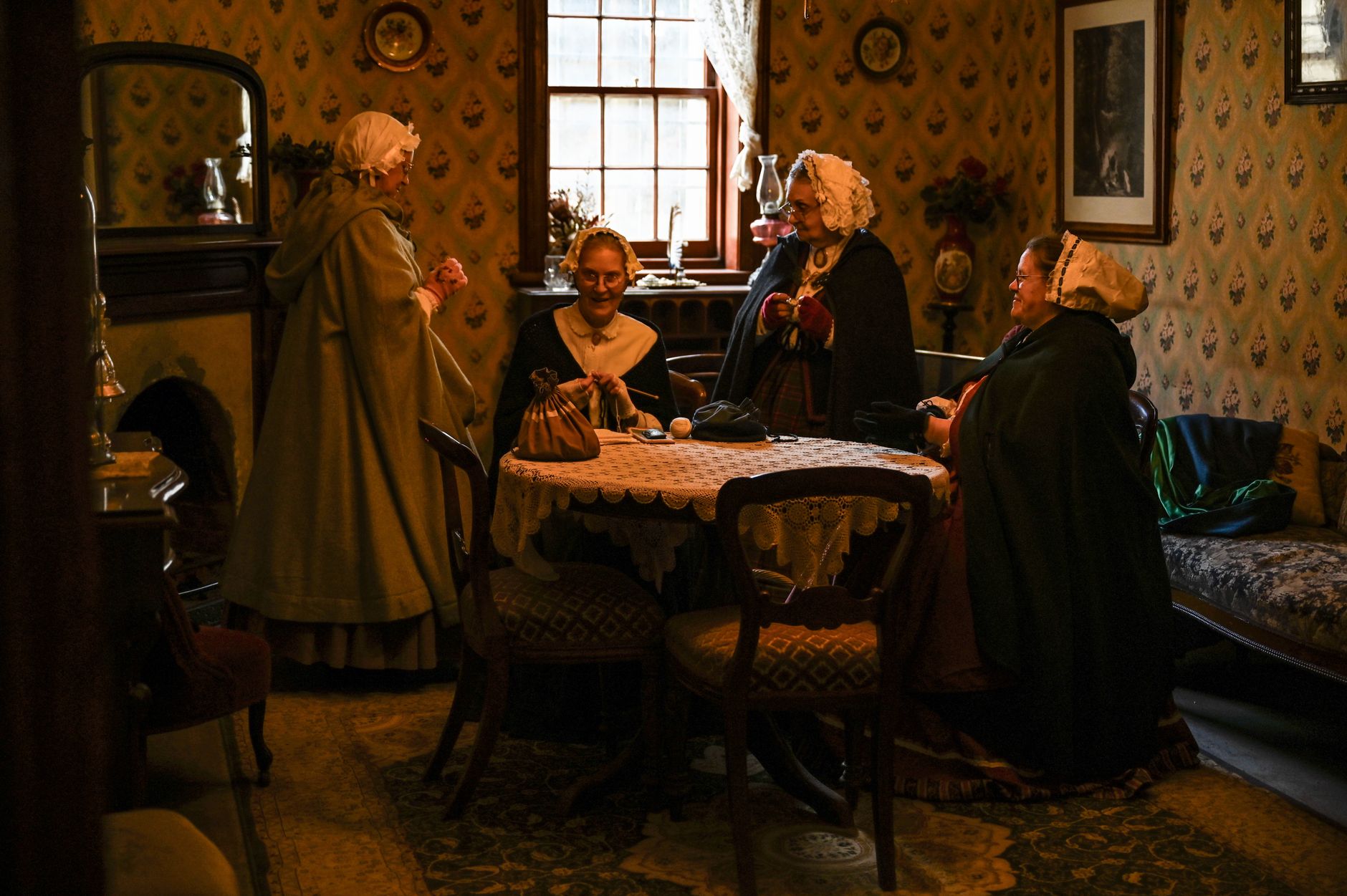
Velvet armchairs in jewel tones, damask sofas glowing in gaslight, ottomans smothered in tassels and fringe—Victorian upholstery fabric is synonymous with visual drama and lavish comfort. More than mere decoration, these textiles were statements of status, taste, and technological progress at a time when the Industrial Revolution was transforming how people lived. Understanding Victorian upholstery fabric means understanding a century when design exploded with new possibilities, when historical revivals jostled with cutting‑edge machinery, and when middle‑class homes began to rival aristocratic interiors. Today, designers, restorers, and homeowners return to Victorian fabrics not out of nostalgia alone, but for their craftsmanship, durability, and richly layered aesthetic vocabulary.
Victorian (1837-1901) a term used to describe anything pre 20th century that referred to Queen Victoria of the United Kingdom coincided with huge leaps forward in textile production, dye chemistry, and the growth of world trade. Over a short period of time, upholstery fabrics had to compete with the considerable aging of weaving practices and the introduction of artificially produced dyes. Much of what we think of as the “Victorian look” the insoluble depth of color, intricate patterns and luxurious textures was in fact this exposure to older styles. As the Victorian and Albert Museum states, nineteenth century design “looked to the past for inspiration while harnessing the latest manufacturing techniques”.
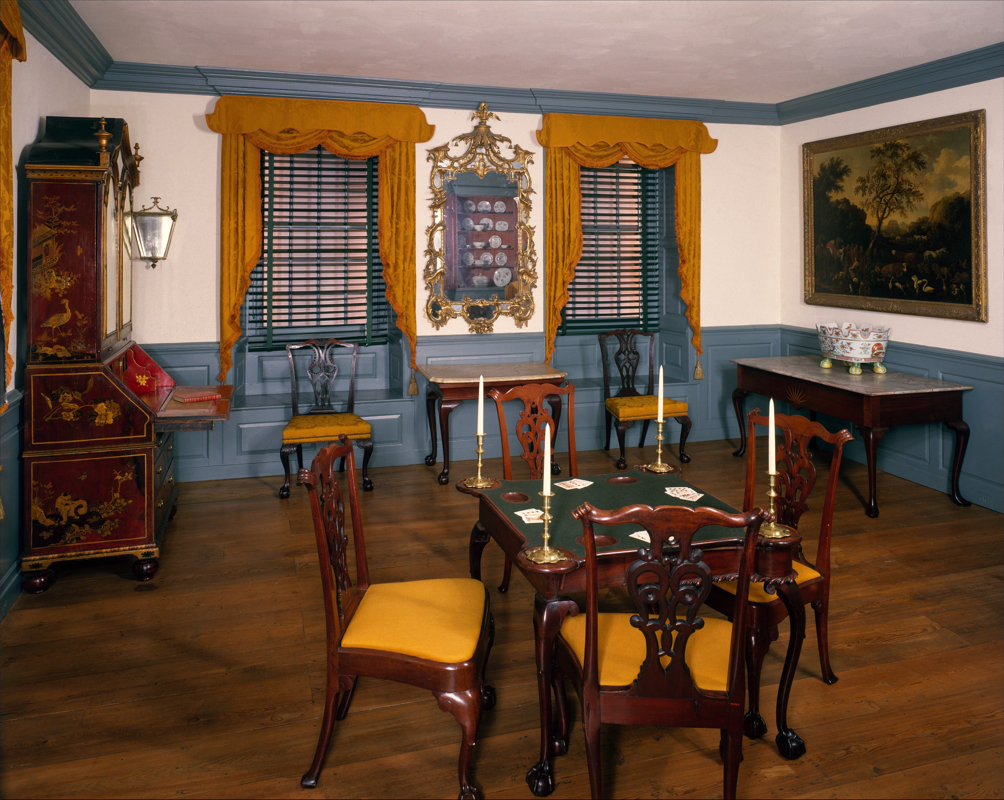
Victorian textiles have come under renewed scrutiny as interest in period interiors, heritage hotels and authentic restoration has been rekindled. The Metropolitain Museum of Art in New York, the Victoria and Albert Museum in London and the Smithsonian Institution in Washington D. C. maintain large archives of 19thcentury furnishings which inform contemporary manufacturers. Anyone undertaking Victorian upholstery for use in a domestic living room, a boutique project or conservation project should seek understanding of the history, range of materials and design rationale which underpins these textiles.
The Historical Context of Victorian Upholstery
Victorian upholstery fabric emerged in a world reshaped by the Industrial Revolution. Power looms, Jacquard mechanisms, and improved spinning technologies enabled the mass production of complex woven textiles that would previously have been prohibitively expensive. In textile centers such as Manchester, Leeds, and Glasgow, British mills supplied a growing domestic market and exported upholstery fabrics across the British Empire and beyond. According to the Smithsonian Institution’s National Museum of American History, mid‑19th‑century American interiors were heavily influenced by British textile imports, especially patterned carpets and upholstery.
Meanwhile, the Victorian years also witnessed a vogue for historicisms; from Gothic to Renaissance to Rocco to Egyptian all these styles appeared on the upholstery market. Inspiration was taken from the furnishings housed in the Louvre Museum which had not only been a prominent indicator of historic European luxury but also inspiring a design ethos which sought to translate the opulence into the modern domestic environments. Pattern books circulated thoroughly and companies like Morris & Co. Based in London demonstrated medieval and floral influences in the work as a reaction to the ‘confusion and extent of decoration’.
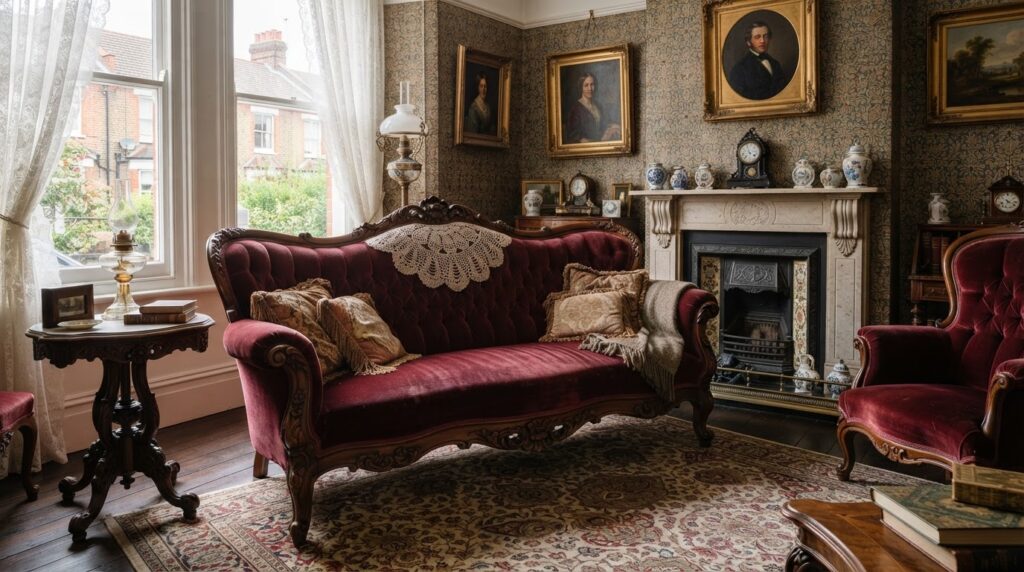
At the same time social change influenced the selection of upholstery. An expanded middle-class especially in the industrial cities of Birmingham and Liverpool could now buy upholstered furniture in bulk rather than a single “best” sofa or armchair. Upholstery fabric became a crucial vehicle through which families could signal aspiration, moral principles, and domestic respectability. As reformers like Charles Eastlake argued in the 1870s, textiles should be “truthful” in fabric and design, counteracting the cheap copycat imitations that now flooded the mass market. This ongoing debate about luxury, mass-market desirability, and ontological truth continues to inform Victorian-style reproducers.
Signature Fabrics and Materials
Victorian upholstery is best understood not as a single look, but as a palette of favored materials, each with distinctive properties. At the top of the hierarchy stood silk, used for high‑status drawing rooms and formal parlors. Woven silk damasks with large‑scale floral or foliate motifs, often tone‑on‑tone, were a hallmark of elite interiors. The Victoria and Albert Museum’s textile collection includes numerous examples of mid‑19th‑century silk damasks woven in Spitalfields and Lyons, showing how industrial production could still achieve extraordinary refinement.
The plush stuff of velvet must have been the most iconic Victorian fabric rich in color and touch, velvets in cotton and silk were used for upholstering armchairs, chaise longues and portieres. Pattern was achieved with the use of cut and voided velvets, where the pile was manipulated to form spots, stripes, waves or other designs. Several examples of 19 th century velvets (French and English) from the collections of the Metropolitan Museum of Art demonstrate the opacity of the pile and bright coloring likely enhanced by the exposure to gas and electric light that made the textiles live within a Victorian setting. As well as being beautiful, velvets were practical in the fact that they were heavy and durable.
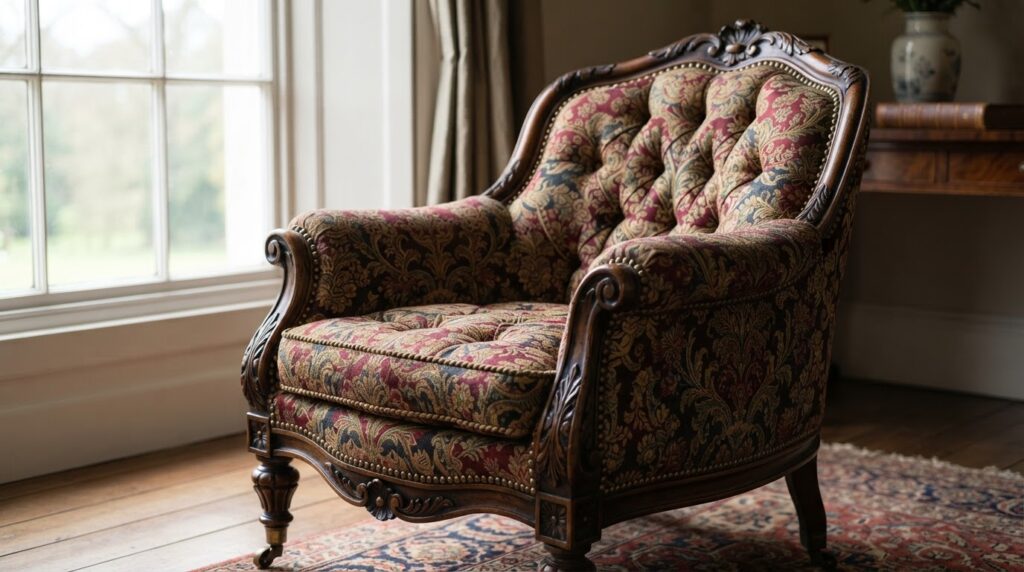
Wool and cotton blends rounded out the Victorian repertoire, particularly for transitional rooms, or in more humble dwellings. Durable worsted wool damasks and twills, as well as printed cotton chintzes, provided color and pattern at more affordable prices. The Cooper Hewitt, Smithsonian Design Museum in Washington presents American manufacturers who devised stout woolen upholstery fabric that could cope with the rigors of a railway carriage and civic environment, then moved into the domestic world. Though less auspicious than silk, their long life meant that they were ubiquitous throughout Victorian life.
Patterns, Motifs, and Color Palettes
Pattern in Victorian upholstery fabric is rarely shy. Large‑scale florals, curling acanthus leaves, and scrolling arabesques dominated mid‑century designs, especially under the influence of Rococo Revival and Neo‑Baroque taste. Designers such as Augustus Welby Pugin promoted dense, medieval‑inspired ornament, while later, William Morris advocated for more stylized, repeating botanical motifs. As the V&A notes of Morris’s work, his patterns “brought nature indoors in rich, complex compositions that wrapped entire interiors in foliage and flower.” These patterns translated readily from wallpapers to upholstery, unifying whole rooms.
Color schemes evolved drastically across the Victorian era, in the centuries when new kinds of dye were introduced. Vegetable and mineral dyes at the beginning of the reign gave luxurious, if largely narrow, ranges: madder reds, indigo blues, browns, and natural olive-greens. The appearance of synthetic aniline dyes in the 1850s was a turning point: jade greens, cherry reds, brilliant magentas and violets flooded the market. The Met‘s textiled is an effective record of this transition from natural hues and hand-dyeing, to chemical ecstasy: bright reds, greens, blues and yellows offered for upholstering and curtain fabrics, never before available.
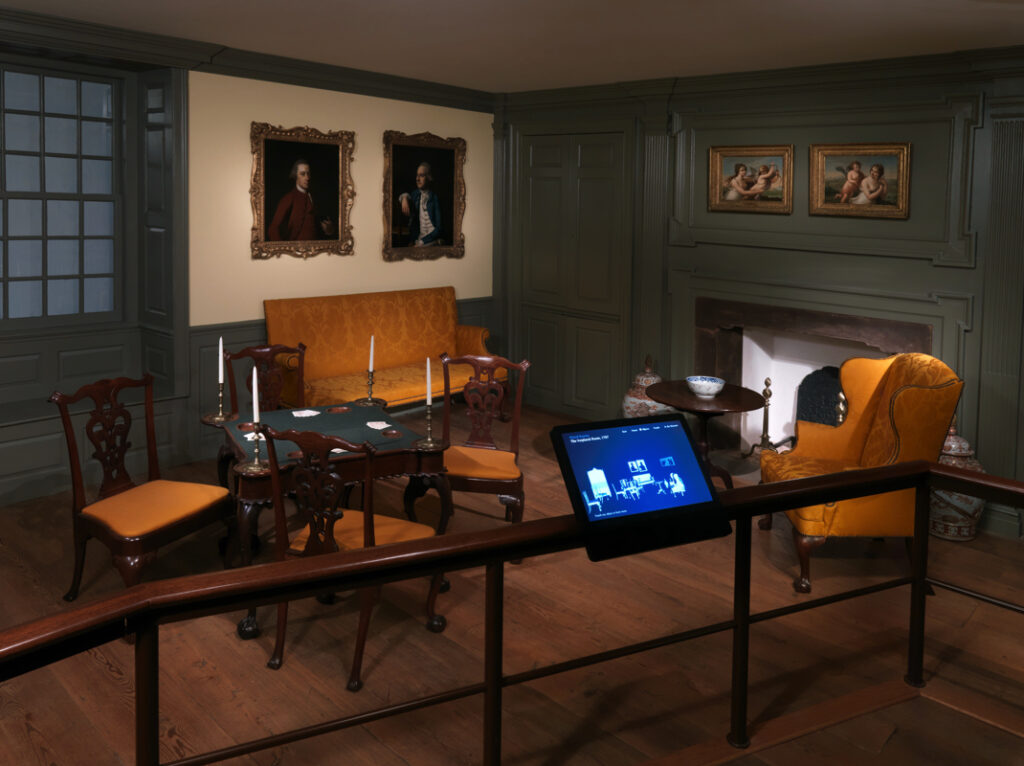
A backlash against over-ornamentation and too-brash colours was happening by the end of the 19th century, largely by influence of the Aesthetic Movement and Arts and Crafts. Palettes became a little more subdued, embracing olive greens, russets and more subdued gold shades; patterns seemed to follow suit although continue to retain a more busy air. It is unlikely Victorian interiors would have included a flat colour alone. Even subdued upholstery fabrics had a woven quality or damask pattern, as a rule, many making up the rich layering effect of Victorian design.
Techniques, Construction, and Durability
Additionally, it is important to understand how upholsterer’s fabric was employed structurally. In 19th century traditional upholstery horsehair (or kapok in the 20th century) was supported by tensioned webbing, several layers of handstitched canvas and burlap, and a coiled spring frame. The fabric was secured over this with upholsterer’s tacks. Fabrics, therefore, needed to resist tension, the pressure of tight stretching and levering as well as extraordinary wear. Heavyweaves such as damasks, velvets, jacquards and Turkish twills, were used instead of brittle prints.
The Jacquard loom, an invention earlier in the nineteenth century, was vital to Victorian upholstering. Control of each warp with punch cards meant complex repeat patterns could be woven with efficiency. As demonstrated in the Louvre record of 19thcentury French textiles, Jacquard weaving made large cape repeats possible with sharp definition of surface motifs like cartouches, heraldic devices and intricate foliage. English and American makers copied these already200years old methods, creating affordable patterned upholstered furniture for many.
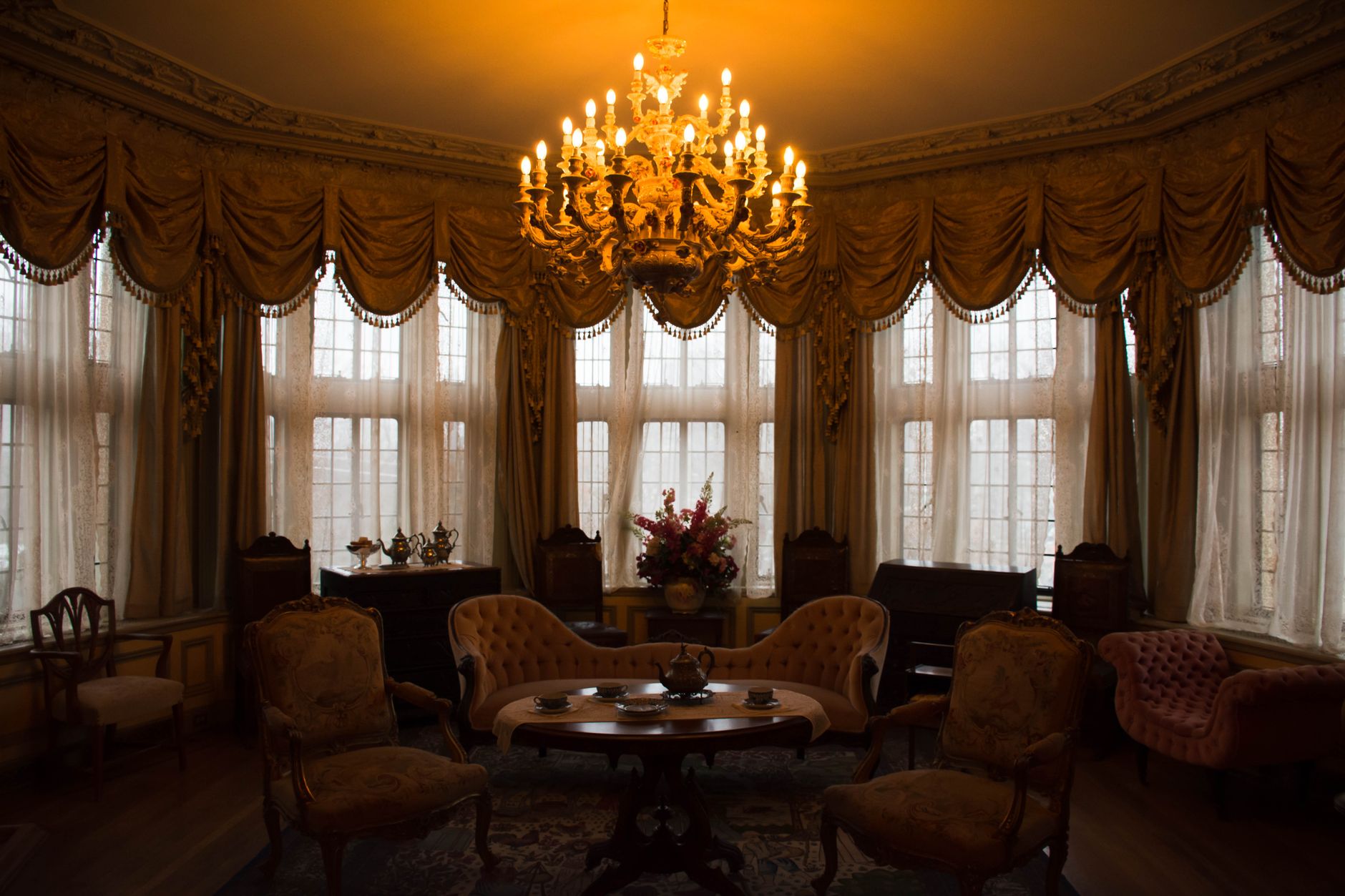
However, durability could be argued as a moral issue as well as a technical in the Victorian design debate. For example, reformers in the Arts and Crafts movement claimed that textiles should be honest, well made and durable. As William Morris said, ‘Have nothing in your house that you do not know to be useful, or believe to be beautiful’. A trend that he expressed can be seen in much of the best Victorian upholstery fabric: tight weaves, high thread counts, and good quality fibre. Tomorrow‘s restorers should be able to compare the durability of Victorian textiles, some more than hundred years old, to modern pieces.
Key Characteristics of Victorian Upholstery Fabrics
Below is a summary of core attributes that define Victorian upholstery fabrics in historical and contemporary contexts:
| Characteristic | Typical Victorian Expression | Modern Considerations |
|---|---|---|
| Primary Fibers | Silk, cotton, wool (sometimes mixed), occasional linen | Cotton, wool, viscose, polyester blends for durability/cost |
| Weave Structures | Damask, brocade, velvet, twill, heavy jacquards | Reproductions often use jacquard looms and pile fabrics |
| Patterns & Motifs | Large florals, acanthus, scrolls, Gothic and Renaissance motifs | Scaled to modern rooms; often simplified for subtlety |
| Color Palette | Deep reds, greens, blues; later olives, golds, russets | Wider range; UV‑stable dyes, more lightfast |
| Finish & Texture | Plush piles, embossed surfaces, glazed chintz in some periods | Stain‑resistant finishes, abrasion‑tested textures |
| Intended Settings | Parlors, drawing rooms, railway carriages, hotels | Heritage interiors, boutique hotels, period‑inspired homes |
Choosing and Using Victorian‑Style Fabrics Today
For homeowners, designers, and conservators, the challenge is to balance historical fidelity with contemporary needs. In strict period restorations—such as those undertaken in historic houses in the care of the National Trust (UK) or the National Park Service (US)—fabric selection is guided by surviving fragments, archival photographs, and museum comparanda. Institutions often consult collections at the V&A, The Met, and the Smithsonian to identify appropriate weaves, colors, and patterns that match or closely approximate original upholstery.
In more interpretive or eclectic interiors, Victorian‑style fabrics can be used selectively to add drama or depth without overwhelming a space. A single velvet sofa in a jewel tone, a pair of damask‑covered armchairs, or an upholstered headboard in a botanical jacquard can evoke the period while remaining compatible with modern pared‑down architecture. Scale and color are crucial: large‑scale patterns that once suited high‑ceilinged drawing rooms may need to be reduced or recolored to work in smaller urban apartments.
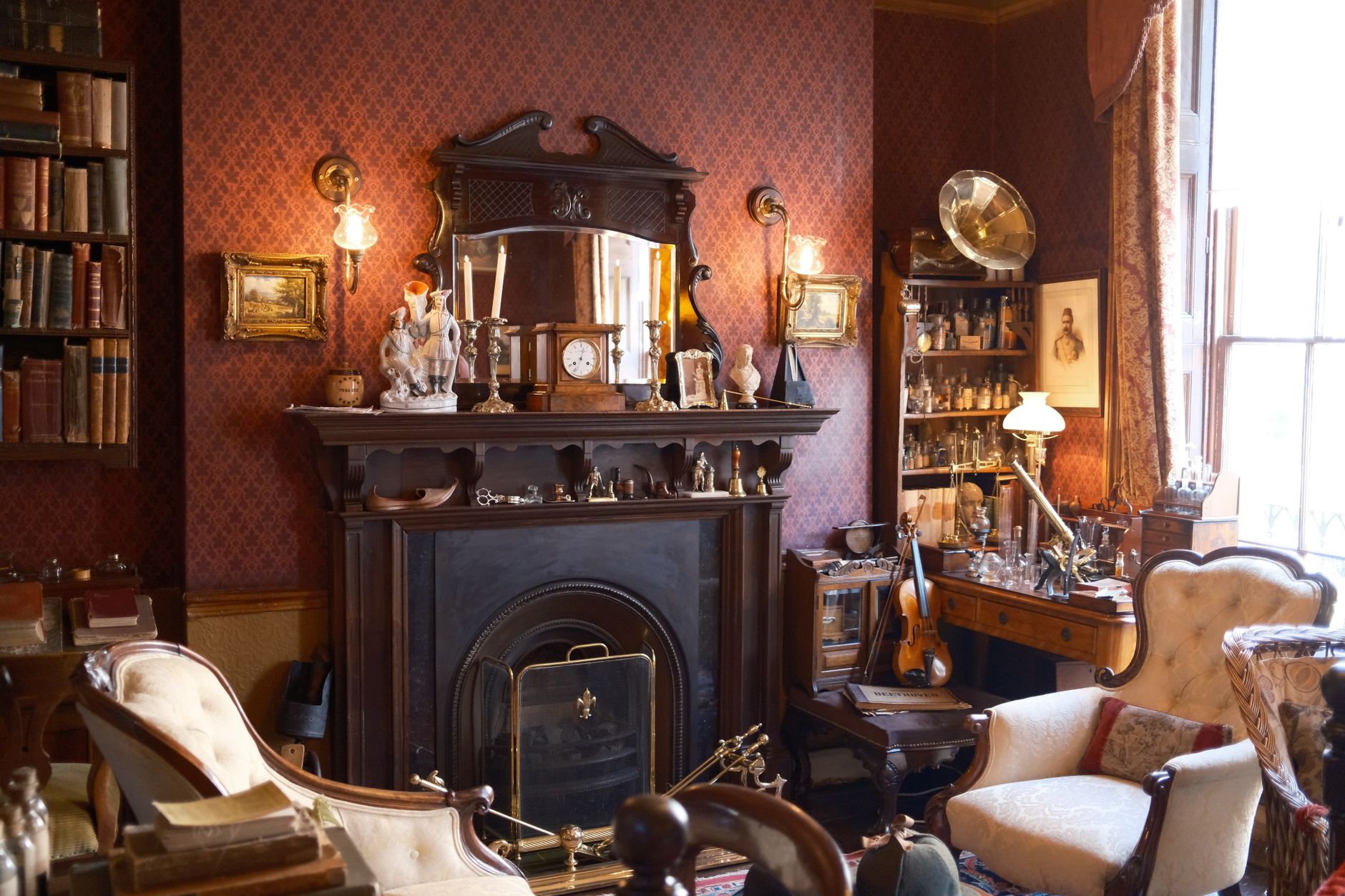
Practical considerations should not be overlooked. Many high‑quality reproductions now incorporate performance fibers and finishes—such as polyester blends for abrasion resistance or stain‑repellent treatments—while retaining a historically informed appearance. For high‑traffic spaces or family homes, these may be preferable to pure silks or delicate cottons. When specifying fabrics, pay attention to rub counts (Martindale or Wyzenbeek tests), lightfastness ratings, and cleaning codes to ensure that the fabric’s beauty endures.
Authoritative Voices and Research Resources
Scholarship on Victorian interiors and upholstery is supported by a robust body of museum research, catalogues, and exhibitions. The Victoria and Albert Museum’s permanent galleries on 19th‑century design and its online collections provide detailed information on specific fabrics, makers, and design movements. Their curators emphasize that “textiles were central to Victorian taste, transforming interiors into immersive decorative schemes,” highlighting upholstery as a key component of that visual environment.
The Metropolitan Museum of Art offers extensive documentation of 19th‑century European and American furnishings, including upholstery fragments, complete seating suites, and pattern books. Research publications such as Nineteenth-Century European Furniture (Metropolitan Museum of Art) and exhibition catalogues on the Aesthetic Movement or Arts and Crafts period help contextualize textile choices within broader social and artistic currents. These scholarly works are invaluable for designers seeking historical accuracy or nuanced inspiration.
In the United States, the Smithsonian Institution’s museums, including the National Museum of American History and Cooper Hewitt, Smithsonian Design Museum, hold rich collections of 19th‑century textiles as well as trade catalogues and technical manuals. These documents reveal not only what upholstery fabrics looked like, but how they were marketed, priced, and described to consumers and professionals. Cross‑referencing European and American sources helps distinguish between British, French, and American preferences in color, motif, and fabric type across the Victorian century.
Frequently Asked Questions About Victorian Upholstery Fabric
Was all Victorian upholstery dark and heavy?
No. While many surviving examples and popular reproductions feature dark reds, greens, and blues, the period saw a wide range of colors and tones. Early Victorian interiors could be quite bright, especially after the introduction of synthetic dyes. Later Arts and Crafts and Aesthetic Movement interiors often favored softer, more natural palettes. The perception of “darkness” is partly influenced by aged varnish, soiling, and dim historic lighting.
What fabrics are most authentic for a Victorian‑style sofa today?
Historically accurate choices include silk or cotton damask, cut or plain velvet, and sturdy wool or wool‑cotton jacquards. For modern use, many specialists recommend high‑quality cotton velvets or wool‑blend damasks that balance authenticity with durability. Consult reputable manufacturers who work with heritage properties or reference collections at the V&A or The Met to guide selection.
How can I tell if an antique chair’s upholstery is original?
Original Victorian upholstery is relatively rare. Signs include hand‑stitched seams, natural fiber threads, horsehair or natural stuffing visible under the fabric, and tacking methods consistent with 19th‑century practice. Fabrics may be faded, worn, or patched. Comparing the textile with documented examples in museum catalogues can help. For a definitive assessment, consult a professional textile conservator or furniture historian, especially for museum‑quality pieces.
Did Victorians use printed cotton for upholstery, or only for curtains and slipcovers?
Printed cottons, including chintzes, were used for lighter‑duty upholstery such as bedroom chairs, nursing chairs, and informal seating, as well as for slipcovers and loose covers protecting more expensive underlying fabrics. For main reception rooms and heavily used seating, woven fabrics (damask, velvet, twills) were more common due to their superior wear characteristics.
Can Victorian‑style fabrics work in a minimalist or contemporary interior?
Yes, if used thoughtfully. A single richly textured piece—a velvet armchair in a deep solid color, a damask‑covered bench, or a patterned cushion—can add visual interest and historical resonance to a minimalist space. Choosing restrained colorways, smaller‑scale patterns, or monochrome jacquards helps bridge Victorian richness and contemporary simplicity.
Conclusion
Victorian upholstery fabric sits at the intersection of artistry, technology, and social history. Its velvets, damasks, and richly patterned jacquards embody the ambitions and anxieties of a century obsessed with progress yet enamored of the past. Informed by the collections and scholarship of institutions such as The Metropolitan Museum of Art, the Victoria and Albert Museum, the Louvre, and the Smithsonian, we can approach these textiles not as mere ornament, but as evidence of how people once lived, sat, and dreamed. Whether restoring an historic drawing room or adding one opulent chair to a modern flat, an understanding of Victorian upholstery fabrics allows us to harness their enduring appeal with intention, respect, and expertise.
AI Notice: Some visual content in this article may have been created or enhanced using artificial intelligence (AI) for artistic, editorial or illustrative purposes. Learn more about our approach in our AI & Editorial Principles.