
Old Gothic Victorian House Interior: Memory, Morality, And The Domestic Theater Of The Nineteenth Century
Homes in the 1800s weren’t just shelters – they shaped how people felt about daily life. One striking example? The dark, ornate insides of Victorian Gothic homes, designed on purpose to push back against fast-moving industry trends.
Entering one felt like walking onto a set where history played out slowly, not due to ignorance, yet driven by desire to handle what advancement cost emotionally. While factories reshaped urban layouts, railroads changed perceptions of travel, newsprint altered rhythms of everyday moments.
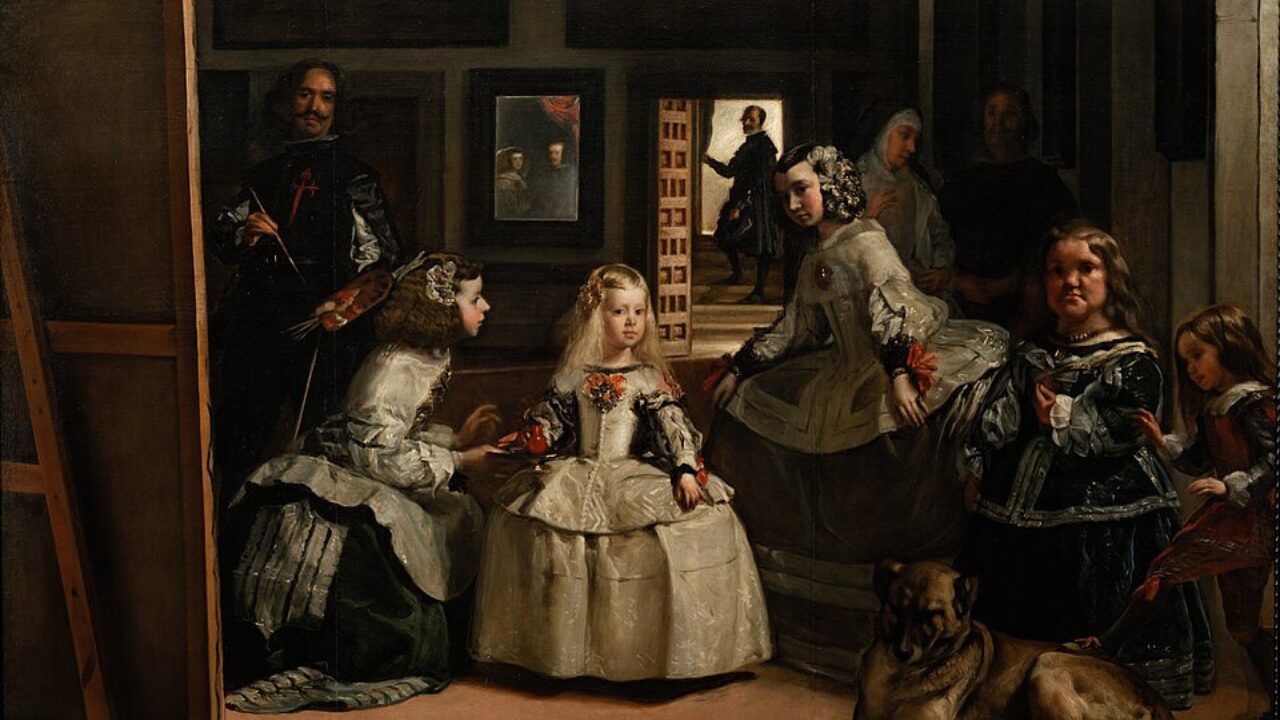
Can You Name the Masterpiece?
Ten masterpieces. Ten questions. How well do you know the history of art?
So too did private rooms need to reshape what mattered inside walls. Every so often, an old kind of beauty slipped back in through the walls. Not just shapes from long ago but something quieter – a hush built into the woodwork.
Instead of rushing past moments, people found themselves pausing under high ceilings that seemed to listen. A step across worn floorboards felt different when framed by stone tracery. Even small acts gained stillness, like lighting a lamp near stained glass or resting hands on a sill shaped centuries before. Rooms stopped being only shelters.
They turned into spaces where thought had room to breathe without asking permission. Out here lived doctors, traders, schoolteachers – people whose standing rose from learning, not bloodline.
Can You Guess the Artist?
Three clues. One artist. How quickly can you identify the painter?
These homes had to suggest tradition without actually passing it down. A kind of make believe held things together, built into walls and ceilings. Woodwork twisted through rooms like remembered stories.
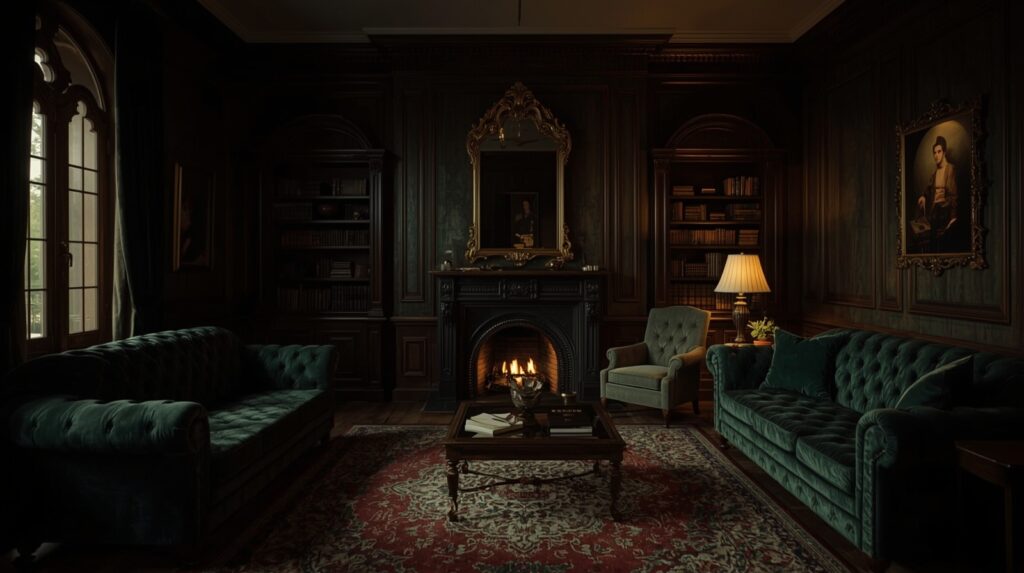
Light slipped in at angles, dim and careful, shaping moods older than steam engines or factories. Space unfolded slowly, room after shadowed room. Time felt thick there, even though none of it was real.
Real historical interiors that shaped the style
That atmosphere had real form. Inside certain structures it took shape – structures that later shaped taste far beyond their walls, thanks to printed guides and journals circulating through Britain, Europe, and parts of North America.
One such place: Strawberry Hill House. Transformed by Horace Walpole during the 1700s, then revived in print throughout the next century, it offered something different – not grandeur for nobility, but a version of medieval life suited to private homes.
Small chambers, ornamental ceilings, shadows arranged on purpose – these details quietly entered design thinking, copied into modest houses where people wanted depth from the past, just not built like castles.
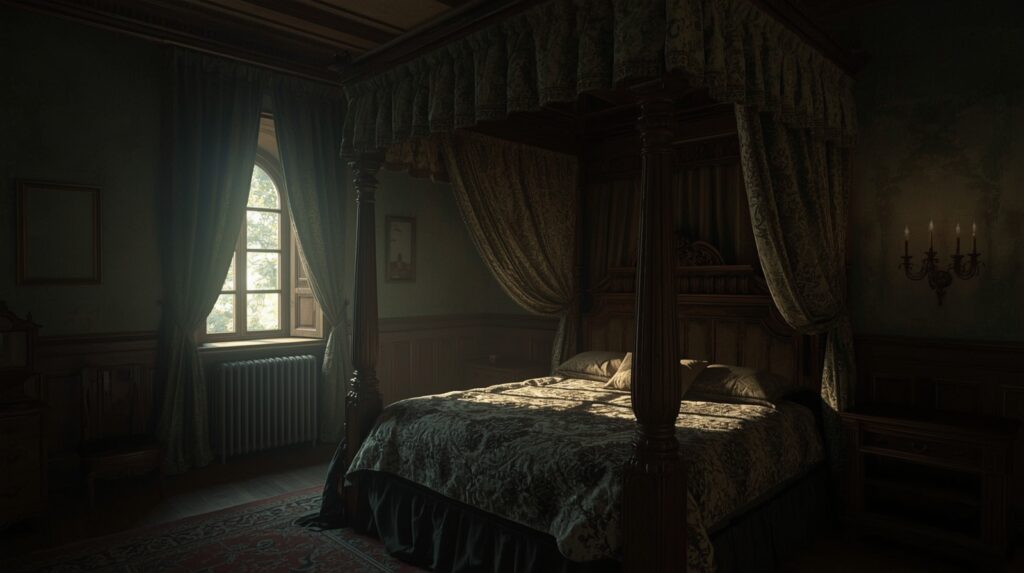
Pugin gave the movement a sense of right and wrong. At his home, The Grange in Ramsgate, design elements like furniture, paper on walls, metal details, and building shape worked together to reflect values. Because he believed decoration should grow out of construction, spaces felt honest.
This principle influenced homes that followed, making full-looking rooms seem grounded rather than ornamental.
Built into London’s tight rows of Victorian terraces, urban adaptations emerged through slender street fronts hiding intricate paths of halls and steps inside. Privacy took a quiet form here, shaped by space rather than walls.
Elsewhere, at Oxford, old-style Gothic libraries found new echoes when home readers began copying the calm mood of college study spaces. Houses slowly filled with that hushed intent.
Material production also had a specific origin. The encaustic tile floors associated with the old gothic victorian house interior were largely manufactured by the Minton factory, whose patterned surfaces allowed industrial production to mimic medieval craft.
Later, the Arts and Crafts movement, led by figures such as William Morris, softened the style but preserved its emphasis on honest materials and moral domestic space.
| Location or figure | Lasting contribution |
|---|---|
| Strawberry Hill House | Romantic domestic medieval atmosphere |
| Augustus Pugin | Moral unity of interior design |
| Victorian London terraces | Urban adaptation of privacy planning |
| Oxford college libraries | Scholarly domestic influence |
| Minton tile works | Patterned medieval flooring revival |
| William Morris | Transition toward handcrafted modern interiors |
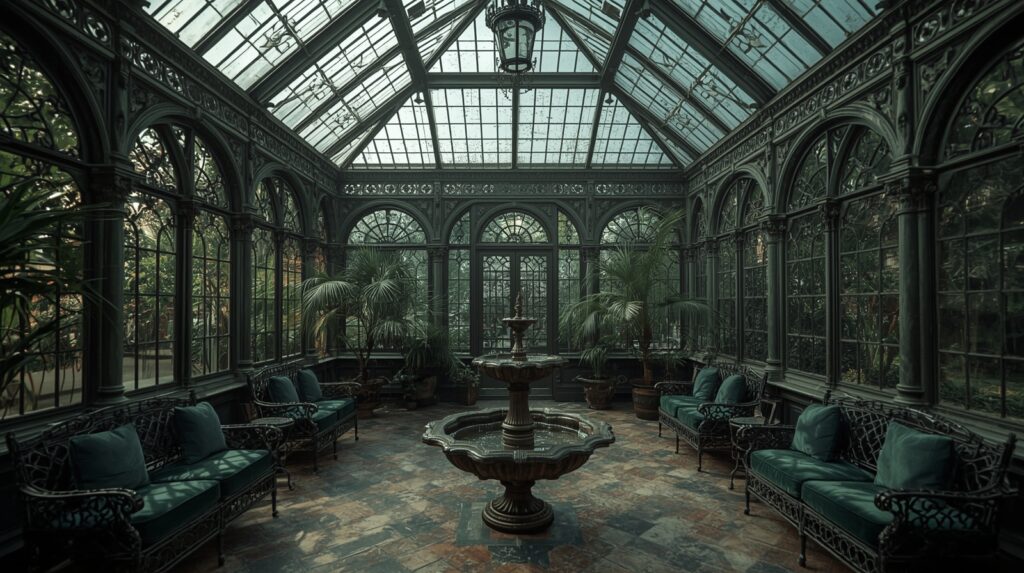
These references reveal that the style spread not as fashion but as a network of shared ideas about living responsibly within modern society.
Spatial choreography and the education of movement
Inside aged Gothic Victorian homes, rooms seldom connected straight through. Instead, hallways, entry spaces, and small half-rooms guided movement step by step.
Each function demanded readiness before entering. Shifting from sitting area to meal space meant passing through zones first. Entry wasn’t abrupt – arrival unfolded slowly.
This setup differs strongly from today’s open-concept designs. Back then, abrupt entries were thought to encourage social slip-ups. Moving step by step through space sharpened personal awareness.
In this way, design quietly guided conduct without needing intention. A visitor who knew nothing of family habits still adjusted their behavior – just by walking the path laid out.
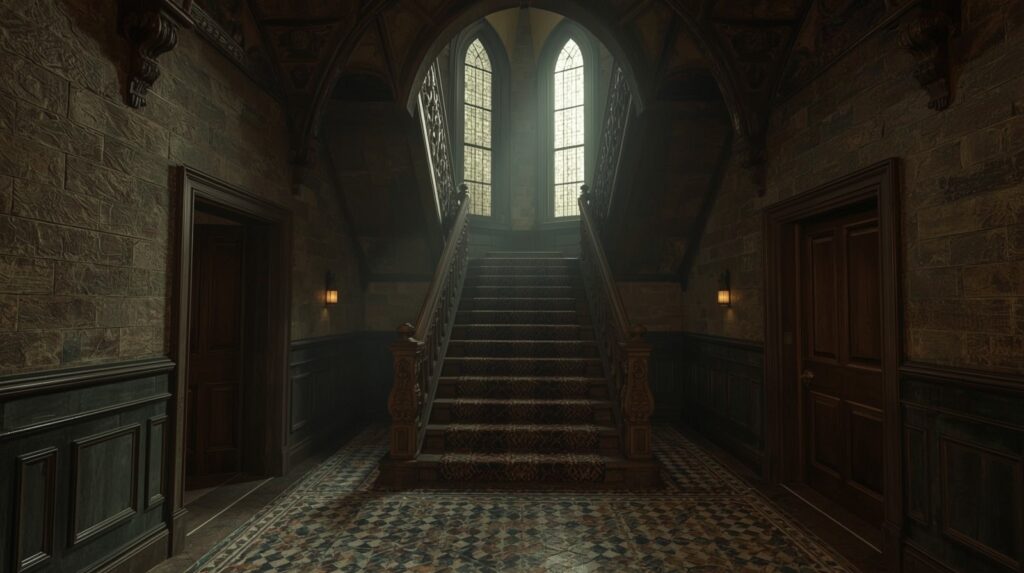
Upward movement carried meaning. Not merely physical, it mirrored a shift toward deeper thought. Rooms for reading or quiet work often sat above, linking altitude with mental pursuit.
Materials and the language of permanence
The choice of materials reveals the psychological ambitions of the style. Dark-stained oak, walnut paneling, encaustic tile floors, and heavy woven textiles absorbed light rather than reflecting it. Surfaces appeared aged even when newly installed. The intention was not gloom but duration. A room that looked old encouraged occupants to imagine themselves as temporary participants in a longer continuity.
| Material | Sensory effect | Cultural implication |
|---|---|---|
| Carved oak paneling | Warm absorption of sound | Stability |
| Patterned tile | Cool tactile contrast | Craft tradition |
| Velvet drapery | Soft acoustics | Privacy |
| Leaded glass | Fragmented daylight | Reflection |
Together these elements created a domestic atmosphere where time felt layered rather than linear.
Light as behavioral guidance
Within the aged gothic-victorian home, illumination seldom spread evenly across rooms. Rather, distinct areas emerged through contrasted light levels.
Near a window, a writing surface caught sharp morning rays – other sections stayed wrapped in shadow. People living there naturally sensed which spots invited focus, others encouraged hushed talk.
Lights fueled by gas or oil deepened the scene after dark. Because their glow reached only so far, people drew together instead of spreading out. Around these small pools of light, families arranged themselves in rings – quiet acts that strengthened bonds. What emerged was closeness shaped by shadow and flame.
| Lighting source | Behavioral outcome |
|---|---|
| Window seat daylight | Reading |
| Table lamp glow | Conversation |
| Shadowed alcove | Solitude |
Light organized relationships without instruction.
Furniture as moral architecture
Furniture in these interiors functioned as miniature architecture. High-backed chairs established posture, settle benches framed entrances, and writing bureaus enclosed the act of correspondence within protective panels. Each piece reinforced the belief that actions deserved boundaries.
Common furnishings included hall stands with carved tracery, overmantel mirrors framed by pointed arches, and bookcases resembling chapel facades.
None were neutral containers. Each object reminded the user that daily acts — hanging a coat, reading a letter, recording accounts — belonged within a larger moral order.
| What to look for | Immediate clue |
|---|---|
| Pointed arch shapes | Present in doors, mirrors, or furniture |
| Dark wood dominance | Oak or walnut surfaces absorb light |
| Patterned tile flooring | Often geometric medieval motifs |
| Layered rooms | Corridors separating activities |
| Filtered daylight | Colored or leaded windows |
| Heavy textiles | Curtains and upholstery reducing echo |
If most of these appear together, the interior likely follows authentic gothic revival planning rather than theatrical imitation.
Restoration and collector guidance
Inside aged gothic victorian homes, owners aiming to renew interiors sometimes weaken their essence by accident. Brighter spaces tend to become a target; stripping off deep-toned surfaces shifts mood more than expected. Leaded windows swapped for transparent ones open sightlines yet drain depth.
Even whitewashing woodwork – though it lifts illumination – breaks rhythm intended long ago. Design once balanced shadow against gleam. Uniform glow replaces that balance with flatness.
Flooring requires careful handling too. Unlike typical approaches, encaustic tiles benefit more from cleaning than polishing – excessive shine disrupts their natural light scatter and flattens visual richness. Their original character lives in subtlety.
Similarly, wood surfaces gain authenticity through slight imperfections; over-sanding erases traces left by hand tools, which are key markers separating genuine historic spaces from imitations made decades later.
One reason collectors go wrong? They chase complete sets. Victorians rarely bought matching rooms. Instead, homes grew gradually – piece by piece, decade after decade. When everything matches too closely, it feels staged, not lived-in.
Real cohesion comes from similar wood tones, fabric textures, or age – not uniform design. Consistency of feel matters more than visual sameness.
Inside the aged Gothic Victorian home, nostalgia took a back seat to purpose. Shaped by dimmed glow and layered pathways, its design quietly guided how people moved, felt, thought.
Materials were chosen not just for look but for weight, texture, history. Furnishings carried meaning, nudging behavior without announcing intent.
Stability emerged not from sentiment, yet through structure – repetition, shadow, detail shaping routine into quiet moral rhythm.
Not just walls but pathways shaped how people moved through space.
Light fell in ways that made pausing feel natural rather than forced. Each built form carried traces of what came before, not by stating it outright but by presence alone. Walking became reflection simply because the surroundings allowed nothing less.
AI Notice: Some visual content in this article may have been created or enhanced using artificial intelligence (AI) for artistic, editorial or illustrative purposes. Learn more about our approach in our AI & Editorial Principles.