Felix Vallotton
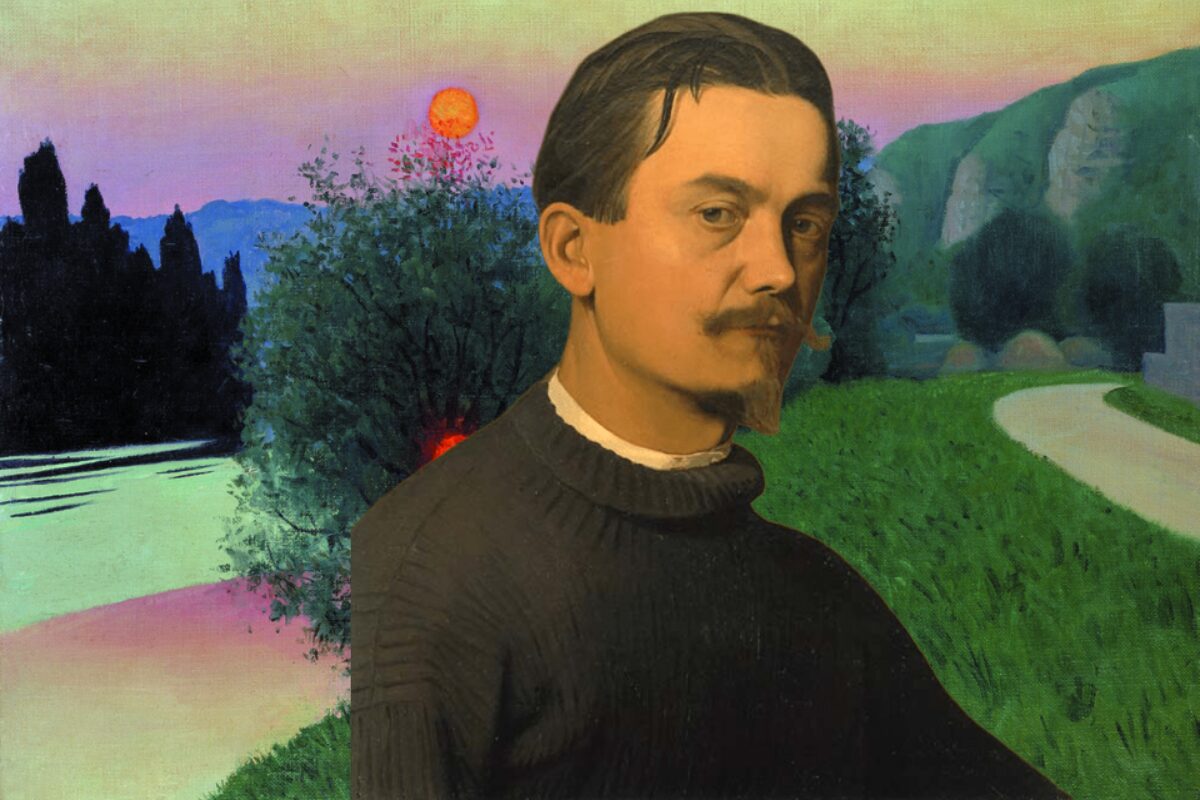
Felix Vallotton (1865–1925) stands among the most original and intellectually acute painters and printmakers of the late 19th and early 20th centuries. Born in Switzerland and active mainly in Paris, Vallotton produced a body of work that traverses incisive black-and-white woodcuts, sharply composed oils, and penetrating portraits and interiors that probe the subtleties of bourgeois life. A prominent figure associated with Les Nabis in his early career, Vallotton evolved into an idiosyncratic realist whose surfaces, planes and psychological acuity exerted a long-term influence on modern figurative painting. This article surveys his life, training, stylistic development, key works, legacy and the market for his art, written for collectors, curators and enthusiasts of art and antiques.
Early Life
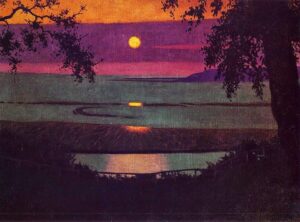
Felix Edouard Vallotton was born in Lausanne, Switzerland, into a cultured, professional family. The environment of a prosperous Swiss canton in the late 19th century provided him with early exposure to literature, music and the visual arts. From adolescence Vallotton displayed a precocious aptitude for drawing and a desire to pursue an artistic career, a decision that led him to relocate to Paris during his formative years. The cosmopolitan milieu of Paris in the 1880s—charged with debates about impressionism, symbolism and the avant-garde—proved decisive for his artistic trajectory.
Can You Name the Masterpiece?
Ten masterpieces. Ten questions. How well do you know the history of art?
Vallotton retained a Swiss identity that informed his character and outlook even as he assimilated Parisian modernity. He cultivated a reputation for intellectual rigor, a somewhat reserved temperament and a sharp critical intelligence that later surfaced in his art criticism as well as his visual work.
Education and Training
On moving to Paris, Vallotton sought formal instruction and entrée into the artistic circles of the day. He enrolled in academic ateliers and also attended lessons at private academies that offered more progressive instruction than the official École des Beaux-Arts. In Paris he encountered a generation of artists who were experimenting with new pictorial languages: Pierre Bonnard, Édouard Vuillard and other members of the circle that came to be identified as Les Nabis.
Vallotton’s training combined academic draftsmanship with exposure to the decorative and symbolist tendencies of his contemporaries. He assimilated rigorous compositional discipline while embracing reductive means of expression—qualities that would characterize both his woodcuts and his later painting.
Career Development
Can You Guess the Artist?
Three clues. One artist. How quickly can you identify the painter?
Vallotton’s career can be read in two partly overlapping phases. The first, lasting through the 1890s, is centered on his woodcuts and graphic work; the second, from the turn of the century onward, is dominated by painting—portraits, interiors and still lifes characterized by severe composition and psychological intensity.
During the 1890s Vallotton emerged as one of the most important modern printmakers. He revitalized the woodcut technique with a distinctive, high-contrast language of black-and-white imagery: simplified shapes, bold outlines and a capacity to suggest volume and space with minimal means. His prints often carried subjects of urban life, satire, eroticism and domestic tension and were widely reproduced and discussed in contemporary journals. This graphic period established his reputation and contributed to the international revival of relief printmaking.
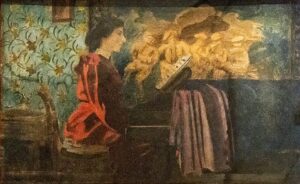
Around 1900 Vallotton gradually shifted emphasis to painting. His oils are less decorative than many of his Nabis colleagues’ works and instead pursue a dry, analytic realism. He composed interiors and portraits with planar clarity, flattened perspective and deliberate chromatic restraint. The paintings convey psychological distance and often an unsettling stillness that encourages careful reading of gesture, posture and facial expression.
Parallel to his artistic activity, Vallotton wrote art criticism and contributed essays and reviews to cultural journals. His writing demonstrates the same incisive judgment and sharp observation as his imagery, and he was a respected voice in artistic debates of his time.
Artistic Style
Felix Vallotton’s style is singular: a synthesis of graphic economy, formal clarity and psychological penetration. Two registers are especially notable.
– Woodcuts and prints: Vallotton’s woodcuts deploy an extreme chiaroscuro. By reducing subjects to black mass and white ground he achieved a pictorial directness that reads like a combination of medieval woodcut tradition and modern abstraction. His prints rely on silhouette, negative space and linear incisiveness. The emotional and narrative content—urban scenes, scandals, moments of violence or intimacy—becomes all the more striking through this stark mode.
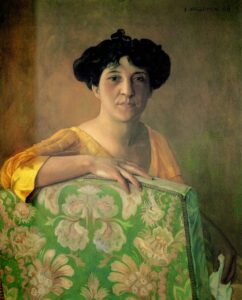
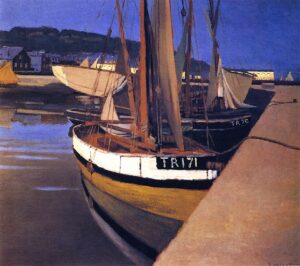
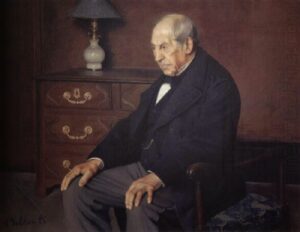
– Oil painting: Vallotton’s painting language is characterized by flattened planes, tight contouring and a cool palette. Unlike impressionist facture, his brushwork is restrained and surface treatments are smooth and even, which emphasizes form over painterly texture. Compositionally he favored strong horizontals and verticals and clear geometries that organize domestic spaces and human figures into tableaux of psychological ambivalence. Many paintings express an ironic or detached view of bourgeois life, revealing tensions between characters through posture, gaze and placement within an interior.
Across media, Vallotton’s control of line, clarity of composition and willingness to prioritize narrative tension over decorative charm mark him as a modernist with an analytic temperament.
Influences and Inspirations
Vallotton absorbed a variety of influences while maintaining a distinct voice:
– Japanese prints: The Nabis and other late-19th-century artists admired ukiyo-e for its planar treatment, flat color and economy of line. Vallotton’s woodcuts display a comparable fascination with silhouette and negative space, though he used the expressive potential of black to greater dramatic ends.
– Medieval and Renaissance relief prints: The directness and iconography of earlier woodcut traditions contributed to Vallotton’s formal vocabulary, particularly his reliance on contrast and narrative economy.
– Les Nabis: Association with Bonnard, Vuillard and Roussel brought Vallotton into contact with decorative and symbolic tendencies. While he shared an interest in surface design, he diverged in his colder, more objective approach to subject matter.
– Contemporary Parisian life: Urban scenes, the theater, cafés and bourgeois interiors populated Vallotton’s imagery. He drew from real-life observation but distilled scenes into concise, often ironic, statements about social relations and mores.
– Literary and critical culture: Vallotton’s own literary tastes and critical activity informed subject choice and compositional strategies; he frequently staged scenes with narrative suggestiveness rather than purely pictorial interest.
Famous Works
Below are five notable artworks that illustrate the range and development of Vallotton’s production. Each entry includes the artwork name, year, medium and a major public collection where the work is held, followed by an explanation of its significance.
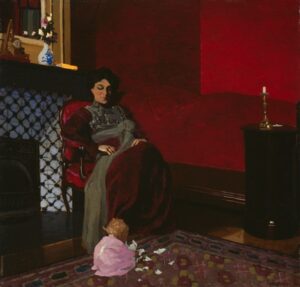
– Fighting Cats (Two Cats Fighting)
– Year: 1891
– Medium: Woodcut
– Current collection: The Museum of Modern Art (MoMA), New York (and other institutional collections via impressions)
– Explanation: One of Vallotton’s earliest celebrated prints, Fighting Cats exemplifies his mastery of black-and-white contrast. The image reduces an animal clash to a dynamic silhouette, capturing motion and menace in minimal means. Its pictorial economy and striking composition helped secure Vallotton’s reputation as a modern printmaker and contributed to renewed interest in the woodcut as a contemporary medium.
– Intimacies (Intimités)
– Year: 1898 (series)
– Medium: Oil on canvas and woodcut series
– Current collection: Works and variants in Musée d’Orsay, Paris; other impressions in European and American collections
– Explanation: Intimacies refers to a group of works—both prints and small-scale paintings—exploring private domestic scenes. Vallotton stages moments of emotional friction and concealed desire with cool detachment. His careful arrangement of figures and the sparing use of color emphasize the psychological charge of otherwise ordinary interiors. These works demonstrate the artist’s preoccupation with the subtleties of bourgeois relationships.
– The White and the Black (La Blanche et la Noire)
– Year: 1894
– Medium: Woodcut
– Current collection: Examples held in the British Museum, London, and other major print collections
– Explanation: The print pivots on a formal contrast that is both literal and thematic. Vallotton uses stark tonal opposition to explore social and aesthetic contrasts, and the work showcases his facility with pattern, silhouette and negative space. Its crisp arrangement and visual wit are characteristic of Vallotton’s graphic mode.
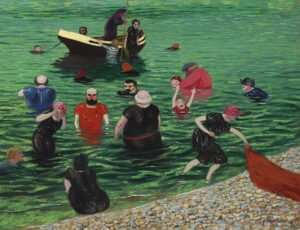
– The Bathers (Les Baigneuses)
– Year: circa 1910
– Medium: Oil on canvas
– Current collection: Musée d’Orsay, Paris (and related compositions in other collections)
– Explanation: This painting signals Vallotton’s mature painting style: flattened planes of color, measured composition and an unemotional gaze on corporeal forms. Unlike the impressionist sensuality of other bathing pictures of the period, Vallotton’s Bathers are more sculptural and reserved; the scene reads as an orchestrated tableau, wherein the bodies serve as compositional pivots and psychological markers rather than objects of mere visual pleasure.
– The Ball (Le Bal)
– Year: 1897–1900 (period variations)
– Medium: Oil on canvas
– Current collection: Works in the National Gallery of Art (Washington), Musée d’Orsay, and major European collections (variants and related canvases)
– Explanation: In The Ball Vallotton interrogates public sociability and the choreography of display. The painting arranges figures in a ballroom with an emphasis on posture, line and spatial compression. The artist’s cool palette and sharp contours lend the scene an air of theatricality and restraint; the composition often suggests underlying tensions among the participants, a recurring theme in his portraits of social life.
Note: Vallotton produced multiple versions and related compositions of many themes (bathers, interiors, social scenes) that are distributed among museums worldwide. The works above represent seminal examples and exist in numerous impressions or variants across institutional collections including Musée d’Orsay, the British Museum, MoMA, the Metropolitan Museum of Art and major Swiss collections.
Legacy and Influence
Felix Vallotton’s legacy is multifaceted. As a printmaker he contributed to the international revival of relief printing, demonstrating how the woodcut could serve modern expressive ends well beyond the decorative and the folkloric. His graphic minimalism and use of contrast influenced subsequent generations of artists who sought to reconcile figuration and formal reduction.
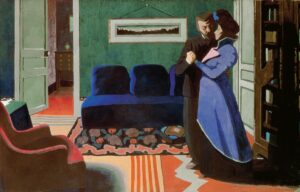
In painting, Vallotton’s austerity and psychological acuity anticipated later developments in European figurative art. His cool, composed interiors—where silence and tension replace narrative resolution—can be seen as precursors to certain strands of 20th-century realism that favored concise, scenographic compositions and a sober register of emotion.
Vallotton is also remembered for his critical writings, which contributed to contemporary debates about art and the role of the artist. His measured critiques and essays exhibit the same precision that characterizes his images, and collectively they helped to shape the reception of modern art in France.
In the museum canon his work has been the subject of retrospectives and scholarly attention that emphasize his hybrid position between late-19th-century symbolism, Nabis decorativism and emergent modernist objectivity. Vallotton remains a central figure for scholars investigating the intersections of print culture, painting and modern subjectivity.
Market Value and Collectibility
Vallotton’s market profile reflects his dual importance as a printmaker and painter:
– Prints and woodcuts: Vallotton’s graphic works, particularly iconic woodcuts from the 1890s, are accessible to a wide range of collectors. Due to multiple impressions and the survival of many prints, prices for woodcuts are generally lower than for oils, though rarer impressions, hand-colored prints and exceptional examples (with provenance or early-state proofs) command premium prices at auction and in specialist galleries.
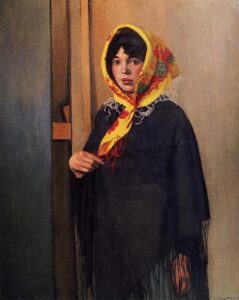
– Paintings: Vallotton’s oils, especially mature interiors and portraits from the first two decades of the 20th century, attract stronger prices. His paintings are less plentiful on the market and are highly sought by institutions and private collectors for their compositional sophistication and historical importance. Auction results in recent decades have shown robust demand, particularly for major works with good provenance and condition.
– Collectibility factors: Condition, provenance, rarity, subject matter and exhibition history all influence valuation. Works included in museum collections or exhibitions typically carry a market premium. Additionally, Vallotton’s growing recognition in scholarship and retrospective exhibitions has supported sustained interest in his work among collectors.
For collectors and dealers in art and antiques, Vallotton represents both a historically significant figure and a desirable asset: prints offer entry-level opportunities, while paintings are prized for museum-quality collections. As with all purchases, careful condition reports, provenance checks and consultation with specialists are recommended.
Museums and Collections
Felix Vallotton’s work is represented in major museums and print rooms worldwide. Notable institutional collections holding his prints and paintings include:
– Musée d’Orsay, Paris: A leading repository for Vallotton’s paintings and prints relating to his engagement with French modernity.
– The Museum of Modern Art (MoMA), New York: Holds important prints and works on paper by Vallotton, reflecting international interest in his graphic achievements.
– The British Museum, London: Houses a significant collection of Vallotton’s woodcuts and prints.
– The Metropolitan Museum of Art, New York: Contains paintings and prints that illustrate Vallotton’s contribution to modern figuration.
– Musée cantonal des Beaux-Arts (MCBA), Lausanne: As his Swiss hometown museum, it preserves works and archival material related to Vallotton.
– National Gallery of Art, Washington, D.C., Tate (London), and various regional museums across Europe and North America: All include examples that demonstrate the range of his practice.
Specialist print rooms, university collections and private collections also maintain important holdings of Vallotton’s work. Major retrospective exhibitions have circulated his work internationally, further consolidating his museum presence.
Interesting Facts
– A dual talent: Vallotton was equally at home as a graphic artist and a painter; his woodcuts brought him early fame, while his later paintings confirmed his versatility.
– Literary sensibility: He was an active art critic and essayist, contributing incisive commentary to contemporary debates on art and aesthetics.
– Les Nabis connection: Although associated with Les Nabis early on, Vallotton’s work quickly diverged from their decorative impetus toward a cooler, more realist-inclined mode.
– Revival of the woodcut: Vallotton played a major role in the late-19th-century revival of the woodcut as a modern expressive medium rather than a mere craft or novelty.
– Psychological tableaux: Many of his interior scenes read like stage sets; figures are carefully arranged to create tension and narrative ambiguity.
– Swiss roots: Despite spending most of his career in Paris, he retained ties to Switzerland and is regarded as one of that country’s most distinguished modern artists.
FAQ
Who was Felix Vallotton and why is he important?
Felix Vallotton was a Swiss-born painter and printmaker who worked principally in Paris at the turn of the 20th century. He is important for revitalizing the woodcut as a modern expressive medium and for developing a distinctive painting style—characterized by flattened planes, clear contours and psychological intensity—that bridges late-19th-century symbolism and 20th-century realism.
What are the defining features of Vallotton’s artwork?
Vallotton’s defining features include stark black-and-white woodcuts with pronounced use of negative space, and oil paintings marked by flattened surfaces, cool palettes, precise composition and an emphasis on psychological narrative rather than painterly flourish. His subjects often concern domestic interiors, portraits and scenes of urban life.
Is Vallotton associated with any artistic movement?
Vallotton participated in the circle of artists known as Les Nabis early in his career, but he maintained an independent course. His work synthesizes elements of Nabis decorative theory, Japanese print influence, and a personal realist rigor that places him somewhat apart from any single movement.
How can collectors evaluate the authenticity and condition of a Vallotton work?
Collectors should request comprehensive provenance, condition reports and, for prints, information on state and edition. Consultation with specialist dealers, museum curators or academic experts in late-19th- and early-20th-century prints and painting is advisable. Authentication may require technical analysis, such as paper studies for prints or pigment analysis for paintings.
Where can I see Vallotton’s work in person?
Major museums with Vallotton holdings include the Musée d’Orsay (Paris), The Museum of Modern Art (New York), the British Museum (London), the Metropolitan Museum of Art (New York), the Musée cantonal des Beaux-Arts in Lausanne and other regional institutions. Permanent collection displays and temporary exhibitions rotate, so checking museum websites or contacting curatorial departments is recommended before planning a visit.
—
Felix Vallotton’s oeuvre remains a compelling study in the interplay of form, narrative and psychological observation. Whether encountered in the compact force of a woodcut or the considered geometry of a painting, his work rewards close looking and continues to resonate with collectors, museum audiences and students of modern art.
AI Notice: Some visual content in this article may have been created or enhanced using artificial intelligence (AI) for artistic, editorial or illustrative purposes. Learn more about our approach in our AI & Editorial Principles.