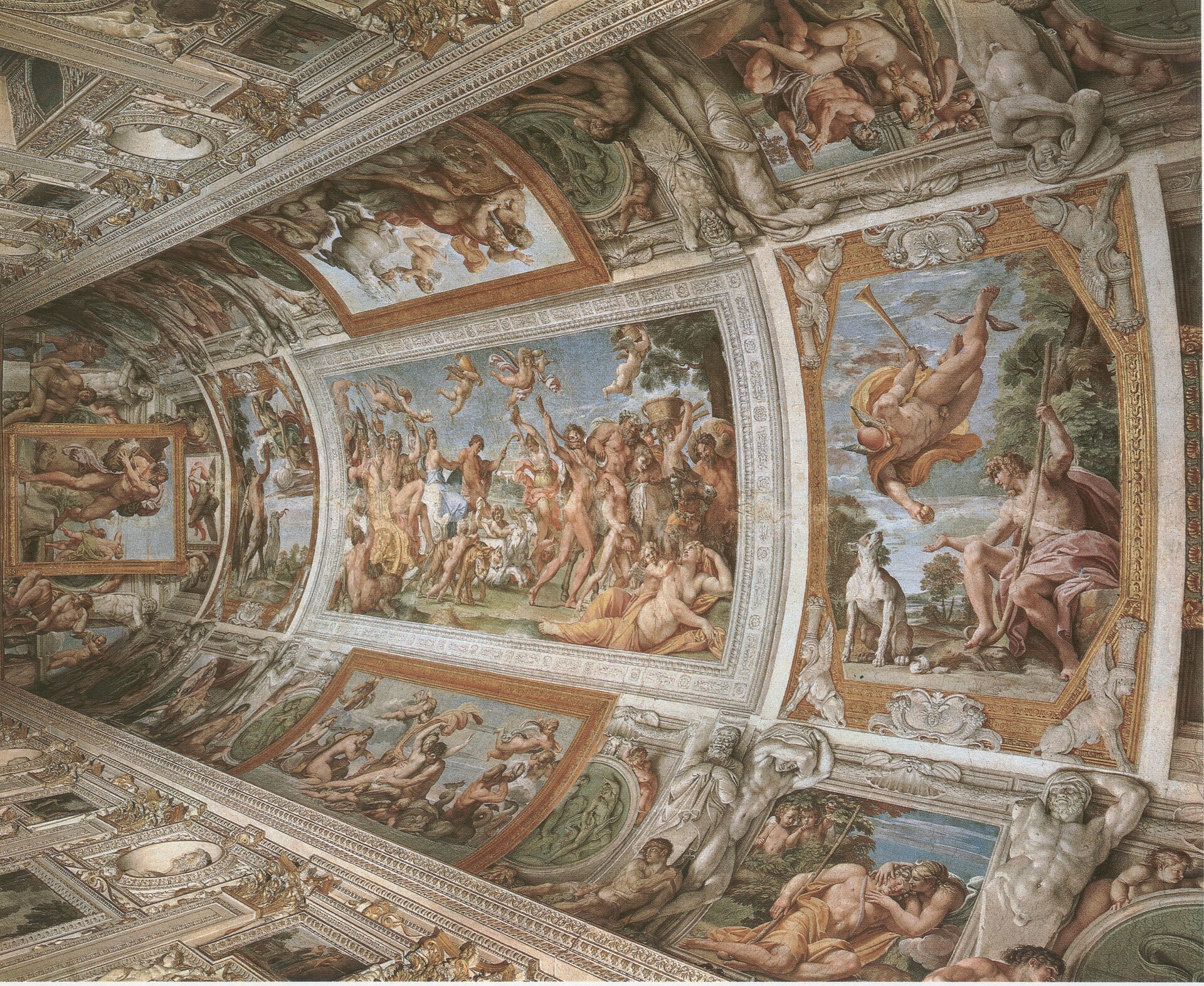
Annibale Carracci’s ceiling in the Farnese Gallery is one of those rare works that can change how you understand painting in a single visit: it is at once exuberantly sensual, intellectually rigorous, and technically astonishing. Standing beneath The Loves of the Gods (1597–1601) in Rome’s Palazzo Farnese, you confront a decisive moment in European art—when the energy of the High Renaissance and the lessons of antiquity were re-forged into a new visual language that would help ignite the Baroque.
A Ceiling Made for Rome’s Greatest Palace
The Farnese Gallery ceiling was commissioned during the Counter-Reformation era, a period when Rome asserted itself as the artistic and spiritual capital of Catholic Europe. Palazzo Farnese—begun in the 16th century for the powerful Farnese family (including Pope Paul III)—was among the city’s most prominent aristocratic residences, a stage for cultural authority as much as political prestige. Carracci, already celebrated in Bologna, was brought to Rome to meet that scale of ambition.
Can You Name the Masterpiece?
Ten masterpieces. Ten questions. How well do you know the history of art?
Annibale Carracci (1560–1609) and, representing his broader circle and workshop, which included Domenichino and Giovanni Lanfranco, collaboratively applied reverence and competitive daring to the task. The ceiling reveres the precedent of Michelangelo’s Sistine but rebels against its premise: instead of biblical history, Carracci invented a magnificent festival of love where classical myths particularly Ovid‘s erotic metamorphoses are performed.
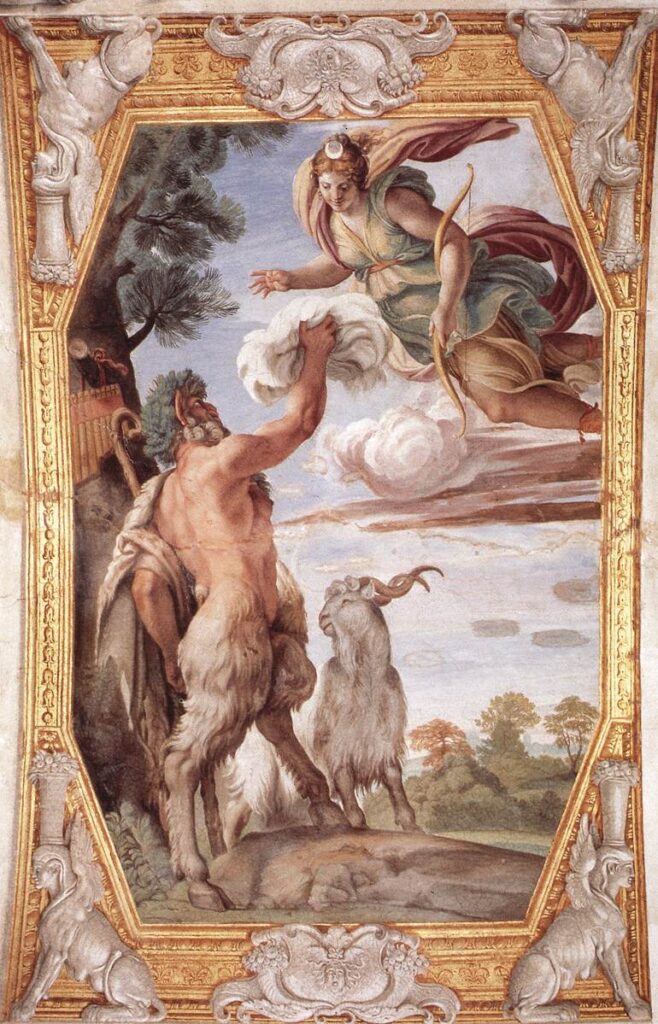
What emerges, then, is not a chaotic mythological mash-up but an artfully orchestrated scheme probably formulated through conversations with humanist scholarship at the Carracci‘s Farnese court. Art historians often claim that the Carracci‘s ceiling expressed a new ‘classicism’ for Rome: emotionally engaging, convincingly three-dimensional and sumptuous, but rooted in the antiquity. As the Met Museum observes of the Carracci, they combine diverse strands into a compelling new course for painting (“Heilbrunn Timeline of Art History,” The Met).
The Program: Myth, Metamorphosis, and Moral Theater
The Loves of the Gods centers on amorous tales of the Olympian gods—stories that Renaissance and early Baroque patrons read both as pleasurable fiction and as learned allegory. Carracci arranges these myths across the vault with a logic that rewards slow looking: framed scenes, feigned sculpture, and painted architectural elements create a layered experience that toggles between illusion and display. The viewer is invited to admire the stories, but also to admire how painting can invent worlds.
Can You Guess the Artist?
Three clues. One artist. How quickly can you identify the painter?
The leading central scene, The Triumph of Bacchus and Ariadne, presents a glittering, ecstatic procession, with Bacchus shedding through the thumping flesh, cloth and whirling limbs of his followers. Carracci manages the myth in a tangible way: body is massy, weighty and eirenic, space is understood rather than illusionistic, sculpture and gesture operate in unison within a lower register. This sensuality fused with architectural command and planning is typical of the ceiling.
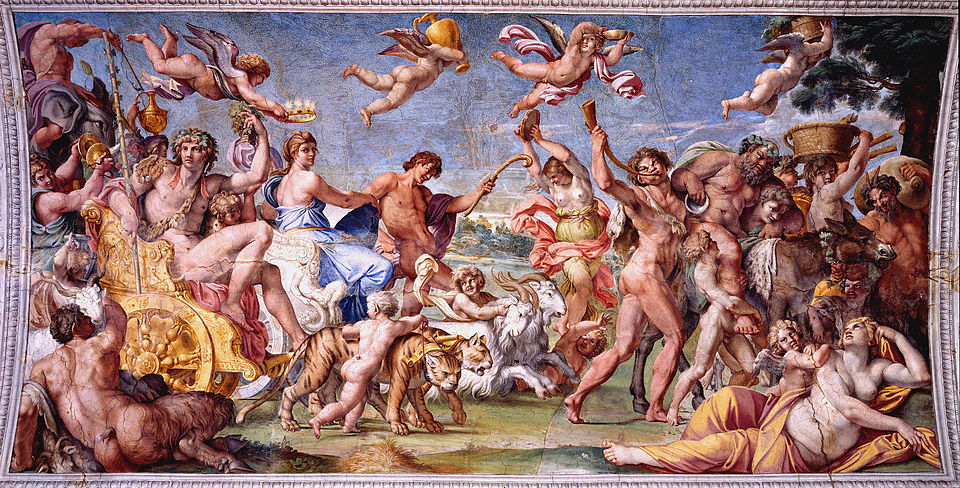
At the same time, Carracci continues to build a more complex “picture gallery” above him, the classic quadri riportati paintings that appear as framed canvases nailed to the ceiling. The conceit is important: it allows Carracci to combine the chic of easel painting with the sheer spectacle of the fresco, and to pace the reading of each myth as individual episode in the grand cycle.
Technique and Illusion: Fresco as Intellectual Virtuosity
Carracci’s ceiling is technically virtuosic because it operates on multiple registers of illusion. The quadri riportati simulate framed pictures, while surrounding elements imitate sculpted figures and architectural moldings. This interplay of “painted painting” and “painted sculpture” is not mere decoration; it is a meditation on the powers of art—how painting can rival other media and command a space.
The fresco medium was applied to a fresh plaster surface; it was necessary to work quickly, assuredly, and to have a full knowledge of how the colors would set and change after application. Carracci’s brushwork is bold but measured; lines are distinct, modeling believable, and color palette maintains a vibrant luminosity. These aspects set the standard for the Farnese ceiling to become a pinnacle for generations of artists an example of how to depict enormous decoration with lucidity and classical composure, and still retain drama.
In history of art, Carracci has been painted as the turning point between late-sixteenth-century Mannerism and the Baroque. The Victoria and Albert‘s summation of the ‘general Baroque tendency’ is concerned with energy, fervor and convincing illusion-precisely what Carracci advocates with a classical veneer and not ruthless theatrics (V&A collections and essays on Baroque art). In that respect, the Farnese ceiling is at once the pinnacle of and stepping stone for Renaissance perfection and, allegedly, the predecessor for a new visual rhetoric.
Influence, Reception, and Why It Still Matters
The Farnese Gallery became a training ground for painters working in Rome in the early 17th century. Carracci’s approach influenced figures associated with both classicizing and more dynamic Baroque currents. Domenichino absorbed its clarity and narrative order; Lanfranco pushed illusionism toward more expansive ceiling effects. Even artists who diverged from Carracci’s classicism had to reckon with the ceiling’s authority as a modern standard.
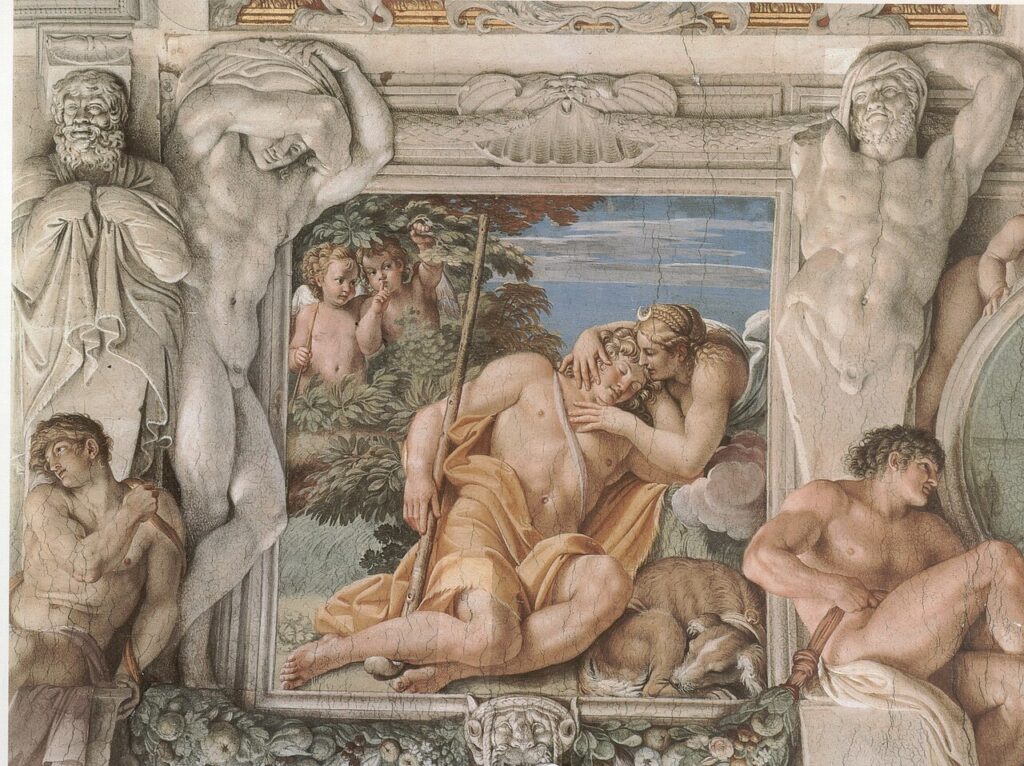
Its reputation is also due to the way it frames mythological images within a social context; situated in a palace, the love stories of the gods could be understood as a high-brow reiteration of hedonism, wedlock and fecundity, or a show of erudition and taste. This premise is in keeping with the way most prominent European collections interpret mythological images in their holdings: for example, the Louvre’s documentation on mythological subjects in its collection reflect how it ‘almost always choses to read Greco-Roman myth in such vast body of painting as a means towards allegory, patronage and obviously learned viewing’.9
The ceiling lastly matters because it demonstrates how the spaces and the institutions influence art. The Palazzo Farnese, equivalent of time, stands for centuries of the imperial dynamics of Europe. Museums and research institutions still network Carracci through those institutions. The Smithsonian Institution’s art-studies pages foreground the role of patronage, material facture, and historical background on analyzing large art using those mechanisms to read the trees of the Farnese Gallery.
Key Characteristics at a Glance
| Aspect | Summary | Why it Matters |
|---|---|---|
| Artist | Annibale Carracci (with workshop participation) | Establishes a leading model for early Baroque ceiling painting |
| Date | c. 1597–1601 | Marks a turning point between late Renaissance and Baroque |
| Location | Farnese Gallery, Palazzo Farnese, Rome | A major aristocratic/papal-linked setting shaping meaning and display |
| Subject | Classical myths: “loves” of the gods (Ovidian tradition) | Combines sensual narrative with humanist learning and allegory |
| Format | Fresco with quadri riportati illusion | Blends easel-painting prestige with monumental decoration |
| Style | Classical balance + energetic movement | Influences both classicizing and more theatrical Baroque tendencies |
Authoritative Perspectives (Quotes)
Art historians consistently single out Carracci’s ceiling as foundational. The Metropolitan Museum of Art, in its overview of the Carracci and their impact, emphasizes their synthesis of traditions into a new direction for painting—an approach that helped define 17th-century art (The Met, Heilbrunn Timeline of Art History).
A second, widely cited scholarly judgment comes from art historian Giovanni Pietro Bellori (17th century), who praised the Carracci for restoring painting through study of nature and the great masters—an assessment that aligns with how the Farnese ceiling reconciles observed reality with ideal form. Bellori’s Lives of the Modern Painters, Sculptors and Architects remains a key historical source for understanding how Carracci’s achievement was received in Rome.
Together these perspectives capture why The Loves of the Gods is not only visually impressive but historically pivotal: it is a work that later generations treated as both a technical lesson and a philosophical statement about what painting should be.
Frequently Asked Questions
What is the Farnese Gallery ceiling about?
It is a cycle of mythological scenes—primarily amorous tales of Greco-Roman gods—organized as a grand decorative program celebrating love, desire, and divine transformation, often connected to Ovid’s Metamorphoses.
What does quadri riportati mean, and why is it important here?
It refers to paintings that look like framed canvases “carried” onto the ceiling. Carracci uses this device to make each scene read clearly as an independent image while still contributing to a unified ceiling spectacle.
Is the ceiling Renaissance or Baroque?
It belongs to the late 16th–early 17th century and is often described as a key transition: grounded in Renaissance classicism and compositional order, yet anticipating Baroque dynamism, sensuality, and immersive decoration.
Where can I learn more from trustworthy institutions?
Start with the Metropolitan Museum of Art’s Heilbrunn Timeline essays on the Carracci and Italian Baroque; consult the Victoria and Albert Museum’s educational materials on Baroque art; explore the Louvre’s resources on mythological painting and classical themes; and use the Smithsonian Institution’s art-history content for patronage and technique context.
Annibale Carracci’s The Loves of the Gods in the Farnese Gallery is more than an ornamental masterpiece: it is a turning point in how European artists imagined the possibilities of painting. By fusing antique myth, humanist learning, and breathtaking fresco illusion within one of Rome’s most consequential palaces, Carracci created a ceiling that taught generations how to unite beauty with meaning—and why, four centuries later, it still compels the eye and the mind.
Sources (Selected)
- The Metropolitan Museum of Art, Heilbrunn Timeline of Art History, essays on the Carracci and Italian Baroque painting: https://www.metmuseum.org/toah/
- Victoria and Albert Museum (V&A), collections and interpretive texts on Baroque art: https://www.vam.ac.uk/
- Louvre Museum, curatorial resources on mythological subjects in European art: https://www.louvre.fr/
- Smithsonian Institution, art-history and museum education resources on technique and patronage: https://www.si.edu/
- Giovanni Pietro Bellori, Lives of the Modern Painters, Sculptors and Architects (historical primary source; multiple modern editions)
The Illusion That Changed Ceiling Painting Forever
One of the most revolutionary aspects of The Loves of the Gods is the way Carracci transformed a flat architectural surface into what appears to be an open, sculptural world.
Rather than treating the ceiling as a simple decorative space, he created an elaborate visual illusion in which painted architecture, framed canvases, mythical figures, and sculptural elements seem to coexist within the same three-dimensional environment. Viewers are encouraged to look upward not at a painted surface, but at an imagined realm where mythology unfolds above their heads.
This sophisticated use of illusion—often described as quadratura and illusionistic ceiling painting—became one of the defining characteristics of Baroque art. Later masters expanded these techniques into increasingly dramatic compositions that dissolved the boundaries between architecture, sculpture, and painting.
Carracci’s Influence on the Baroque Masters
Although artists such as Caravaggio revolutionized painting through dramatic light and realism, Carracci’s influence developed along a different path. His achievement lay in combining the ideal beauty of the Renaissance with greater movement, emotion, and visual richness.
The Farnese Gallery quickly became essential viewing for ambitious young painters arriving in Rome. Artists studied its harmonious compositions, dynamic figures, and carefully orchestrated storytelling.
Many of the seventeenth century’s greatest painters—including Pietro da Cortona, Guido Reni, Domenichino, Giovanni Lanfranco, and later Giovanni Battista Gaulli—borrowed elements of Carracci’s approach. Monumental ceilings across Italy would owe an unmistakable debt to the artistic language first perfected inside the Palazzo Farnese.
In this sense, Carracci helped establish the visual vocabulary that would define the High Baroque for generations.
More Than Mythology: A Celebration of Human Emotion
At first glance, The Loves of the Gods appears to be a collection of entertaining stories from classical mythology. Yet beneath its playful surface lies a remarkably sophisticated exploration of human relationships.
Love appears in many forms throughout the ceiling: passionate, joyful, tragic, playful, and transformative. Rather than presenting mythology as distant legend, Carracci treats these ancient narratives as timeless reflections on human desire, beauty, jealousy, and emotional complexity.
This emotional accessibility explains why modern audiences often respond to the paintings even without recognizing every mythological character or literary reference. The figures remain expressive because they communicate universal experiences rather than purely academic symbolism.
Why the Ceiling Still Feels Surprisingly Modern
Visitors frequently describe the Farnese Gallery as unexpectedly contemporary despite its age.
Part of this impression comes from Carracci’s extraordinary understanding of visual storytelling. Instead of arranging isolated scenes, he creates a sequence that guides the viewer’s eye naturally across the entire ceiling. Every figure contributes to a larger rhythm of movement, creating an experience that feels almost cinematic.
His mastery of anatomy also contributes to this sense of immediacy. The bodies possess convincing weight, natural movement, and emotional expression, making them appear strikingly alive even after more than four centuries.
Combined with vibrant color, dramatic perspective, and playful illusion, the ceiling continues to feel remarkably fresh to modern viewers accustomed to immersive visual experiences.
Visiting the Farnese Gallery Today
The Farnese Gallery remains one of Rome’s greatest artistic treasures and continues to attract historians, artists, architects, and travelers from around the world.
Experiencing the ceiling in person reveals qualities that photographs rarely capture. The scale of the room, the interaction between architecture and painting, and the carefully calculated viewpoints all become apparent only when standing beneath the masterpiece itself.
For many visitors, the experience becomes one of the defining artistic moments of a journey through Rome, demonstrating why the Farnese Gallery occupies such an important place in the history of Western art.
Conclusion
Annibale Carracci’s The Loves of the Gods represents far more than a magnificent decorative ceiling. It marks a turning point in European painting, where Renaissance harmony evolved into the theatrical energy of the Baroque. By combining classical mythology, breathtaking illusion, and profound emotional insight, Carracci created a work that continues to inspire artists more than four hundred years after its completion.
Its enduring power lies not only in technical brilliance but in its ability to make ancient stories feel immediate and deeply human. That is why the Farnese Gallery still feels so remarkably modern: it reminds us that great art does not simply decorate space—it transforms the way we experience it.
AI Notice: Some visual content in this article may have been created or enhanced using artificial intelligence (AI) for artistic, editorial or illustrative purposes. Learn more about our approach in our AI & Editorial Principles.