Hans Holbein and Henry VIII: The Portrait Trick That Shaped a Tyrant’s Image
Hans Holbein the Younger’s image of Henry VIII is one of the most influential “brand portraits” in Western history: a king planted wide-legged, staring down the viewer, draped in power, wealth, and unchallengeable authority. That image did not arise by accident. It was engineered—through paint, workshop practice, and court politics—at the exact moment Tudor England was reshaping itself during the Reformation. To understand the main keyword—hans holbein henry viii—is to understand how art, propaganda, and monarchy fused in the 16th century to create a visual language that still defines Henry VIII today.
Holbein’s Arrival in Tudor England and the Making of a Court Artist
Hans Holbein the Younger (c. 1497–1543) trained in the artistic culture of the Northern Renaissance, first in Augsburg and then in Basel—an important center of humanist learning and printing in the early 16th century. His early work reflects the precision and surface realism prized in German and Swiss art, alongside an intellectual engagement with humanist circles. Basel’s book trade and reformist debates also shaped Holbein’s flexibility as an artist who could serve religious patrons, civic institutions, and private collectors.
Can You Name the Masterpiece?
Ten masterpieces. Ten questions. How well do you know the history of art?
Holbein initially came to England in 1526, with a letter of introduction to Thomas More from the humanist scholar Erasmus. He instantly arrived at the heart of English humanism, a world bound to the institutions and networks of political and cultural consequence. He was valued immediately for the skill with which he captured likenesses. By the 1530s, as the English court around Henry VIII processed the break with Rome and the reshaping of power, this skill proved strategically indispensable.
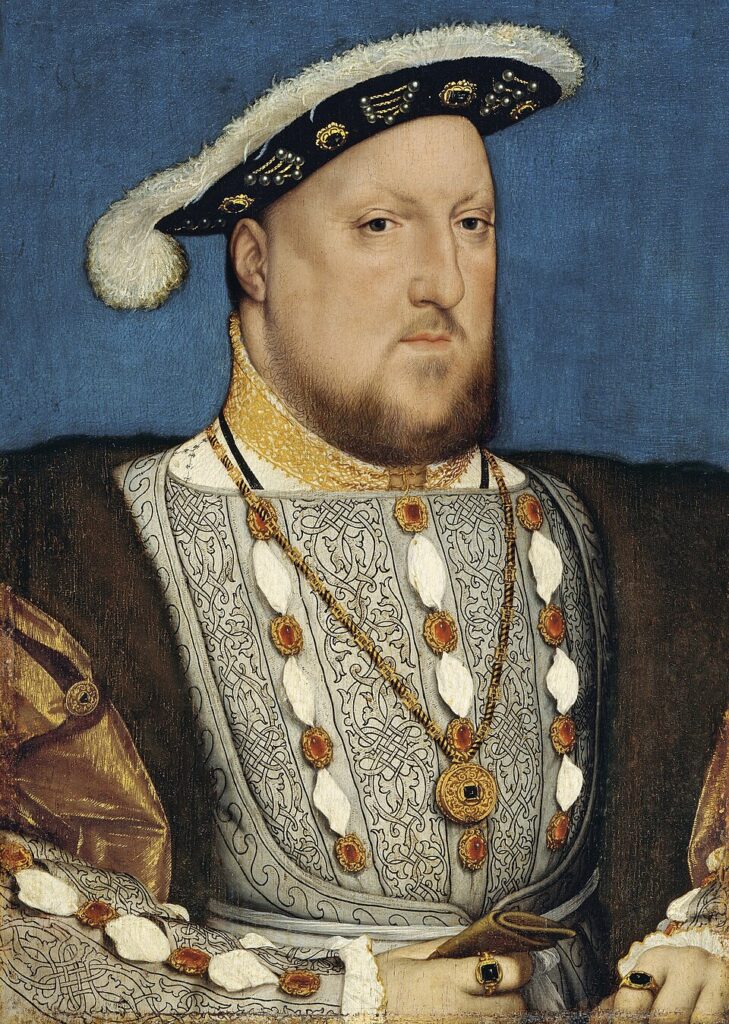
At the same time, Henry VIII appointed him King‘s Painter in 1536, a position which, as the Victoria and Albert Museum explains in their collections and on Holbein‘s drawings and designs, was much more than “artist-in-residence;” it involved not only portraits but decorative schemes and the designs for ceremonial artifacts which helped frame Tudor sovereignty (V&A collections and scholarship). Holbein was, according to the V&A, “central to the art of the Tudor court, defining the aesthetics of power through the visual display of political, social and ceremonial power in the visual art of the period.”
The Iconic Portrait: How Holbein Defined Henry VIII’s Image
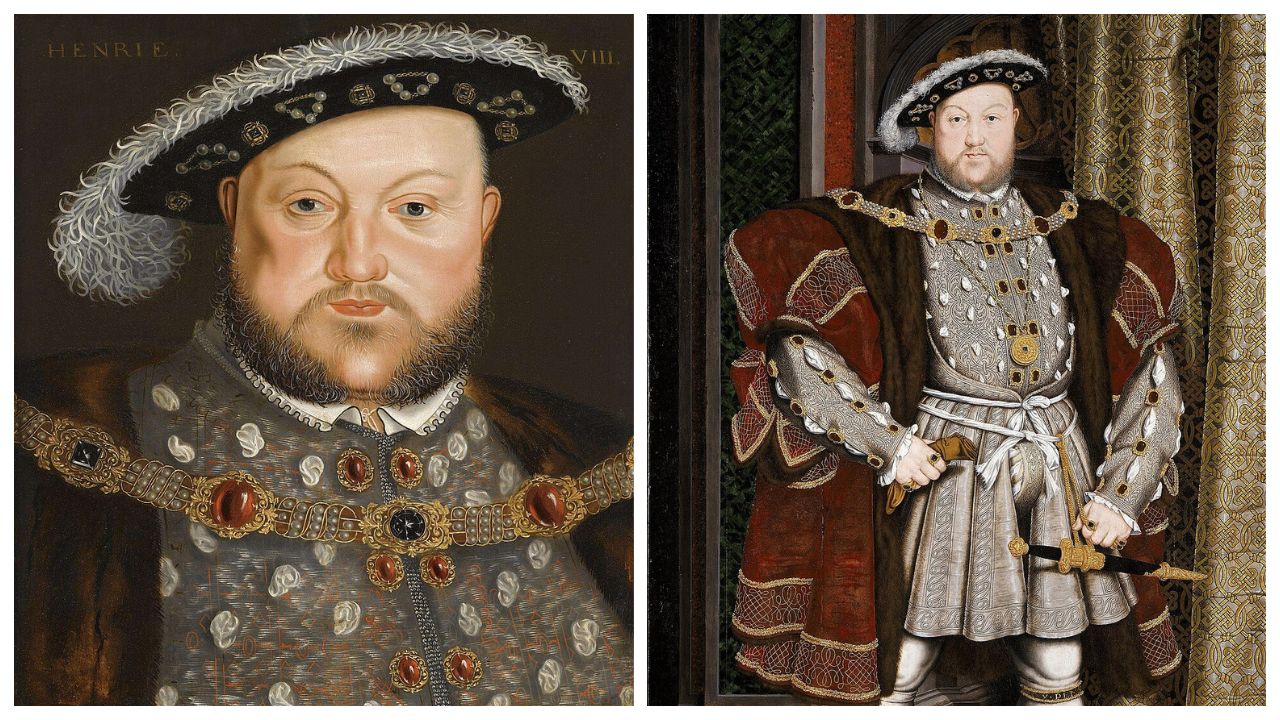
The most famous Holbein-derived image of Henry VIII is associated with the wall painting created for Whitehall Palace (1537), a dynastic statement celebrating the Tudor line. Although the original mural was destroyed in the 1698 Whitehall fire, its composition survives through copies and related works. The king’s stance—front-facing, broad, and commanding—was a radical departure from more restrained medieval depictions. This was a Renaissance monarch presented as an immovable force.
Can You Guess the Artist?
Three clues. One artist. How quickly can you identify the painter?
Holbein‘s Henry is less depicted than made. The large outline of his body, the mirrored arrangement of fabrics and jewels and the unyielding stare all combine to transmit a sense of order in chaotic times. That, at least, was important given what had happened to England in the years prior (the ‘annulment crisis’, the murder of Anne Boleyn, the Dissolution of the Monasteries which started in 1536, and rising political and international uncertainty). Politics is performed painting as political propaganda.
In museum texts, Holbein‘s mastery and power are stressed. The Met says that Holbein has achieved the rare union of extreme descriptive detail and epic stature. This is seen in all of his Tudor portraits. The point is that he rendered court politics into an effective visual vocabulary, which was convincing enough to deceive and heroic enough to endure, while remaining stylish enough to be persuasive.
Art, Power, and Propaganda in the English Reformation
Henry VIII’s reign (1509–1547) spanned a period when images carried special ideological weight. After the break with Rome and the establishment of royal supremacy over the Church in England, the state needed new symbols of legitimacy. Portraiture—portable, replicable, and instantly legible—served that need. Holbein’s work became a key instrument in this shift, aligning the king’s personal image with the authority of the new order.
Holbein was part of a larger world of courtly production: designs for goldsmiths, festival entertainments, and decorative schemes that transformed politics into a spectacle. In the pre-photograph era, portraits weren‘t passive records; they were instruments. They could be given as gifts, imitated, placed in noble houses, sent in diplomatic missions. The king‘s face was a piece of policy; a declaration of who was in charge and who was in power wanted to be viewed.
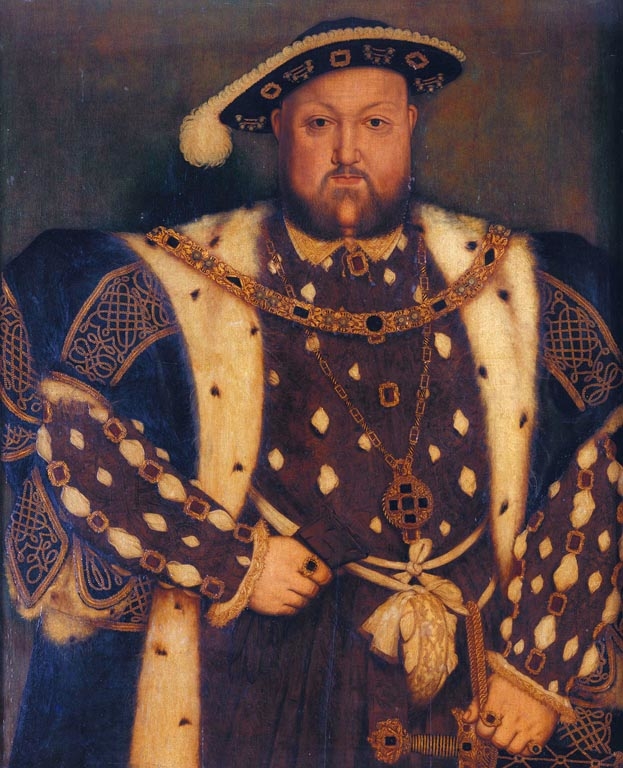
The stakes of this visual agenda is captured aptly in a well-known, scholarly account. Historian John Guy says the court was exceptionally mindful of representation, spectacle, and symbols in asserting the king’s power; Holbein’s portraits are, he argues, some of the most transparent, survivals that served this function. They do more than simply transmit Henry‘s features; they provide a strategically negotiated vision of dominance, prosperity, and immutability – an ideal certainly to bear in mind, given the religious reforms, institutional changes and political instability that characterised this period.
Holbein’s Methods: Realism, Workshop Practice, and Court Demand
Holbein’s authority rests partly on method. He was a master draftsman, often beginning portraits with detailed preparatory drawings—many surviving today—before translating them into paintings. These drawings capture facial structure and expression with remarkable economy, allowing Holbein to work efficiently while maintaining lifelike specificity. The practice also supported replication, an important feature in court portrait culture.
Close scientific study of Northern Renaissance painting often documents the ways Holbein built up layers of technique: detailed underdrawings, fine glazes of pigment, a precise study of textures fur, velvet, embroidery, etched metal. This is not painting that‘s “detail for detail‘s sake.” It‘s persuasion. Surface tactility implies resources and access to them, a visual coded message for a court that proclaimed its own divine and legal right to rule.
These institutions highlight the material intelligence in the painting. The Louvre, in the wider Northern Renaissance collection it houses and explains, talks about the status- and realism-making role of virtuosity and careful looking. The Smithsonian, in its art-history materials, discusses Renaissance portraiture as a social document as much as an artifact: a repository of power, identity, and social relations under institutional conditions.
Table: Key Characteristics of Holbein’s Henry VIII Image
| Characteristic | What Viewers See | What It Communicates |
|---|---|---|
| Frontal, confrontational pose | Henry faces outward, planted firmly | Unchallengeable authority; dominance |
| Monumental silhouette | Broad shoulders, expanded width | Strength, stability, dynastic permanence |
| Luxurious materials | Jewels, cloth of gold, fur, embroidery | Wealth, legitimacy, control of resources |
| Intense realism | Lifelike facial structure and textures | Credibility; “this is the real king” |
| Courtly symbolism | Insignia and costume choices | Political messaging aligned with royal supremacy |
Legacy and Where to See Holbein’s Tudor World Today
Holbein’s Henry VIII became the template through which later generations imagined the Tudor monarch. Even when the original Whitehall mural vanished, its copies, prints, and echoes persisted. The result is remarkable: Holbein’s design shaped not only contemporary court culture but also centuries of theater, film, illustration, and popular history. When people “see” Henry VIII in their minds, they are often seeing Holbein.
This legacy can be tracked through museum collections and scholarship. The Metropolitan Museum of Art provides art-historical framing for Holbein’s role in Northern Renaissance portraiture and his exceptional status among Tudor artists. The Victoria and Albert Museum preserves and interprets works tied to Tudor design, including objects and drawings that place Holbein within a larger world of court craftsmanship. These institutions, through conservation and research, help separate myth from method—showing how the image was built.
The continued appeal also rests on clarity. Holbein’s Henry VIII is instantly readable: power made visible. In an age saturated with images, that kind of visual decisiveness still works. It is a reminder that propaganda is not only about distortion—it can also be about precision, selection, and emphasis. Holbein’s genius was to make political messaging feel like reality.
Frequently Asked Questions (FAQ)
Was Holbein the official painter of Henry VIII?
Yes. Holbein served as King’s Painter, producing portraits and designs for the Tudor court, particularly from the mid-1530s until his death in 1543.
Is the famous full-body Henry VIII portrait still intact?
The original Whitehall Palace mural (1537) associated with Holbein was destroyed in the 1698 fire. The composition survives through copies and related versions that preserve the iconic pose.
Why does Henry VIII look broader and more imposing in Holbein’s image?
Holbein’s design emphasizes width, symmetry, and frontal presentation to convey dominance and permanence—qualities useful to a monarch asserting authority during the English Reformation.
How do museums support what we know about Holbein and Henry VIII?
Institutions such as the Metropolitan Museum of Art, the Victoria and Albert Museum, the Louvre, and the Smithsonian Institution provide conservation research, catalog scholarship, and historical context on Renaissance portrait methods and court culture.
Was Holbein’s portrait “accurate”?
Holbein was renowned for likeness, but court portraiture also communicated political ideals. The image is both observational and strategic: it depicts Henry while amplifying the message of power.
The phrase “hans holbein henry viii” names more than an artist and a king; it identifies a turning point in how political authority could be manufactured through art. In the volatile landscape of Reformation-era England, Holbein supplied Henry VIII with a visual identity strong enough to outlive palaces, policies, and even the original paint itself. Through technique, design, and courtly purpose, Holbein didn’t just portray Tudor power—he defined what it looked like.
Sources consulted and recommended: interpretive and collection resources from the Metropolitan Museum of Art, the Victoria and Albert Museum, the Louvre Museum, and the Smithsonian Institution (museum collection pages, scholarly catalog entries, and educational materials on Northern Renaissance portraiture and Tudor court art).
AI Notice: Some visual content in this article may have been created or enhanced using artificial intelligence (AI) for artistic, editorial or illustrative purposes. Learn more about our approach in our AI & Editorial Principles.