The Best Paintings of Hans Holbein That Reveal Secrets You’ll Never Unsee
Hans Holbein the Younger’s paintings do not merely depict the Renaissance—they define how we visualize it. From coolly exact portraits of Tudor courtiers to religious scenes shaped by the upheavals of the Reformation, Holbein fused Northern European precision with an international sophistication that still feels startlingly modern. His sitters meet our gaze across five centuries with a clarity that seems to suspend time, and his surfaces—skin, velvet, fur, metal, paper—are rendered with such authority that the pictures read like historical documents as much as artworks.
Holbein’s World: Renaissance Humanism, Reformation Upheaval, and Tudor Power
Hans Holbein the Younger (c. 1497–1543) worked at the hinge-point between late medieval traditions and the Northern Renaissance. Born in Augsburg (in the Holy Roman Empire) and active early in Basel, he matured in a city shaped by printing, humanist scholarship, and religious debate. Basel’s intellectual climate—linked to figures such as Erasmus—helped form Holbein’s ability to give visual form to learning, status, and personal identity.
Can You Name the Masterpiece?
Ten masterpieces. Ten questions. How well do you know the history of art?
The turbulent time in which Holbein worked was between periods of religious upheaval iconoclasm, change in patronage and financial support for religious art, notably in the major Swiss cities such as Basel. Sure-footed and flexible Holbein proved himself adaptable to new circumstances, “when church image commissions became fewer he had no difficulty turning his sharp eye into a new channel; one in which people and objects expressed the same ideas of power, faith and loyalty”.
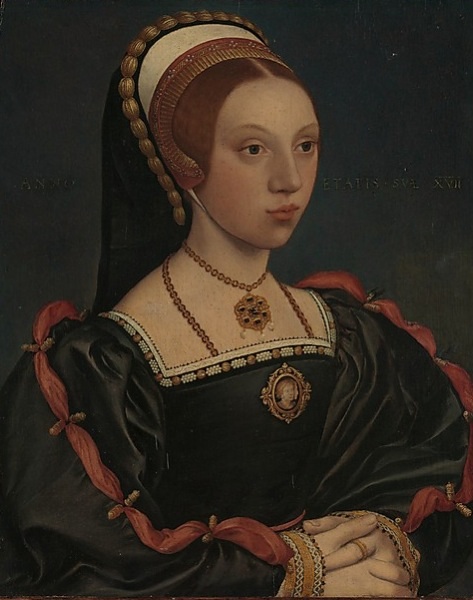
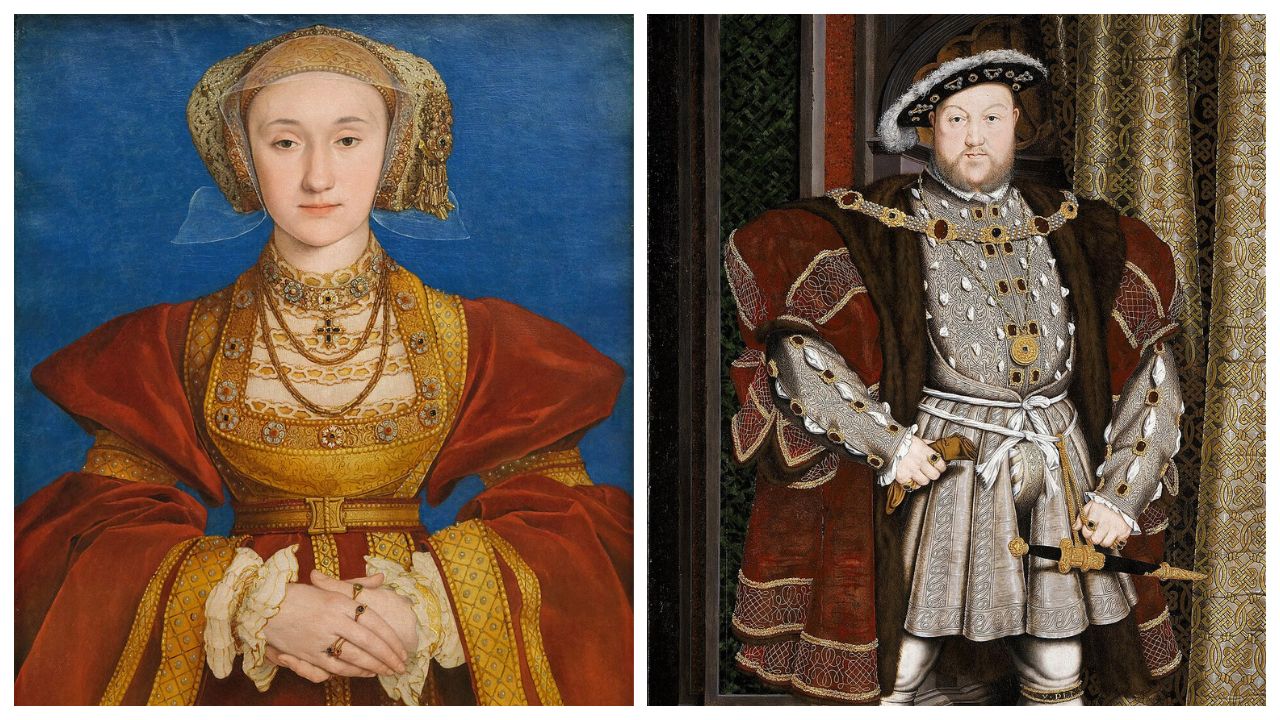
His later triumph in England most notably, at the court of the Tudors put him at the heart of European diplomacy. Henry VIII‘s rule (1509–1547) was one of dynamic political realignment and, in this context, portraiture became part of the machinery of statecraft. Holbein‘s portraits established a new standard: suggesting power, authenticity and premeditated splendor while establishing the model for how monarchy would be visualized following the Renaissance.
What Makes the Paintings of Hans Holbein So Distinctive?
Holbein’s hallmark is a realism that feels simultaneously intimate and official. He builds faces with crisp, economical modeling—nothing sentimental, nothing vague—yet the resulting presence is deeply human. This balance between psychological immediacy and formal restraint is central to why the paintings of Hans Holbein remain foundational to portraiture.
Can You Guess the Artist?
Three clues. One artist. How quickly can you identify the painter?
The same goes for Fabrics’ fantastic handling of objects and symbols. They are not simply ‘well-painted’; they are a language of social meaning. The fur-lined cloak, the jewel-encrusted clutch, the scepter of office, the book or the seal these signs speak of social position, of occupation, of moral character. The effect is consistent with the regard for the individual displayed by renaissance humanism but also, it admits, with the certainty that identity was contingent upon social role in the sixteenth century.
But Holbein shows a high level of mastery when it comes to order in a composition and clarity of design. Some of the backgrounds are very resolved, with the focus on the sitter‘s image and things. When the space is complex, it is done so purposefully most famously in The Ambassadors (1533), where an anamorphic skull provides an unwelcome memento mori. So the Louvre refers to the painting as exhibiting the painter‘s “virtuosity” and a symbolic dense coding (Musee du Louvre).
Key Characteristics of Holbein’s Painting (Summary Table)
| Characteristic | What it looks like in Holbein’s work | Why it matters historically |
|---|---|---|
| Razor-sharp likeness | Clean contours, steady gaze, precise facial structure | Establishes portraiture as reliable record and political tool |
| Material realism | Velvet, fur, metal, parchment rendered with tactile clarity | Visualizes Tudor wealth, office, and international trade networks |
| Symbolic objects | Books, instruments, seals, devotional items | Encodes learning, faith, diplomacy, and mortality |
| Composed simplicity | Plain or shallow backgrounds; frontal clarity | Intensifies the sitter’s authority and legibility |
| Innovation (anamorphosis) | Distorted skull in The Ambassadors | Demonstrates Renaissance optical play and moral messaging |
Masterpieces and Where to See Them: From the Louvre to Major Collections
Among Holbein’s most studied works, The Ambassadors (1533) is central not only for its technical bravura but for its intellectual ambition. The painting’s scientific instruments, musical references, and religious tensions mirror Europe’s fractured unity in the 1530s. The Louvre’s stewardship of the work has made it a touchstone for scholars examining diplomacy, knowledge, and mortality in Tudor-era image culture.
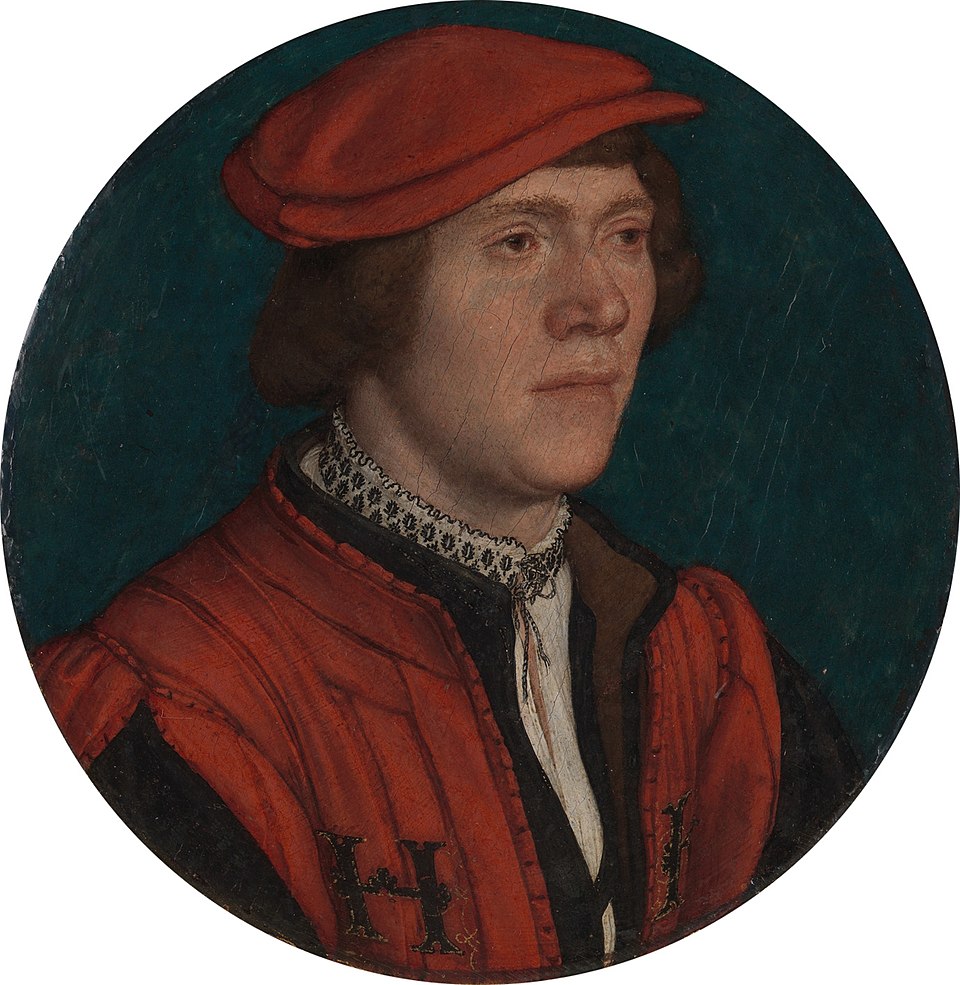
In London, the Victoria and Albert Museum and other British institutions collect crucial material relevant to Holbein‘s working method sketchbooks, designs for court portraiture. The V&A has underlined his multiple functions as an artist/draughtsman/decorator, which offer reasons for the compositional rigour of his portraits they have been not simply painted but constructed.
On the other side of the Atlantic, scholarship by the Metropolitan Museum of Art and the Smithsonian Institution provide contextualizing knowledge of other Northern Renaissance practices. In the Met, period talk of the Renaissance as a meeting of technique and humanist subjectivity underpinned the institution’s conceptualization of portraiture closely paralleling artists’ clients’ and patrons’ expectations of Holbein. Smithsonian publications and public programsconsolidate scholarship on European objects and dress as social code.
Holbein’s Technique and the Authority of Likeness
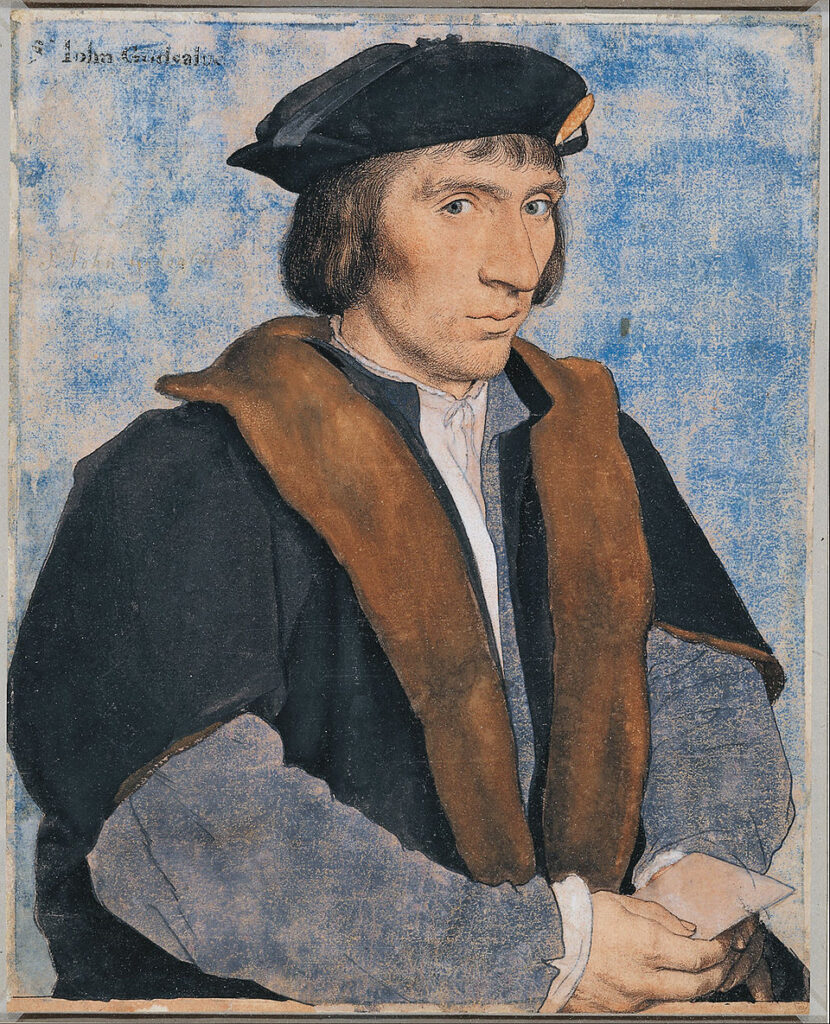
Holbein’s paintings convey authority because they are built on disciplined draftsmanship. His preparatory drawings—where they survive—show how thoroughly he mapped a sitter’s features before paint touched panel. This structure creates the impression of inevitability in the final likeness: the face seems “found” rather than invented, which is one reason Holbein’s portraits have been trusted as historical surrogates for real people.
His handling of paint is tight and layered rather than showy. The flesh, although modeled with a naturalistic sense of life, is free from too much painterly affect; although he keeps his edges well defined. Such attention to clarity and compositional structure is appropriate in the social context of Tudor portraiture: the portrait had to convey trustworthiness, social standing and long-term stability. As the Met has said, in a wider consideration of portraiture‘s civic and social functions, the picture was not just a private adornment but also a vehicle of representation within a system of connections of power, memory, and narrative (The Met).
A popular image of Holbein‘s Henry VIII (through variants and workshop pattern) the poet can see how portraiture could be used as political theater the forward battering-ram position, the broad buxomness of the shoulders, the sumptuous surfaces constructs a visual argument about mastery. That tradition of the surviving image book can be seen to demonstrate the power of one pictorial invention to canonize the monarchy face for generations.
Paintings of Hans Holbein: Reputation and conservation
Holbein’s standing has remained unusually stable because his paintings continue to reward close looking and careful historical analysis. They are central to museum narratives about the Northern Renaissance, the Reformation, and Tudor England—periods that shaped modern Europe’s political and religious landscape. Institutions like the Louvre and the Victoria and Albert Museum present Holbein not as a specialist curiosity but as a defining European master whose art intersects with history at every point.
Technical study has refined knowledge of Holbein‘s workshop practice: infrared, x-ray and pigment analysis can clarify workshop engagement, and distinguish studio versions from later copies a core pursuit in images so popular with royal patrons. Museums like The Met have relied on conservation knowledge to inform tradition for we ‘see’ ‘what’.
Holbein continues to matter because his images exemplify a visual literacy that continues to be relevant: Persuading images, signifying objects of personal meaning, crafting “realism” to wield authority. In a world of camera-toting society pages and tightly controlled “public images,” Holbein‘s images still serve to remind us that realistically-painted images have never been neutral, but a language the language of the Tudors, and the language of Holbein.
“Holbein’s The Ambassadors is one of the most famous paintings in the Louvre,” the Musée du Louvre notes in its collection presentation, emphasizing the work’s enduring canonical status and interpretive richness (Musée du Louvre).
The Met likewise situates Renaissance portraiture within systems of status and representation, reinforcing why Holbein’s “truthfulness” is inseparable from social function (The Metropolitan Museum of Art).
Frequently Asked Questions (FAQ)
1) What are the most famous paintings of Hans Holbein the Younger?
Widely cited masterpieces include The Ambassadors (1533, Louvre) and iconic Tudor portraits associated with Henry VIII and his court. His portrait output—statesmen, merchants, scholars—forms the core of his reputation.
2) Why is Holbein so important to Tudor history?
He created the defining visual identity of Henry VIII’s court at a time when images shaped diplomacy, legitimacy, and public authority. His portraits functioned as political instruments as well as artworks.
3) Where can I see Holbein’s work in major museums?
Key works are held in European collections including the Louvre (Paris) and important British institutions such as the Victoria and Albert Museum (London), with related works and scholarship supported by major museums including The Metropolitan Museum of Art and the Smithsonian Institution.
4) What is special about the skull in The Ambassadors?
It is an anamorphic image—distorted so it resolves into a skull only from a particular angle—serving as a memento mori that contrasts worldly knowledge with mortality.
5) How did the Reformation affect Holbein’s career?
In Basel and other reforming cities, religious commissions declined and iconoclasm reshaped artistic demand. Holbein’s shift toward portraiture and court patronage reflects these changed conditions.
The paintings of Hans Holbein the Younger endure because they unite beauty with evidence: they are breathtaking objects and precise historical statements. Rooted in the Northern Renaissance and sharpened by the politics of Tudor England, Holbein’s art shows how a portrait can be both a likeness and an argument. In museums from the Louvre to London’s major collections—and through ongoing scholarship at institutions such as The Met and the Smithsonian—Holbein continues to teach viewers how power, identity, and truth are constructed on the painted surface.
Authoritative sources referenced: Musée du Louvre; The Metropolitan Museum of Art; Victoria and Albert Museum; Smithsonian Institution.
AI Notice: Some visual content in this article may have been created or enhanced using artificial intelligence (AI) for artistic, editorial or illustrative purposes. Learn more about our approach in our AI & Editorial Principles.