These Elegant 1950s Formal Dresses Are Back—See the Most Flattering Styles
Elegant 1950s formal dresses are more than beautiful clothes—they are wearable evidence of a decade rebuilding after war, celebrating prosperity, and redefining femininity through silhouette, fabric, and impeccable finish. From the ballrooms of New York and Paris to embassy receptions in Washington, these gowns captured a moment when craftsmanship and etiquette carried real social weight. Today, collectors, designers, and vintage enthusiasts return to the 1950s not only for glamour, but for the clarity of its design language: a cinched waist, a sculpted bodice, and a skirt engineered to move like architecture.
What Defines Elegant 1950s Formal Dresses?
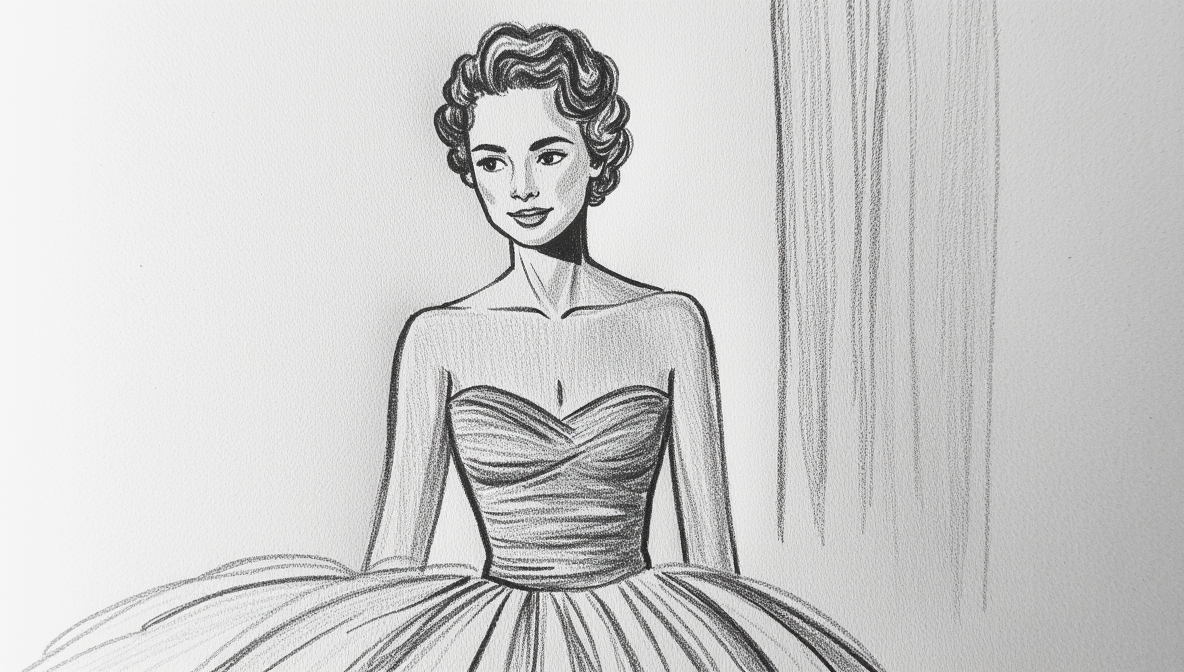
Elegant 1950s formal dresses are typically distinguished by a structured bodice, a sharply defined waist, and either a full skirt (often supported by petticoats or stiffened underlayers) or a sleek, narrow “sheath” or “column” line. This was the era when couture ideals and mid-century engineering met: interior boning, built-in foundation garments, and carefully placed darts shaped the torso, while yards of fabric created volume and drama below. The overall effect was poised and intentional—designed for formal photographs, dance floors, and public appearances.
Can You Name the Masterpiece?
Ten masterpieces. Ten questions. How well do you know the history of art?
If we frame it chronologically, fashion historian wise, the 1950s exist in relation to a specific timeline. The Christian Dior New Look, debuted in 1947, heavily shaped formal and daywear in the 1950s, characterized by the cinched waist and fuller skirt. Museums often credit this style to a postwar shift away from restrictions and a resurgence in luxury through fabric abundance. “In 1947 Dior launched his first collection, that was presented in Paris and was an immediate success. It was given the name ‘New Look’ by journalists” (Victoria and Albert Museum, fashion collection resources). This aesthetic continued into the evening and day formalwear of the 1950s.
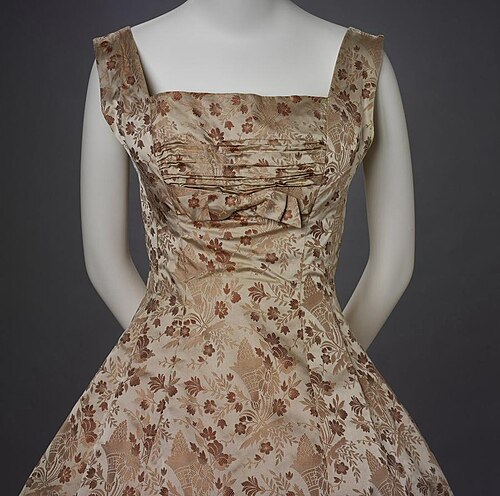
In the 1950s elegance was also about savoir-faire, dressing properly for the purpose and the venue. The style of evening gowns used for weddings, formal dinners, opera, and balls utilized richer fabrics, such as silk satin, taffeta, velvet, lace, chiffon, embroidered organdy, and more. Gloves, stoles, and matching shoes accompanied these formal ensembles, and the Metropolitan Museum of Art‘s Costume Institute collections are filled with examples demonstrating how these looks functioned as an integrated system of form, fabric and accessory.
Signature Silhouettes, Fabrics, and Construction Details
The most recognizable silhouette in elegant 1950s formal dresses is the full-skirted gown: fitted bodice over a dramatically flared skirt. Circle skirts, gathered skirts, and pleated skirts created volume; crinolines and net petticoats helped maintain shape. Strapless necklines, sweetheart bodices, and off-the-shoulder cuts were common in eveningwear, often paired with a short bolero or a wrap for modesty in certain settings. The look reads “romantic,” but its foundation is highly technical construction.
Can You Guess the Artist?
Three clues. One artist. How quickly can you identify the painter?
The other major style of filling was the ” sheath”. These fit the body more closely, sometimes with an empire waist or darting seams. They were the appropriate style for the smart evening event, and could feel incredibly modern in black satin or jewel-toned velvet. The most appealing sheaths were precisely tailored, with beautiful seams, proportions, and construction rather than something that was just stretched.
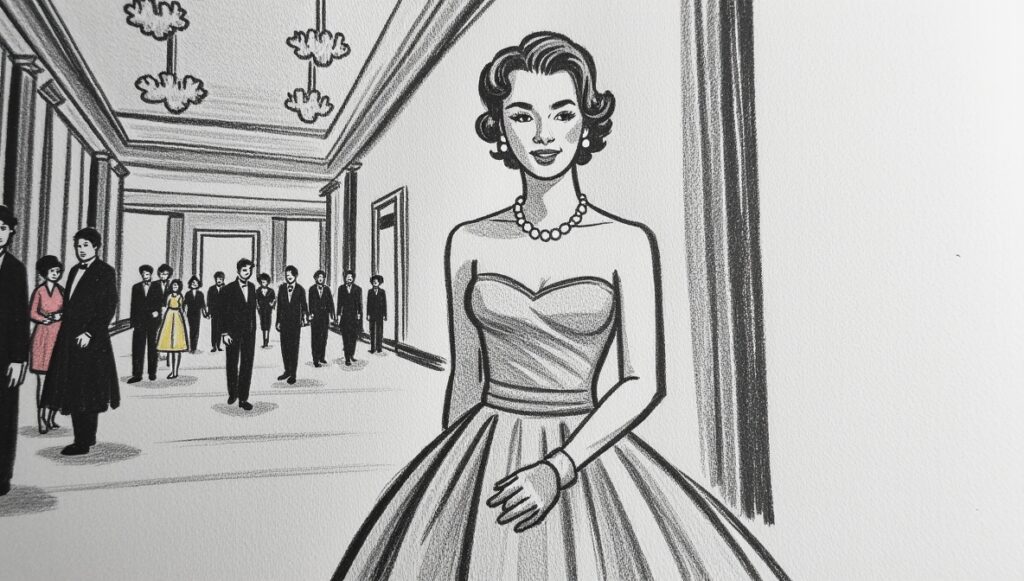
Fabric was as much a status marker and an indicator of formality as is anything. Satin or taffeta signaled evening glamour, a kind I was comfortable reimagining. Chiffon and lace could mean lightness or romance. Velvet equalized with the richness of winter; brocades, with metal threads, signaled the holiday or state visit. How a dress was constructed its boning, underlying, interfacings, the hand hemmed finish was integral to its construction and how it functioned, too. As the Smithsonian‘s costume information reminds visitors frequently, “We always ask about ‘how clothing is made’ in our interpretation, and it‘s about all those unseen underpinnings.” (Smithsonian Institution collections and fashion exhibition information)
Key characteristics at a glance
| Feature | Common 1950s Formal Expression | Why It Reads “Elegant” |
|---|---|---|
| Waist | Strongly cinched, often with inner structure | Creates a controlled, sculpted silhouette |
| Skirt | Full (pleated/gathered/circle) or slim sheath | Either dramatic movement or refined minimalism |
| Neckline | Strapless, sweetheart, bateau, off-shoulder | Frames the face and shoulders for evening |
| Fabrics | Silk satin, taffeta, chiffon, lace, velvet | Luxurious sheen, drape, and texture |
| Construction | Boning, built-in support, underlining | Smooth fit and formal posture |
| Finish | Hand details, covered buttons, precise hems | Signals craftsmanship and quality |
Cultural Context: From Paris Couture to American Social Life
Paris couture set a benchmark in the 1950s, with houses refining the postwar ideal into varied silhouettes and lavish eveningwear. Institutions such as the Musée du Louvre, while best known for fine art, also contextualize how Paris functioned as a cultural capital where luxury industries (including fashion) shaped global taste. In practical terms, elite Parisian design houses influenced formal dress expectations far beyond France—through magazines, department store adaptations, and international clientele.
In the United States, formalwear was intertwined with postwar prosperity, growing consumer culture, and a busy calendar of social events. New York’s fashion industry translated couture influence into American-ready designs, while Hollywood amplified the fantasy. Elegant gowns were worn to theater openings, charity balls, hotel galas, and political functions—occasions where appearance communicated respectability and social standing. Museums such as The Metropolitan Museum of Art preserve these garments precisely because they record social history as much as aesthetics. (The Metropolitan Museum of Art, Heilbrunn Timeline of Art History and Costume Institute holdings).
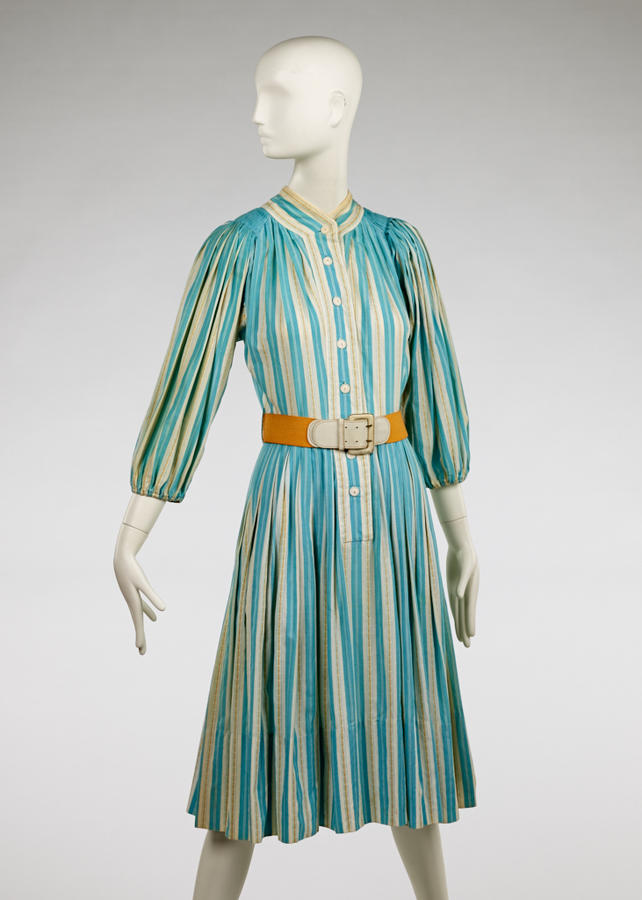
The 1950s were also an era of etiquette and institutional formality: universities, civic organizations, and diplomatic events maintained strict dress codes. The result was a demand for gowns that photographed well and moved well—beautiful under bright ballroom lighting and flattering in posed portraits. The V&A and the Met both document how mid-century garments were engineered for the body and for the public gaze, emphasizing the relationship between fashion, technology (textile manufacturing), and social behavior. (V&A fashion resources; Met collections)
How to Choose and Wear Elegant 1950s Formal Dresses Today
Selecting an authentic or reproduction 1950s formal dress starts with silhouette and structure. A true 1950s look typically requires a supportive underlayer—either a petticoat for a full skirt or shaping garments to keep the bodice smooth. Modern wearers often skip these foundations, but the dress will not sit as intended without them. If comfort is a concern, a lighter net petticoat or a soft corsetry alternative can preserve the line without feeling restrictive.
Finally, examine both fabric and craftsmanship. The seams of a vintage gown might be brittle and break, the silk may be shattering, or a zipper may be broken. Make sure the inside finish is well done, seams are well allowed, and construction is professional (boning channels should exist, waist stays should be well set and in place, the lining should be good). In shopping, use established dealers, auction descriptions that include measurements, and Provenance if possible, or reference photographs of museum collections to see what the details of period construction look like (Metropolitan Museum of Art collection; V&A collection).
Styling must be true to the proportions of the era: drama in the dress, simplicity in the accessories. Think opera gloves, a structured top-handle bag, pumps. Keep the jewelry to single pieces of gold jewelry, simple pearls or even rhinestones don‘t layer. Hair and makeup don‘t need to be like the costume department; a neat bun or softly curled hair with a strong lip works just as well. Recreate the elegance that made the dresses work in the first place.
Frequently Asked Questions
Are elegant 1950s formal dresses always full-skirted?
No. While the full skirt is iconic, the 1950s also embraced sheath and column evening dresses. Both can be period-accurate; the difference often comes down to occasion, season, and personal style.
What fabrics are most authentic for 1950s formal gowns?
Silk satin, taffeta, chiffon, lace, velvet, and brocade are all historically consistent. Many mid-century dresses also used early synthetics (like nylon), particularly in linings and net underskirts.
How can I tell if a dress is truly from the 1950s?
Check construction and labeling: metal zippers, hand-finished details, and period-typical seam work can be clues. Compare silhouette and interior structure with museum examples from institutions like The Metropolitan Museum of Art and the Victoria and Albert Museum, which provide dated, cataloged references.
Can I wear a 1950s vintage gown without damaging it?
Yes, but carefully. Avoid heavy deodorants/perfumes on fabric, limit stress on seams, and store it properly (acid-free tissue, breathable garment bag). For fragile textiles—especially certain silks—consider professional conservation advice.
Where can I study authentic examples?
Start with credible museum collections and exhibitions: The Metropolitan Museum of Art (Costume Institute), the Victoria and Albert Museum (Fashion), and the Smithsonian Institution’s fashion-related collections and interpretation. These sources document materials, dates, designers, and construction in authoritative detail.
Elegant 1950s formal dresses endure because they unite clear design principles with extraordinary technique: sculpted bodices, intentional waists, and skirts engineered for ceremony. Grounded in postwar history and shaped by institutions and cultural centers from Paris to New York, they remain a benchmark for what “formal” can mean—crafted, composed, and unmistakably glamorous.
Sources consulted (public institutional resources): The Metropolitan Museum of Art (Costume Institute/online collection), Victoria and Albert Museum (Fashion collection and Dior/New Look resources), Smithsonian Institution (fashion and costume collection materials), and museum-contextual information related to Paris cultural history (Louvre context).
AI Notice: Some visual content in this article may have been created or enhanced using artificial intelligence (AI) for artistic, editorial or illustrative purposes. Learn more about our approach in our AI & Editorial Principles.