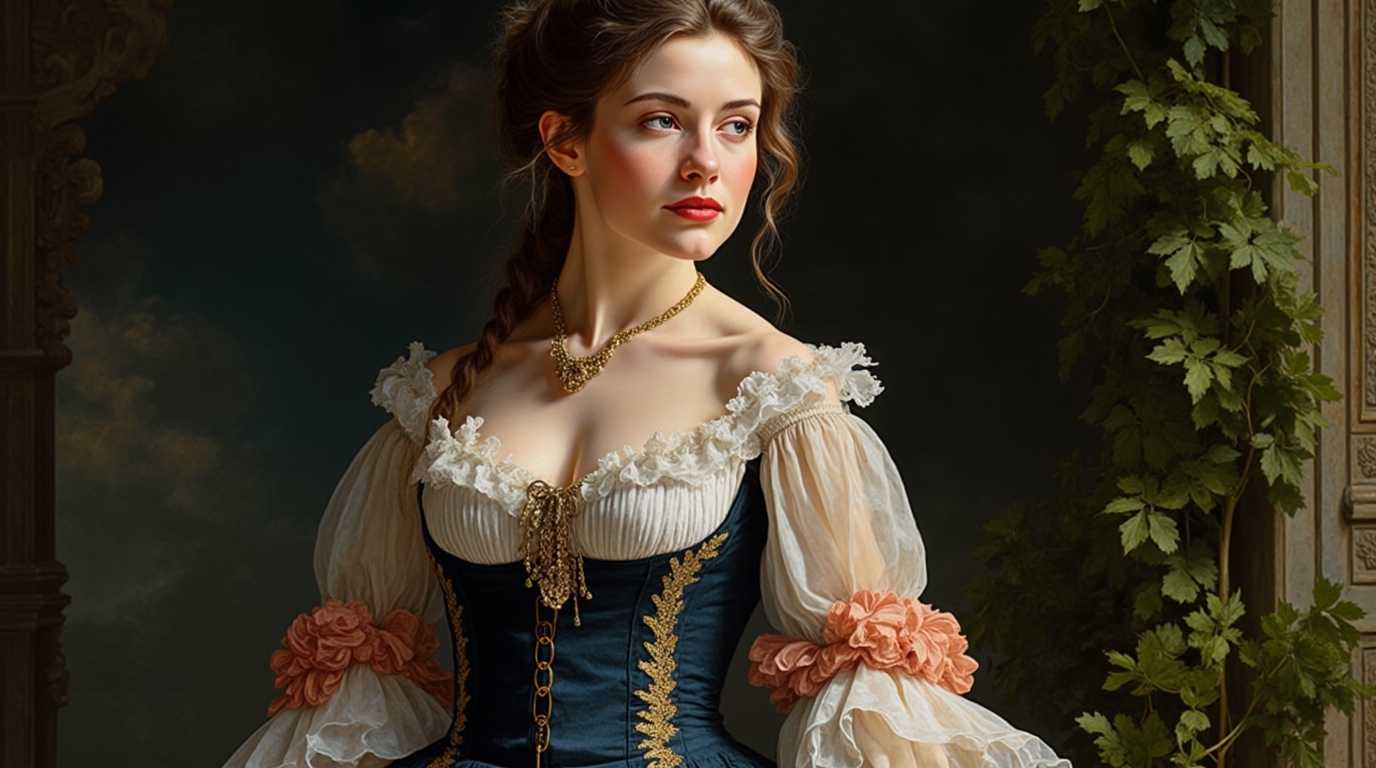
These Unique Antique Wedding Dresses Hide Stunning Histories—See the Rarest Finds
Few garments carry as much personal meaning—and as much cultural history—as a wedding dress. Unique antique wedding dresses are more than beautiful textiles: they are surviving witnesses to changing ideals of love, status, craftsmanship, and femininity across centuries. When you hold an antique bodice or trace the hand-finished lace on a century-old sleeve, you’re touching decisions made by real brides, seamstresses, and ateliers who worked under the aesthetics and constraints of their time.
It‘s not just the romance, either. Antique wedding dresses are typically superior to fast-fashion wedding gowns in terms of fabric and craftsmanship. They are made with types of fabric and construction techniques that are no longer affordable.
Can You Name the Masterpiece?
Ten masterpieces. Ten questions. How well do you know the history of art?
Beyond that, the silhouette is unique: Edwardian lace tops paired with flowing skirts, 1920s beaded flapper dresses, 1930s bias-cut gowns, or 1950s hourglass gowns inspired by the golden age of couture, the designs are virtually impossible to replicate without having worked extensively in the field. The outcome: a bride who is truly one-of-a-kind, with a dress that‘s as timeless as it is unique.
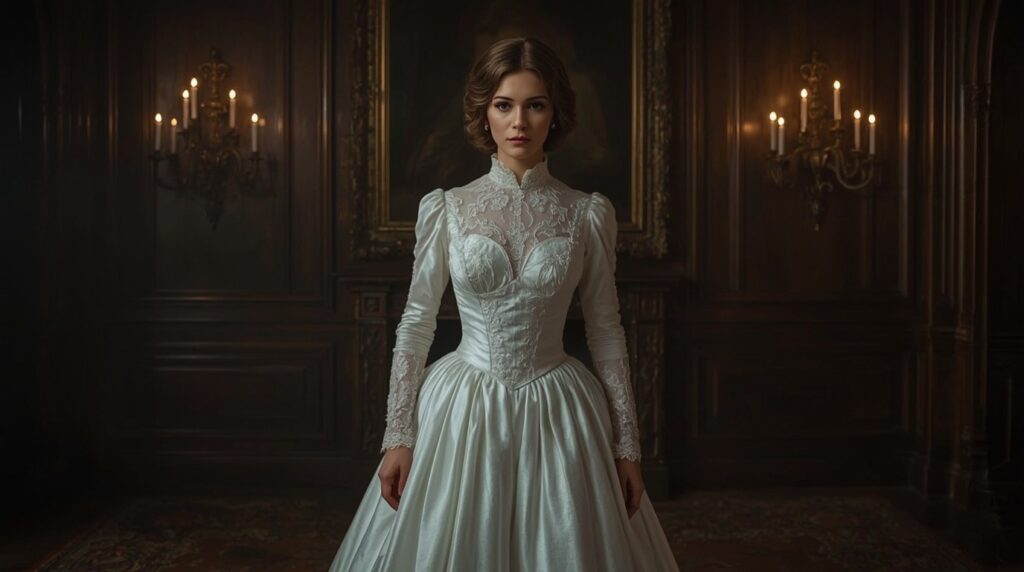
For collectors, conservators, and museums, these are cultural objects. As the Victoria and Albert Museum puts it regarding their collections of fashion and textiles, “Dress is a key source in understanding how people lived, worked and expressed identity.” That‘s a view you‘ll need to adopt if you want to responsibly acquire, wear, or conserve a one-of-a-kind antique wedding dress.
What Makes an Antique Wedding Dress “Unique” (and Truly Antique)
Antique, in most collecting contexts, typically means around 100 years old, while “vintage” often refers to pieces roughly 20–99 years old. In bridal fashion, these boundaries matter because textile stability changes dramatically over time. A dress from the 1890s (Victorian era) will have different vulnerabilities—and different historical value—than one from the 1950s. Museums like The Metropolitan Museum of Art (The Met) and the Smithsonian Institution generally categorize garments by period and construction, emphasizing date, materials, and provenance as key identifiers.
Can You Guess the Artist?
Three clues. One artist. How quickly can you identify the painter?
But not all rarity is the same. What makes a truly one-of-a-kind antique wedding dress rare? It could be the pattern of its lace, the type of lace Belgian crochet, for example, or Irish crochet, perhaps? it could have a hand-embroidered net, an interesting construction to the sleeves, or an origin based in the exotic trade of the period: French and Italian silk satin, perhaps? Often, uniqueness comes with alteration. What was once changed after World War I, to update its hem length to the newest style, speaks to its thrift, and how modern it became.
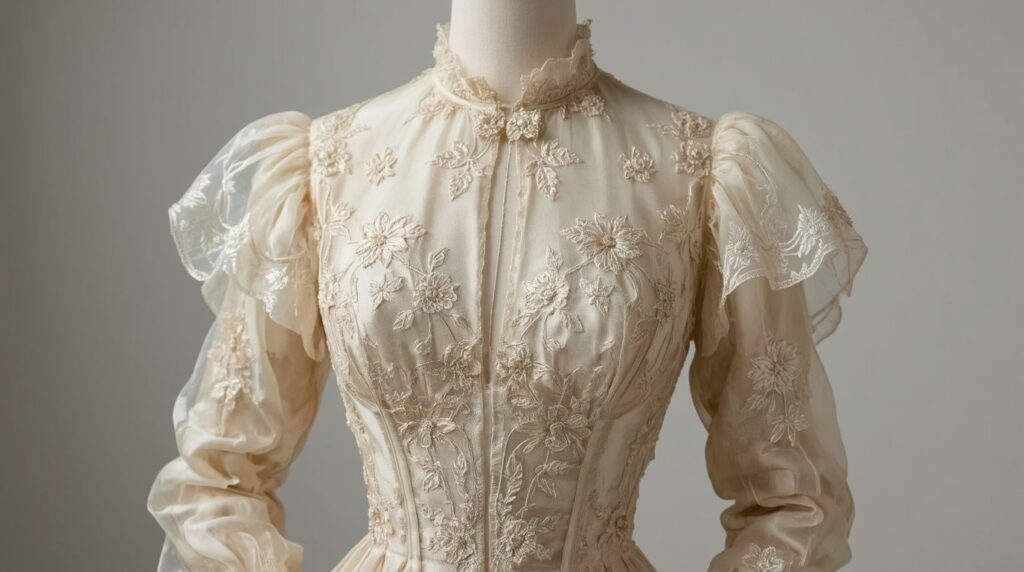
But authentication must be treated similarly to museums that accession historical artifacts: the fiber content, the way it‘s sewn, the closure hardware (hooks and eyes, early zippers), the underlying structure. Both The Met and the V&A have great videos and articles explaining how the internal details of a garment bone channels, seaming, lace attachment are markers that pin the dress to a specific decade. If you want to establish a baseline, browsing the high-res collection images and collection notes of museums is the best visual training ground.
A Brief History of Antique Bridal Style: From Victorian White to Mid-Century Glamour
Many people associate the white wedding dress with Queen Victoria’s 1840 marriage to Prince Albert in London, a milestone widely discussed in fashion history. Yet white was not immediately universal; it spread through print culture, portraiture, and growing textile accessibility. Victorian bridal dress could include rich silks and elaborate trimming, but over time, white came to signify ceremony and status—especially as laundering and fabric care improved for those who could afford it.
Some of the most popular antique styles come from the late 19th to early 20th century. The Edwardian years (c. 1901–1910) had high necks, lace bodices and that “Gibson Girl” romanticism. The 1920s swung toward modern: lower waists, more freedom and sparkle for evening wear. In France, while the Louvre is revered for paintings and sculptures, it is also part of that European custom of preserving material culture of the elites, which is relevant here in discussing bridal and patronage culture.
Economic hardship during the 1930s and 1940s meant a streamlined silhouette and rationing impacted fabric availability. After the war, the 1950s offered structured femininity with aspirations to high fashion cinched waists, full skirts, a direct reflection of a broader cultural sway toward Parisian fashion houses. In the context of fiber, these two decades mark an explosion of synthetic fibers, whereas many antique gowns would be made using silk, cotton, or linen. As the Smithsonian Institution has repeatedly noted, the material culture of bridal (and all fashion) tells social history meaning these changes in fabric aren‘t just sartorial.
Fabrics, Construction, and Preservation: What Museums Teach Us
Antique wedding dresses are fragile because many were made from delicate fibers—especially silk—whose strength can degrade through light exposure, perspiration, and environmental acidity. Museums manage these risks with controlled storage and limited handling. The Met and the V&A commonly display garments for short periods under low light to slow fading and fiber breakdown. If you plan to wear an antique dress, this museum logic should guide your decisions: minimize stress, avoid prolonged sunlight, and handle the garment as a historic textile.
The construction can be the source of both wonder and risk. You might gasp at the fine quality of hand-sewn lace appliques, the lustrous smoothness of silk satin or the sheer fineness of the net, and then notice how it can snag, tear, and break at pressure points (the waistline seams, underarms, fastenings). The original gown depended on what was worn underneath, such as a chemise, corset or boned slip, to take the weight and hold the shape of the skirt. Attempt to wear it without the necessary support, and the dress will break because the fabric is expected to take stress that it wasn‘t engineered to withstand.
Conservationists will typically suggest minimal, irreversible intervention. In the museum context, we record our repairs and ensure that the work isn‘t altering the original garment unnecessarily. Our Smithsonian collections and standards also stress that conservation means stabilization, not an attempt to “make new.” What does this mean in a practical sense? Don‘t use a strong cleanser, never glue fabric, and bring in a conservator if it‘s more than a ripped seam. If you want a way to wear the garment, a custom-fit underslip is best. This will protect the garment from oils and sweat and is reversible.
How to Buy and Wear a Unique Antique Wedding Dress Responsibly
Start with provenance and condition. Ask sellers for clear dating rationale (construction, labels, closures), measurement methods, and photos of stress areas. A reputable dealer should disclose repairs, shattering silk, bead loss, and any odor or staining. If you’re shopping internationally—say, sourcing Edwardian lace from the UK or a 1920s dress from Paris—factor in customs, insurance, and climate-safe shipping. Institutions like the V&A and The Met have set a public standard: documentation matters as much as appearance.
Vintage fit and reality are two separate things. Antique sizing is generally not true to today‘s standards and the seams can be very small. Instead of trying to reconstruct, use the styling: antique bodice with a new skirt, vintage lace over a modern silk slip or have someone make a couture-style replica (leaving the original intact) that will give you the undeniably historical vibe.
Of course, if you do choose to wear the real thing, consider building the whole day around the protection of your garment. Keep the amount of time it‘s on you to a minimum. Don‘t slather yourself in heavy perfume (there are very few historically appropriate scents, anyway). And make sure there is an acid-free barrier between your skin and the fabric. Pack a spare dress, and a tiny ‘garment care’ kit (cotton gloves for anyone touching you, acid-free tissue, and a needle and thread to match just in case of minor, non-load-bearing accidents). As the V&A said to me regarding fashion in its collections, these items have survived because they are the cultural equivalent of heirlooms and not merely functional items of dress.
Key Characteristics by Era (Quick Reference)
| Period (Approx.) | Common Silhouette | Typical Materials | Distinctive Details | Wearability Today |
|---|---|---|---|---|
| Victorian (1840s–1890s) | Structured bodice, full skirt | Silk taffeta, satin, cotton | Heavy trims, long trains, buttons | Often fragile; requires support |
| Edwardian (1901–1910) | High neck, soft S-curve influence | Lace, cotton lawn, silk | Lace yokes, insertion lace, modesty panels | Delicate; best with slip/lining |
| 1920s | Straight, low waist | Silk, chiffon, beading | Art Deco motifs, beaded overlays | Beads add weight; handle gently |
| 1930s | Bias cut, fluid lines | Silk satin, crepe | Cowl necks, elegance in drape | Fits closely; seams can strain |
| 1950s (vintage) | Nipped waist, full skirt | Tulle, satin, early synthetics | Boning, voluminous skirts | Often more wearable; still age-sensitive |
Frequently Asked Questions
Are unique antique wedding dresses safe to wear?
Sometimes. Condition and fiber type decide. Silk “shattering,” weak seams, or heavy beadwork can make wearing risky. When in doubt, consult a textile conservator or choose a hybrid approach (antique overlay over a modern base).
How can I verify age and authenticity?
Look for construction clues (hand finishing, closures, seam styles), fabric type, and any labels. Compare with museum collection examples from The Metropolitan Museum of Art and the Victoria and Albert Museum, which provide dated references and high-resolution images.
Can an antique dress be professionally cleaned?
Cleaning is complex and often risky. Many conservators prefer stabilization over wet cleaning because water and detergents can distort fibers, strip finishes, or set stains. Seek advice from a textile conservation professional rather than a standard dry cleaner.
What eras are most in demand?
Edwardian lace dresses and 1920s beaded gowns are especially sought after, along with 1930s bias-cut silhouettes. Demand also depends on wearability—many brides choose later vintage (1940s–1950s) for better structural resilience.
How should I store an antique wedding dress after the wedding?
Store flat when possible in acid-free materials, away from light, heat, and humidity. Avoid plastic garment bags. Museums commonly use acid-free boxes and tissue to cushion folds and reduce stress—an approach you can replicate at home.
Unique antique wedding dresses offer something modern bridal fashion rarely can: a truly unrepeatable combination of historical artistry, material quality, and personal narrative. When approached with museum-level respect—careful authentication, gentle handling, and preservation-minded styling—an antique gown can be both a breathtaking wedding choice and a meaningful act of stewardship for a piece of textile history.
Authoritative sources referenced: Collection practices and garment documentation standards commonly presented by The Metropolitan Museum of Art, Victoria and Albert Museum, Smithsonian Institution, and broader European material-culture scholarship associated with institutions such as the Louvre Museum.
AI Notice: Some visual content in this article may have been created or enhanced using artificial intelligence (AI) for artistic, editorial or illustrative purposes. Learn more about our approach in our AI & Editorial Principles.