
Victorian Era Ladies Fashion Secrets: What They Wore to Signal Status
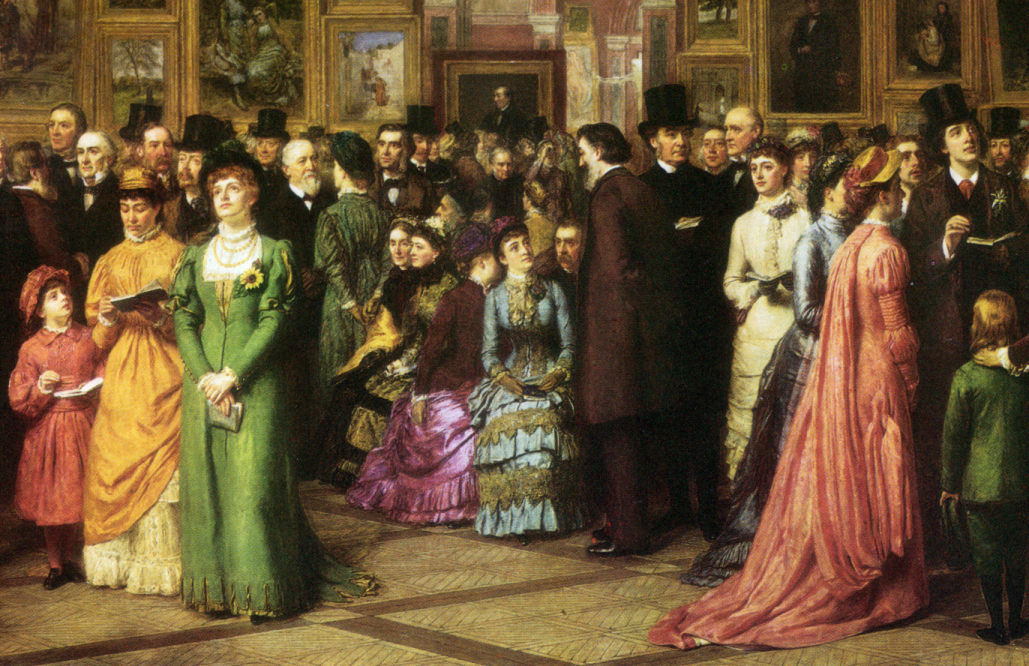
Victorian era ladies’ fashion was never just about looking “proper.” It was a visual language of power, morality, class, and modernity—shaped by industrial technology, expanding global trade, and the strict social codes of 19th-century Britain. From the disciplined geometry of early Victorian silhouettes to the dramatic architecture of crinolines and bustles, women’s dress became a public statement as well as a private negotiation with comfort, identity, and expectation. Understanding Victorian fashion means understanding the era’s politics, economics, and ideals, stitched into fabric and structure.
1) Historical Context: Why Victorian Fashion Changed So Dramatically
The Victorian era (1837–1901), spanning Queen Victoria’s reign, coincided with rapid industrialization, the growth of the British Empire, and the rise of a wealthy middle class. Clothing production shifted as mechanized textile mills, chemical dye innovations, and expanded rail networks made fashionable goods more accessible. London’s West End shops and department stores proliferated, while fashion news traveled through magazines such as The Englishwoman’s Domestic Magazine and Godey’s Lady’s Book (influential across the Atlantic).
Can You Name the Masterpiece?
Ten masterpieces. Ten questions. How well do you know the history of art?
So why did courts and cities influence styles? Paris may still have been a key tastemaker, but London‘s court manners set the tone for acceptability. Court presentation rituals and the social calendar of events (the Season) spawned a need for distinct sets of clothes: morning, visiting, afternoon, and evening dress, mourning wear, and so on. Our museums bear this out; the Victoria and Albert Museum in London has massive amounts of 19th-century dress showing the changing silhouettes and fabrics.
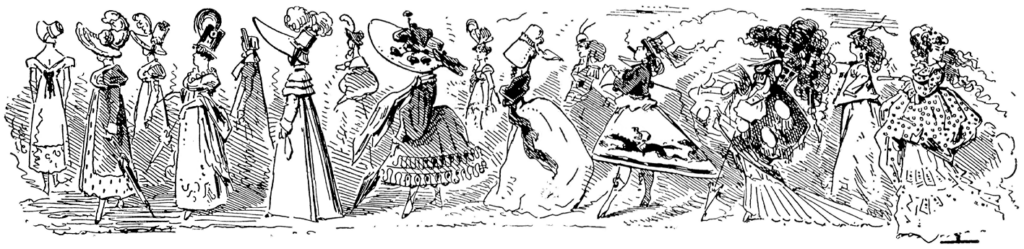
The fashions of the Victorian era also reveal moralistic anxieties. Modesty was less a matter of personal comfort or choice than it was a visible display of social morality and standing. However, the same culture that valued modesty also glorified display in the massive skirts of the 1850s or the bustles that sculpted female forms in the 1870s into architectural abstractions that walked the streets, as noted in the essay collection of the Met‘s 19th-century dress.
2) Silhouettes and Structure: Corsets, Crinolines, and Bustles
Early Victorian fashion (1830s–1840s) favored sloped shoulders, tightly fitted bodices, and full skirts supported by multiple petticoats. Sleeves grew large in the 1830s and settled into more restrained forms by the 1840s. The desired shape emphasized a small waist and a controlled, smooth torso—achieved through corsetry and careful tailoring. Many surviving garments show expert construction: boning, hand-finished seams, and strategically placed darts.
Can You Guess the Artist?
Three clues. One artist. How quickly can you identify the painter?
In the 1850s the ‘cage crinoline’ (a hooped underskirt) took over from the multiple petticoats, lifting skirts into a wider dome shape. Fashion was both freed and encumbered. Skirts became lighter but much bigger, making it a challenge for women to enter doorways, carriages and a throng of people. The V&A‘s examples of crinolines and fashion plates show the new technology changing the fashionable outline in Europe and North America.
In the 1870s and ‘80s volume redirected from being all-over to being all over the back of the skirt, i.e., the bustle. Bustle gowns were characterized by an exaggerated posterior protruding from under an overly decorated skirt and bodice, the posterior itself created by bustle pads, wires, and rigid understructures. The late Victorian era, according to the Metropolitan Museum of Art‘s timelines of fashion, called for richly decorated surfaces pleated textures, fringe, passementerie as well as an elaborate draping that reflected labor and spending.
3) Fabrics, Color, and Craft: The Materials of Status
Victorian ladies’ fashion relied on textiles that communicated rank and occasion. Silk taffeta, satin, velvet, fine wool, and cotton were common, with fabric choice dictated by season, time of day, and social formality. Day dresses often used sturdy wools or printed cottons; evening gowns favored silk and low necklines (for adult women in appropriate settings). Lace—especially machine-made lace in the later 19th century—became more widely available, while handmade lace remained a luxury.
And color changed over time as technology developed. Some Victorians were quite muted in their colors but with the invention of synthetic dyes, things really took off. It‘s said that William Henry Perkin‘s invention of mauveine, an aniline dye, in 1856 kickstarted a Victorian craze for bold, long-lasting colors that hadn‘t been possible or affordable beforehand. The Smithsonian Institution and other museums highlight how industrial chemistry changed daily life and fashion was a favorite platform.
There was no less craft when industry came along. The makers of the fine dresses, hats, and suits not to mention the new “couture” system taking root in Paris were creating fashion for which a lot of handwork was needed. “Fashion isn‘t just about how things look; it‘s also about how things are made and social meaning,” Steele says (Fashion Institute of Technology Museum). The museum‘s scholarship also explores how dress relates to labor, technology, and self-concept.
4) Etiquette and Identity: Mourning, Respectability, and Reform Dress
No discussion of Victorian era ladies’ fashion is complete without mourning attire. After Prince Albert’s death in 1861, Queen Victoria’s prolonged mourning deeply influenced British and international practice. Black became central, and etiquette governed fabrics (matte vs. glossy), accessories, and the duration of stages such as “full mourning” and “half mourning.” The Met’s collection and research essays document how mourning dress became a regulated system—part grief ritual, part social performance.
Respectability also shaped everyday clothing. High necklines and long sleeves were common for daytime, with modesty norms varying by age, class, and situation. Yet fashion also offered women avenues for self-expression: accessories, trims, hairstyles, and the careful selection of textiles could signal taste and modernity within accepted boundaries. In portraits and photographs from institutions like the Louvre Museum (which holds 19th-century portraits and decorative arts that contextualize dress), clothing appears as a key indicator of social identity.
At the same time, reform movements challenged restrictive dress. From the 1850s onward, critics argued that tight corsetry and heavy skirts harmed health and limited mobility. The “Rational Dress” movement gained traction later in the century, advocating lighter garments and fewer constraints—especially as women increasingly participated in education, philanthropy, and work outside the home. While reform dress never fully replaced mainstream fashion, it introduced debates about autonomy and the body that anticipate modern discussions.
Key Characteristics at a Glance
| Period (Britain) | Dominant Silhouette | Key Undergarments | Typical Fabrics | Notable Features |
|---|---|---|---|---|
| 1837–1848 (Early Victorian) | Narrow shoulders, full skirt | Corset, multiple petticoats | Wool, cotton, silk | High modesty daywear; structured bodice |
| 1850s–1860s (Mid Victorian) | Very wide skirt | Cage crinoline, corset | Silk taffeta, cotton prints | Dome-shaped skirts; mass-produced trims |
| 1870s–1880s (Late Victorian) | Back-focused volume | Bustle, corset, pads | Silk, velvet, wool | Elaborate drapery; heavy ornamentation |
| 1890s (Fin de siècle) | Hourglass; larger sleeves | Corset; fewer heavy supports | Wool, silk, blended textiles | “Leg-of-mutton” sleeves; more tailored daywear |
Frequently Asked Questions
1) Did all Victorian women wear corsets every day?
Not universally. Corsets were common across classes, but wear varied by age, work, pregnancy, personal comfort, and income. Surviving garments and museum research show a range from heavily structured corsetry to lighter supports, especially for laboring women.
2) What caused skirts to become so wide in the 1850s?
The cage crinoline made dramatic width feasible by replacing layers of heavy petticoats with a lighter hoop structure. This change was closely tied to industrial production and the rapid spread of fashion through print culture.
3) Were bright colors “Victorian,” or mostly dark and black?
Both existed. While mourning dress and some daytime conventions favored darker shades, the invention of synthetic dyes in the mid-19th century made vivid colors fashionable and more widely accessible.
4) How did class affect Victorian women’s fashion?
Class influenced fabric quality, the number of garments owned, and access to skilled dressmakers. Middle- and upper-class women could maintain multiple outfits for different occasions; working-class women often adapted practical clothing while incorporating fashionable elements when possible.
5) Where can I see authentic Victorian clothing today?
Major collections include the Metropolitan Museum of Art (New York), the Victoria and Albert Museum (London), and the Smithsonian Institution (Washington, D.C.). These institutions provide online collection highlights and scholarly essays.
Authoritative Sources (Selected)
- The Metropolitan Museum of Art (Heilbrunn Timeline of Art History), essays on 19th-century fashion and dress history.
- Victoria and Albert Museum (V&A), collections and research on Victorian clothing, undergarments, and textiles.
- Smithsonian Institution, resources on industrialization, textile technology, and material culture in the 19th century.
- Louvre Museum, 19th-century visual culture (portraits and decorative arts) that contextualizes dress, etiquette, and status.
Victorian era ladies’ fashion was a disciplined art and a social system—engineered through corsetry and structure, energized by industrial dyes and mass production, and regulated by etiquette from morning calls to mourning rituals. Victorian dress is something we can observe through surviving pieces of clothing, as well as research carried out at the Met, the V &A, the Smithsonian, the Louvre and many more. It is proof, not costume, of the technologies, philosophies, and everyday lives of the women of the modern age.
AI Notice: Some visual content in this article may have been created or enhanced using artificial intelligence (AI) for artistic, editorial or illustrative purposes. Learn more about our approach in our AI & Editorial Principles.


