

Poor Victorian Era Fashion: The Shocking Clothes the Working Poor Endured
Victorian fashion is often remembered through glittering ball gowns, silk crinolines, and sharply tailored gentlemen’s suits. Yet for most people in Britain between 1837 and 1901, clothing was less about spectacle and far more about survival—patching, reusing, and making do amid industrial smoke, crowded cities, and hard physical labor. “Poor Victorian era fashion” was not a single look but a spectrum of necessity: garments shaped by low wages, unreliable employment, limited access to clean water, and the punishing demands of factories, docks, domestic service, and street trades. Understanding what the poor wore reveals the era’s social hierarchy more clearly than any portrait of aristocratic splendor.
The Social and Economic Reality Behind Poor Victorian Dress
Poverty in Victorian Britain was not marginal; it was structurally woven into the economy of rapid industrialization. In cities such as London, Manchester, Liverpool, and Glasgow, the working poor often lived in overcrowded districts where clothing had to withstand grime, rain, and constant wear. Dress choices were constrained by price, not taste. As the Victoria and Albert Museum (V&A) emphasizes in its collections and research on nineteenth-century clothing, textiles and cut communicate class powerfully because cloth was a major household expense, and “best” garments were protected while everyday items were worked to exhaustion.
Can You Name the Masterpiece?
Ten masterpieces. Ten questions. How well do you know the history of art?
The Industrial Revolution made less expensive textiles especially cotton more plentiful. Still, “less expensive” didn‘t mean easy. Although the manufacture of ready-made clothing grew throughout the nineteenth century, the garments themselves were often poorly constructed, misshapen, and easily worn particularly for workers who regularly leaned over, bent, carried, carried, scrubbed, or hoisted as part of their work. Hand-me-downs, hand-me-ups, hand-me-downs, or purchases from the thriving secondhand trade were also common. The Metropolitan Museum of Art explains the era as one where textile manufacturing increased and markets for goods were evolving: For the working classes, this simply meant more fabric.
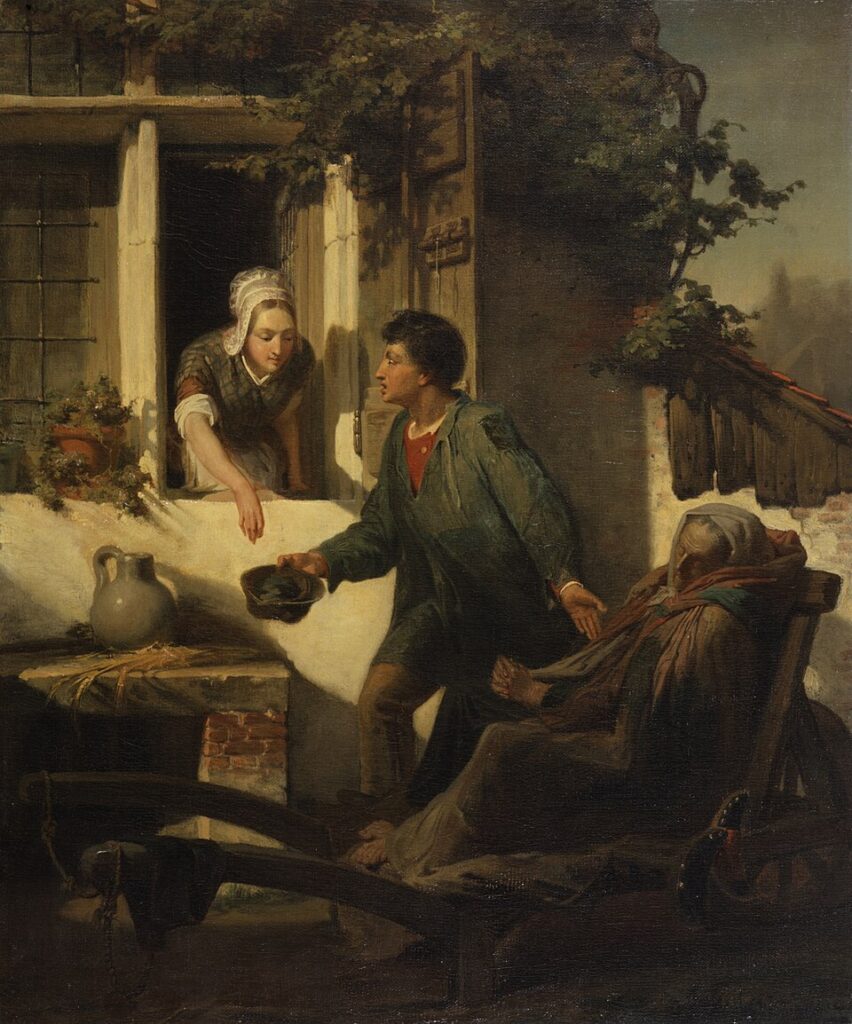
As well as private enterprises, public institutions and charities determined what the poor wore. Uniforms were provided for residents of workhouses under the New Poor Law (1834). The uniform was intended to be as unappealing as possible and would prevent anyone from entering who could avoid it. Such institutional dress often singled out its wearer for identification, acting as a social signifier.
Materials, Construction, and the “Make-Do” Wardrobe
For poor Victorians, fabric mattered more than fashion plates. Wool and wool blends were valued for warmth and resilience, while cotton was common for shirts, shifts, and summer wear due to lower cost and washability. Linen persisted but was comparatively expensive; many households used linen for specific items or inherited pieces. The cut of garments tended toward practicality: women’s skirts were often shorter than elite fashions to keep hems out of mud, and men’s trousers and jackets prioritized movement for manual labor.
Can You Guess the Artist?
Three clues. One artist. How quickly can you identify the painter?
There was always construction or mending to be done. Clothes would be sewn back up, lined, and re-made. A faded old coat would be cut up to fit children; a dress might be “turned” (unpicked and restitched so the least worn fabric is on the outside). Patchwork was not cottagecore: it was good housewifely housekeeping. The V&A has published research into historical sewing and garment use which illustrates that mending and altering was common practice in a time of resourcefulness and textile economy.
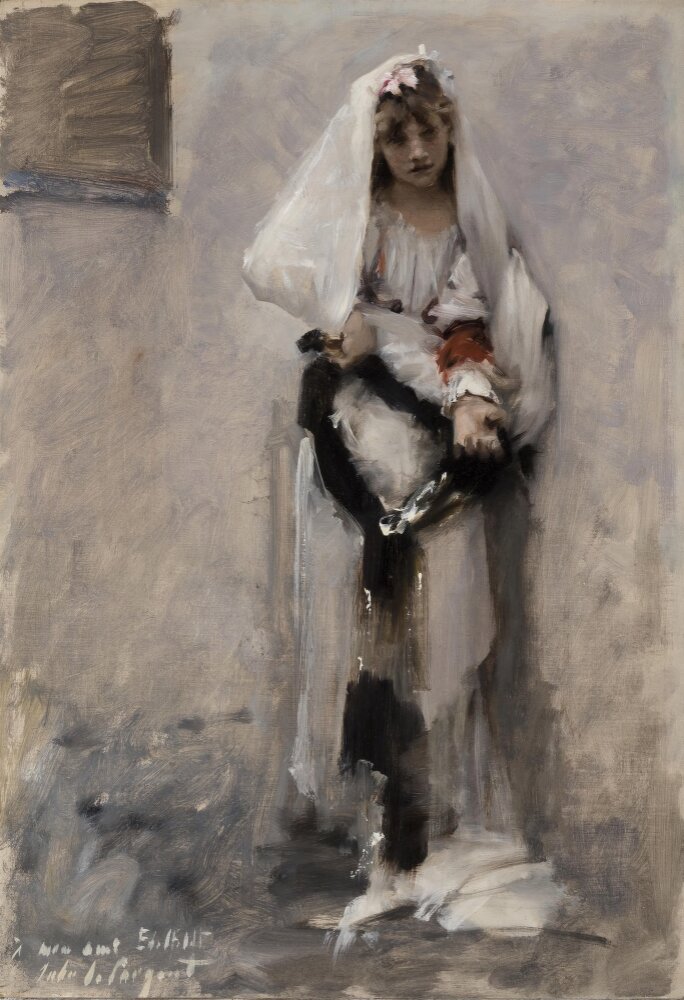
Laundering was a point of separation too. Washing clothes took time and fuel, not to mention the proximity of a water source, all resources the poor lacked. In industrial cities, smoke and dust clung to fibers. Dark colors such as browns, grays, and deep blues hid the grime. Lights were the easiest to stain and the hardest to wash. As the Smithsonian Institution broadly documented of work and industry in the 19th century, urban environments created a distinct material culture.
Table: Key Characteristics of Poor Victorian Era Fashion
| Aspect | Typical Features | Why It Mattered |
|---|---|---|
| Fabrics | Wool/wool blends, cotton, cheaper mixed textiles | Balanced warmth, cost, and durability |
| Color palette | Dark, muted tones | Hid dirt; suited harsh work environments |
| Fit & cut | Practical, looser, often altered | Allowed movement; extended garment life |
| Footwear | Heavy boots, repaired soles; sometimes secondhand | Protected feet in streets/factories; expensive to replace |
| Acquisition | Hand-me-downs, secondhand markets, charity, workhouse issue | Reflected constrained budgets and social status |
| Upkeep | Frequent mending; limited laundering | Necessity amid low wages and polluted cities |
Where Clothing Came From: Secondhand Markets, Charity, and Institutions
One of the most important engines of poor Victorian dress was the secondhand trade. In London, clothing circulated through markets and dealers—some reputable, others predatory—selling garments from estates, pawned items, and surplus. A “best” outfit might be purchased used and carefully preserved for Sundays, chapel, or job-seeking, while weekday clothes bore the brunt of work. This culture of reuse challenges modern assumptions that fashion change required constant new buying; among the poor, the same garment could pass through multiple owners over years.
Clothing was provided by charities, religious missions, and church networks to the most needy, such as widows, children and the jobless. These were likely to be plain, rather than fashionable, clothing and might have a conspicuous label of charity, reminding people of their place in society. Institutions clothed more than just bodies; they controlled bodies through clothing. Uniforms in workhouses, for instance, were a symbol of dependency and discipline in a Victorian moral economy that placed constant stress on the need for respectability.
And we have the museums to prove it. The V&A has massive collections of nineteenth-century clothing, including textiles, revealing the seams and weave counts of high fashion and mundane clothing alike. The costume collections at the Met highlight how industrial textile production helped to democratize wardrobes, even if the differences between fine and poor person were stark in the cuts and quality of the cloth. These resources allow us to distinguish between the “Victorian dress” dream and the realities it created.
Respectability, Gender, and the Politics of Appearance
Victorian society linked clothing to morality with unusual intensity. Respectability could affect employment, credit, and social treatment; the poor were judged for shabbiness even when poverty made neat dress nearly impossible. Charles Dickens captured this harsh social scrutiny in Oliver Twist (1837–39), observing the workhouse system that reduced individual dignity to institutional control. While Dickens is a literary source rather than a museum authority, his work remains a primary contemporary witness to how clothing and deprivation intersected in the public imagination.
For women, clothing had to accommodate both labor and prevailing ideals of modesty. Working women—domestic servants, factory operatives, street sellers—needed durable garments that allowed movement. Aprons, shawls, and sturdy boots were common. A servant’s uniform, though more stable than the wardrobe of a casual laborer, was also a form of control: it marked the wearer’s status within a household and reinforced hierarchy. The V&A’s research into nineteenth-century dress and social context frequently emphasizes how uniforms and standardized attire communicated role and rank.
For men, the working wardrobe reflected occupation: dockworkers, miners, and mechanics needed heavy cloth and protective layers. Caps were practical and common; coats were often worn long past their prime. Clothing could also be a tool of aspiration—saving for a better jacket or cleaner shirt for Sunday was a way to claim dignity. As the Metropolitan Museum of Art has noted in its discussions of nineteenth-century fashion systems, clothing was both material culture and social language; for the poor, speaking that language fluently was costly.
Authoritative Quotes and Evidence-Based Context
Museum and scholarly institutions consistently stress that garments must be read as evidence of daily life. The Victoria and Albert Museum frames dress as a direct lens into lived experience and social structures, reflecting how textiles, labor, and consumption shaped identity. The Metropolitan Museum of Art likewise situates nineteenth-century fashion within industrial production and global trade in textiles—developments that lowered costs but intensified class distinctions in quality, finish, and longevity.
A useful cross-European reminder comes from major collections such as the Louvre Museum, whose holdings and research on nineteenth-century decorative arts and textiles underscore how European industrialization transformed material culture. Although the Louvre is more strongly associated with art than with working-class British dress specifically, its institutional scholarship supports the broader point: the nineteenth century’s technical and economic shifts reshaped what people could afford, how long goods lasted, and how status appeared on the body.
Taken together, these institutions help anchor “poor Victorian era fashion” in evidence rather than stereotype. Clothing was not merely aesthetic; it was a technology of endurance—against weather, work, and social judgment.
Frequently Asked Questions
1) Did poor Victorians follow fashion trends at all?
Yes, but indirectly. Silhouettes and details filtered down through secondhand clothing, simplified home sewing, and cheaper materials. The poor might echo trends in shape—like skirt fullness—without the costly fabrics and understructures seen in elite wardrobes.
2) What did poor Victorian children typically wear?
Children often wore scaled-down adult styles or re-cut garments from adults’ worn clothing. Durability mattered most. Many children had limited outfits, sometimes a single set for everyday wear and a slightly better set for church or special occasions.
3) Was ready-made clothing common among the poor?
Increasingly, yes, especially later in the nineteenth century as industrial manufacturing and urban retail expanded. However, fit and durability could be poor, and many still depended on secondhand goods and home alterations.
4) How did the workhouse influence clothing?
Workhouses issued institutional garments that were practical but stigmatizing. Uniformity reinforced discipline and signaled the wearer’s status to the outside world—an intentional feature of the Poor Law system.
5) Where can I see authentic Victorian clothing today?
Major collections include the Victoria and Albert Museum (London) and the Metropolitan Museum of Art (New York). These institutions provide cataloged objects, research notes, and interpretive essays that help connect garments to their historical context. The Smithsonian Institution offers broader industrial-era material culture resources, and the Louvre Museum provides complementary scholarship on nineteenth-century European decorative arts and textiles.
Poor Victorian era fashion was defined less by trend than by constraint: fabrics chosen for endurance, colors chosen for practicality, garments endlessly mended, and wardrobes shaped by secondhand markets and institutions. Looking closely at what the poor wore—through evidence preserved and interpreted by institutions such as the V&A and the Metropolitan Museum of Art—turns “Victorian fashion” from a story of glamour into a sharper history of labor, inequality, and dignity under pressure.
AI Notice: Some visual content in this article may have been created or enhanced using artificial intelligence (AI) for artistic, editorial or illustrative purposes. Learn more about our approach in our AI & Editorial Principles.


