
Victorian Era Fashion for the Poor: The Harsh Truth Behind the “Genteel” Look
Victorian era fashion is often remembered through sweeping crinolines, glossy silk, and portrait-ready tailoring. Yet for most people in Britain’s industrial cities and rural villages, clothing was not a spectacle but a daily negotiation with poverty, weather, and work. “Victorian era fashion poor” is not a contradiction—it is the missing majority story, shaped by the realities of overcrowded housing, irregular wages, and the hard physical labor that made elaborate dress impractical. Understanding what the poor wore in the Victorian period (1837–1901) reveals not only changing styles, but the economics of survival in a world transforming rapidly through industrialization, empire, and urban growth.
The realities of poverty and clothing in Victorian Britain
For the Victorian poor, clothing was a form of basic shelter. In cities such as London, Manchester, Liverpool, and Glasgow, soot, rain, and cold made durable layers essential, while cramped living conditions limited the ability to wash, dry, and mend garments. Clothing often had to serve multiple roles—workwear, daywear, and “best” for church—because owning separate outfits was a luxury. A single coat could be a family asset, passed between relatives or pawned in hard weeks.
Can You Name the Masterpiece?
Ten masterpieces. Ten questions. How well do you know the history of art?
The jobs they did determined the fabric and the form. A woman working in laundry, on the factories, or in domestic service required something practical and durable: skirts that could be moved in and often repaired (with patches on the soles), shawls, aprons, boots. For the dockworker, construction man, street merchant, or factory worker, it was durable trousers, waistcoats and caps. Perhaps a single ‘good’ coat for special occasions. And children? Mostly smaller versions of adult clothing, or hand-me-downs, at least before they could earn their keep.
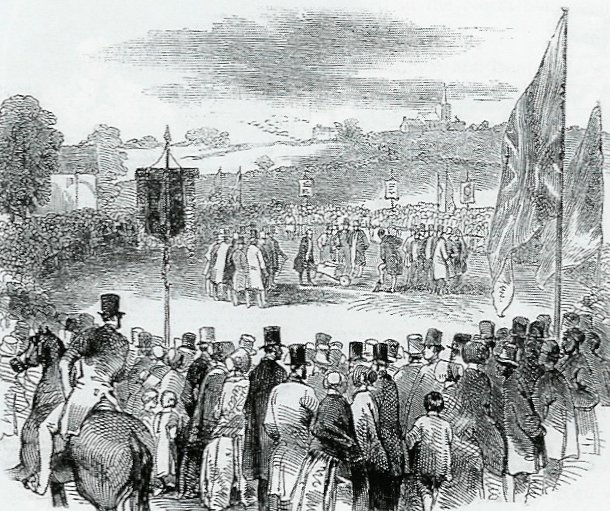
Clothing was also dictated by institutions. The Poor Law system (especially after the 1834 Poor Law Amendment Act) along with workhouses established control over dress to indicate the wearer‘s social position. Charity schools, parish relief, and various philanthropic organisations issued garments that indicated dependence. These institutions provided an ‘outer boundary of identity’; clothing was worn not to adorn, but to show how one was positioned at the edges of ‘respectable’ work, insecure work, and state poverty.
What the Victorian poor actually wore: garments, materials, and repairs
Can You Guess the Artist?
Three clues. One artist. How quickly can you identify the painter?
The fabrics of poverty were chosen for price and endurance. Wool and wool-blends were valued for warmth; linen and later cotton were common for shirts, shifts, and underlayers. Cotton became increasingly available through industrial textile production, though quality varied widely. Many garments were made from coarse cloth, and color could be muted—browns, greys, and dark blues—partly to hide dirt. Prints existed, but in cheaper calicoes rather than costly silks.
The construction was just as important as the textile. Working class people tended to opt for fewer layers than the elite when it came to silhouettes fewer hoops, less involved understructure, less trim. Despite the prevalence of bustles and crinolines for high Victorian styles late-to-mid-period, you see women in working attire opting for a version only maybe a skirt, but less of the extreme underpinning, since hoops could get in the way and cost additional fabric. Men’s clothing kept its silhouette but differed greatly in material: cheap wool, few linings, obvious patches.
Repair culture was omnipresent. Clothes were mended, re-hemmed, turned (inverting collars or cuffs that were fraying at the edges) and altered (to fit larger children). Buttons, hooks and lacing were regularly renewed; seams were strengthened. Second-hand clothing, bought at markets or in the extended kinship network, represented the bedrock of working-class dress. “Fashion,” if it arrived at all, was tardy and diluted for the poor.
Secondhand markets, sweatshops, and the clothing economy
The sheer scale of the city economy meant that elite consumption and the lives of the poor were intertwined. The wardrobes of middle and upper classes generated so many discards that they began to feed the second-hand market of London, and elsewhere. Clothes were sold, pawned or donated, and then resold, often by small dealers and vendors in street markets. The poor might benefit from occasional access to a better material a wool coat once worn by a gentleman, a good pair of boots but often with a combination of clothing that did not match, altered clothing and garments nearing the very end of their life.
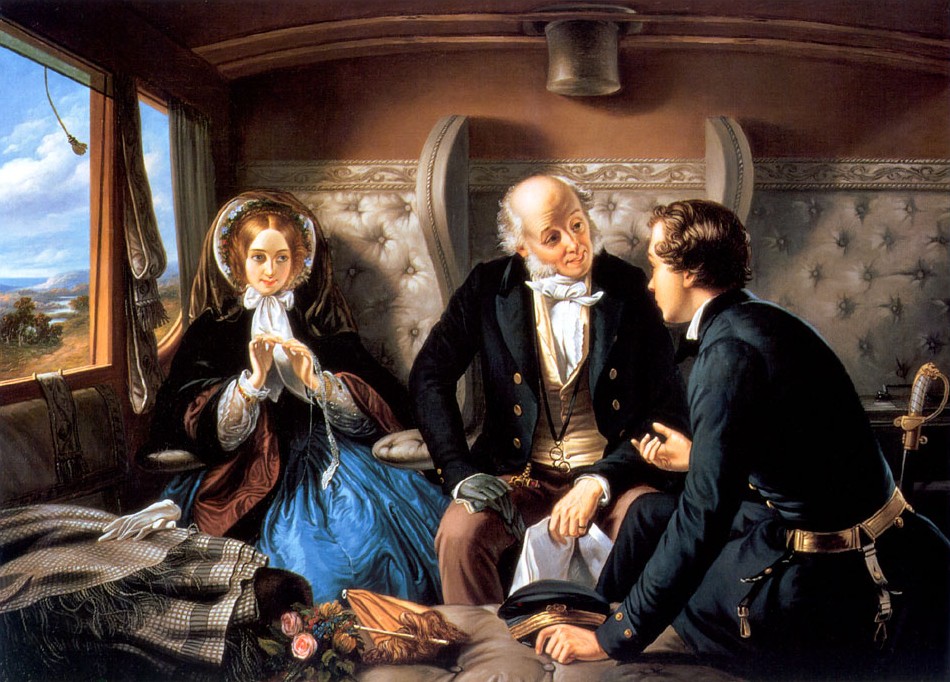
On the other side of production, mass-produced ready-made clothes expanded rapidly during the 19th century. Northern English mills produced fabric and London workshops turned it into cheap, fast-made garments. “Sweating” (subcontracting at extremely low rates, usually in tiny rooms) was a Victorian London scandal particularly in tailoring and shoemaking. That form of production determined the nature of affordable clothing: cheap clothes existed, but were badly made and did not last, creating conditions of dependency and pawning.
Museums that hold surviving garments help explain this economy by highlighting construction details, wear patterns, and material quality. The Victoria and Albert Museum (London) preserves both high fashion and everyday dress, illustrating the spectrum of Victorian clothing and the craft of tailoring and dressmaking. The Metropolitan Museum of Art’s Costume Institute similarly documents nineteenth-century silhouettes and textile innovation, providing context for how industrial production changed what was possible—and what was affordable.
Key characteristics of Victorian-era fashion for the poor (summary)
| Aspect | Common reality for the poor | Why it mattered |
|---|---|---|
| Fabrics | Coarse wool, cotton, linen; blends; reused cloth | Durability and warmth outweighed aesthetics |
| Color & finish | Dark, practical colors; minimal trim | Hid dirt; cheaper dyes and simpler construction |
| Fit & silhouette | Simplified versions of trends; movement-first | Work required mobility; less fabric and fewer supports |
| Footwear | Repaired boots/shoes; multiple resoles | Shoes were costly; repair extended life |
| Acquisition | Secondhand markets, charity, pawning, cheap ready-made | Clothing circulation was tied to wage instability |
| Maintenance | Constant mending, patching, turning | Repair skills were essential household labor |
| Social meaning | “Respectability” signaled by cleanliness and intactness | Clothing affected employability and social judgment |
Respectability, stigma, and institutional dress
Victorian society judged poverty visually. “Respectability” was not simply about style but about whether clothing appeared clean, intact, and appropriate. A patched coat could be read as hardship; a carefully mended coat could be read as diligence. This pressure was especially intense for women seeking domestic service—one of the largest employment sectors—where employers scrutinized neatness and modesty.
Institutional clothing made stigma explicit. Workhouse uniforms were designed to be plain and standardized, separating inmates from ordinary society and discouraging reliance on relief. The Victorian Poor Law administration treated clothing as both provision and discipline. In charitable contexts—ragged schools, church missions, and relief societies—distributed garments could also mark recipients, even when meant benevolently.
Primary accounts underscore how clothing encoded hardship. Henry Mayhew’s mid-century investigation of London labor and poverty captured the relationship between deprivation and dress; his descriptions of street sellers and the very poor repeatedly note worn, inadequate clothing as both symptom and sign of precarious living. As Mayhew wrote in London Labour and the London Poor (1851), “Of the thousand millions of human beings… there are… the poor.” While not a fashion treatise, his observations remain foundational for understanding how poverty was seen in the streets and how garments functioned as evidence of social position.
Evidence, collections, and what museums tell us today
Because the clothing of the poor was worn hard and remade repeatedly, it survives less often than elite dress. That absence can distort modern impressions. Museums therefore become crucial not just for what they display, but for how they interpret incomplete evidence: garments, textiles, prints, photographs (especially later Victorian), and material culture such as sewing tools and laundry equipment.
Institutions such as the Victoria and Albert Museum and The Metropolitan Museum of Art provide scholarly catalogues and collection essays that explain Victorian textiles, construction techniques, and the evolution of silhouettes. These sources help distinguish between aspirational fashion plates and lived clothing practices. The Smithsonian Institution offers additional context on industrialization and technology—factors that reshaped textile production and made cotton goods widely available, albeit uneven in quality.
Continental collections, including the Louvre Museum’s holdings in decorative arts and textiles, illuminate broader nineteenth-century European material culture and craft traditions that intersected with British consumption through trade and style exchange. Taken together, these institutions support a more accurate picture: Victorian fashion was not a single look but a hierarchy of access, where poverty shaped every decision from fiber choice to hem length.
The Victoria and Albert Museum describes fashion as a lens into “how people lived,” emphasizing clothing’s close ties to work, status, and daily life (V&A Collections and Fashion resources).
The Metropolitan Museum of Art’s Costume Institute materials highlight how nineteenth-century innovations in textiles and dress construction transformed what people could wear and how garments were made (The Met collection essays on 19th-century fashion and textiles).
Frequently Asked Questions
Did poor Victorians follow fashion trends at all?
Yes, but indirectly. Trends filtered down through secondhand clothing, simplified home sewing, and cheaper materials. The poor often adopted elements (a collar shape, skirt fullness, a cap style) without the costly structures or fine fabrics of elite dress.
What did working-class Victorian women usually wear?
Typically a practical skirt, blouse or bodice, apron, shawl or cloak, sturdy boots, and a bonnet or scarf. Fabrics were chosen for wear and warmth, and garments were frequently altered and mended.
Were corsets common among the poor?
Corsets existed across classes, but quality and usage varied. Many poor women relied on cheaper stays or partial support garments, and some skipped structured undergarments for certain kinds of labor due to discomfort and restricted movement.
How important was secondhand clothing?
Extremely important. Secondhand markets, pawnbrokers, and hand-me-down networks were central to clothing access. They allowed occasional acquisition of better cloth but also created a patchwork wardrobe shaped by availability rather than preference.
Why is there less surviving clothing from the poor?
Because it was worn until it failed, then patched, repurposed into rags, or cut down for children. Elite garments were more likely to be preserved, stored, and donated, creating an archival imbalance.
“Victorian era fashion poor” is the story of clothing as necessity: layered against cold, repaired against ruin, and judged as a proxy for moral worth. Looking beyond the iconic silhouettes of the wealthy, the clothing of the poor reveals the economic pressures of industrial Britain and the resilience required to remain clothed at all. Museum collections and historical investigations help recover this reality—one stitched from secondhand cloth, relentless mending, and the daily effort to appear respectable in an unequal society.
Authoritative sources (suggested starting points):
- Victoria and Albert Museum (V&A), Fashion and Collections resources (London)
- The Metropolitan Museum of Art, Costume Institute collection essays and object records (New York)
- Smithsonian Institution resources on industrialization, textiles, and social history (Washington, D.C.)
- Henry Mayhew, London Labour and the London Poor (1851) (primary historical source)
AI Notice: Some visual content in this article may have been created or enhanced using artificial intelligence (AI) for artistic, editorial or illustrative purposes. Learn more about our approach in our AI & Editorial Principles.