
Why Vintage Pine Desks Are Suddenly in Demand—and How to Spot a Great One
A vintage pine desk is more than a functional surface—it’s a surviving witness to how people studied, kept accounts, wrote letters, and managed households across centuries. The siren call is immediate and tactile: the honey glow of aged pine, the wear on the drawer pulls, the faint dent that says used, not just assembled. In an age of cheap, replaceable furniture, an oak or pine desk feels like an antidote. It feels solid. Fixable. Respectable.
But pine also has a social history. “Unlike the luxurious even regal mahogany or walnut from exotic climes,” says Pine, “pine was an abundant wood readily used everywhere in Northern Europe and North America.” It was found not only in the offices of merchants and clerks but in public schools and workshops and family homes throughout the middle class.
Can You Name the Masterpiece?
Ten masterpieces. Ten questions. How well do you know the history of art?
And “common” doesn‘t mean low quality: Pine that‘s been well-crafted, carefully detailed, and lovingly maintained can make handsome, durable casework that never feels out of style. Today, collectors and decorators are drawn to vintage pine desks for the same reasons that museums covet many other pieces of furniture their craftsmanship, context and the story of their materials.
Why Pine Became a Classic Desk Material
Pine was historically abundant in regions with large conifer forests, including Scandinavia, the Baltic, Britain, and New England. Its workability—easy to plane, dovetail, and repair—made it ideal for everyday furniture at a time when furniture was expected to be maintained for decades. In Britain deal was common for painted furniture or pieces that didn‘t require a very strong wood, and in Scandinavia and Finland dealt with a tradition of functional craft in the home.
The different periods also influenced the appearance and usability of pine writing tables. Furniture styles solidified in Britain during the Georgian period (1714–1830). Slant-front bureaus, writing tables and kneehole desks emerged in their now familiar incarnations. Pine versions imitated the more elegant counterparts fashioned from mahogany, though usually with less elaborate moldings and a more utilitarian design. By the 19th century, the spread of literacy and the rise of clerical work during the Industrial Revolution brought mass-produced desk types which, out of necessity, included a great deal of inexpensive pine.

Can You Guess the Artist?
Three clues. One artist. How quickly can you identify the painter?
Museums highlight that furniture is not only about wealthy taste and social status, but also about people‘s lives and activities. The Victoria and Albert Museum notes that collections of furniture serve as a record of changes in design, materials, and domestic habits, and the Smithsonian Institution sees objects as proof of the social and economic history of their time. And it‘s this view of history that‘s so relevant to vintage pine desks. Their wear and repair histories, their hardware replacements, even the holes where desk accessories once attached can tell a story of the lives and work of their previous owners that many fine replicas can only hint at.
Identifying Authentic Vintage Pine Desks (and Avoiding Reproductions)
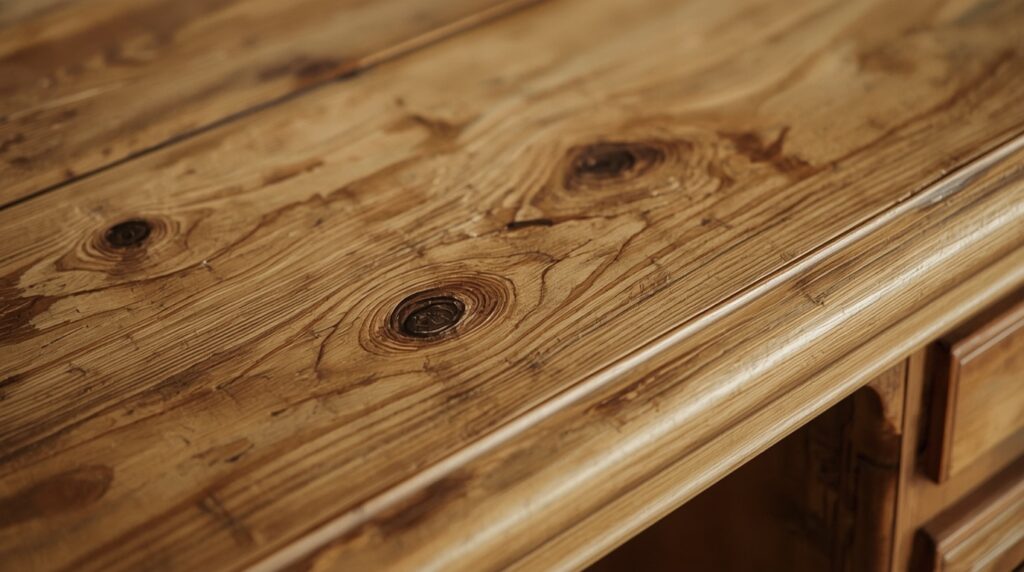
Authenticity is built not found. Look for dovetails that were chopped, not automatically machined; drawer sides made of solid wood, not plywood or plastic; wear and tear where you expect to find it oxidation on the underside of the top, tool marks on drawers, notching around pulls and feet. A vintage pine desk, for instance, will have shrinkage gaps, mismatched boards and old screws (slotted, not Philips). That‘s not a defect; that‘s history.
The finish is also important. Many antique pine desks are painted or stained, and might have been stripped in the late 20th century, when “natural pine” was popular. If the desk has trace amounts of old paint still in crevices, it‘s a historically interesting detail. If the desk looks unnaturally “golden” and “perfect”, it may be new, or it may have been sandblasted to death. Good patina is varied: draw fronts, writing edges, and Hardware shouldn‘t be the same shade as in the protected drawer insides.
Provenance and history builds trust. If a dealer can tell you where that desk came from an English boarding school, a Swedish farm or an New England general store or furnish receipts, repair records, or even photos, the desk is that much more approachable. And as the Met shows, object histories can enrich the cultural weight of an article and aid in differentiating original objects from pastiches.
Key Characteristics of a Vintage Pine Desk
| Feature | What to Look For | Why It Matters |
|---|---|---|
| Wood & grain | Softwood with visible knots, straight grain; possible pitch pockets | Confirms material and typical regional sourcing |
| Joinery | Dovetails, mortise-and-tenon, wooden runners | Indicates age and craft method |
| Hardware | Worn brass/iron pulls, keyholes; slotted screws | Period-appropriate fittings are hard to fake convincingly |
| Patina | Uneven wear, darkened edges, oxidation underneath | Natural aging patterns validate “vintage” claims |
| Form | Kneehole, writing table, bureau, clerk’s desk | Ties desk to specific historical uses |
| Repairs | Old glue blocks, patched splits, replaced locks | Honest repairs can signal long service life |
Style, Period, and Place: What Your Desk Might Be Saying
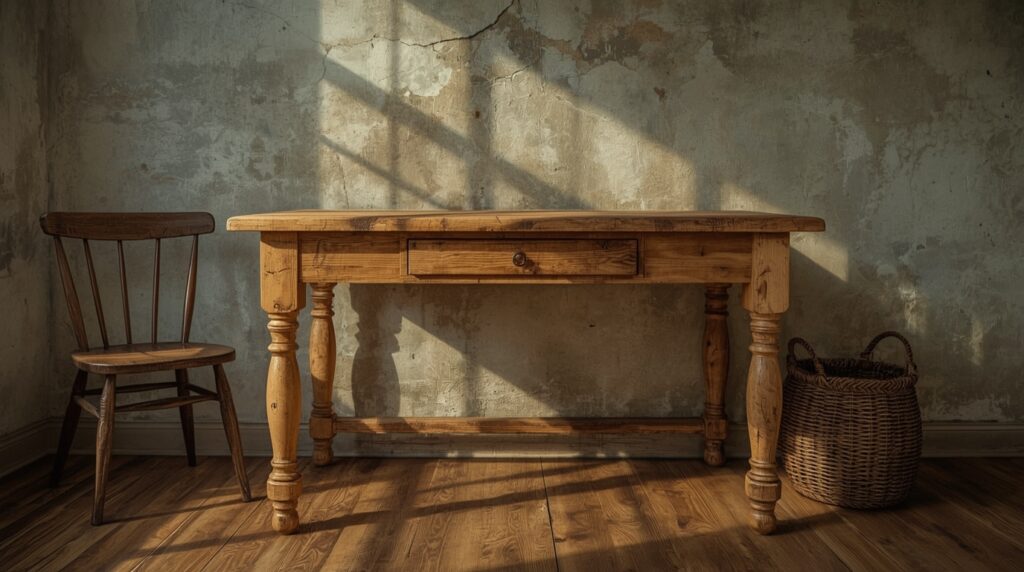
Many vintage pine desks fall into recognizable European and American vernacular traditions. In Britain, provincial workshops produced pine writing tables and kneehole desks that mirrored Georgian and Victorian silhouettes but remained restrained. In France, pine was common in rural interiors and service spaces, even as fine cabinetry in Paris favored oak, walnut, and exotic imports. In North America, especially in New England, pine desks appear in both modest homes and commercial settings, shaped by practical needs and regional building traditions.
Understanding period context can guide your evaluation. A late 18th-century desk is more likely to show handwork, irregularity, and individually fitted parts. A mid-to-late 19th-century example may have more standardized dimensions and smoother machine-assisted joinery. Early 20th-century pine desks—sometimes associated with Arts and Crafts ideals of honest materials—may display simpler lines and a renewed appreciation for visible structure.
Museum collections can help triangulate style. The V&A and the Metropolitan Museum of Art provide searchable furniture holdings and essays that illustrate period forms and construction logic. While you may not find “pine desk” as a headline masterpiece as often as mahogany, the institutional frameworks—how curators date objects, interpret joinery, and attribute regional traits—are directly applicable when assessing vernacular pine.
Caring for a Vintage Pine Desk: Preservation Over Perfection
Pine is softer than many hardwoods, so preservation is about gentle stability rather than aggressive restoration. Avoid placing the desk in direct sunlight or near radiators; rapid humidity changes can cause splits and warping. Use felt pads under lamps and objects, and if it’s a working desk, consider a removable writing mat to protect the surface while keeping the patina intact.
Cleaning should be conservative. Dust with a soft cloth, and use minimal moisture. If the desk has an original or old finish, harsh solvents can strip historic surfaces that contribute to value. The museum principle of minimal intervention is widely echoed in conservation practice. As the Smithsonian notes in its public-facing conservation resources, preserving original materials and evidence of use is often preferable to making an object look “new.”
When repairs are necessary, choose reversible and well-documented work. A skilled conservator or furniture restorer can stabilize loose joints, address active woodworm (if present), and replace missing hardware sympathetically. The goal is not to erase history but to keep the desk functional and structurally sound—especially important if you plan to use it daily.
Frequently Asked Questions
What qualifies as “vintage” for a pine desk?
In the marketplace, “vintage” often refers to pieces roughly 20–100 years old, while “antique” typically means 100+ years. However, museums and scholars emphasize dating by construction, materials, and context rather than labels alone.
Are vintage pine desks valuable, or are they just decorative?
They can be both. Value depends on age, rarity of form, condition, provenance, and regional interest. A rare clerks’ desk with original hardware and documented origin can command strong prices, while common late 20th-century reproductions may be modestly priced.
Should I refinish my vintage pine desk?
Refinishing can reduce historical and resale value, especially if it removes original surfaces. Conservation-minded practice favors cleaning, stabilizing, and preserving patina. If refinishing is unavoidable for functional reasons, consider a professional approach and keep a record of what was done.
How can I tell if it’s solid pine or pine veneer?
Check edges and undersides. Solid pine will show end grain and consistent thickness; veneer often reveals layered substrates or a thin top layer at corners. Drawer sides and interior structures are also revealing—solid wood components are more typical of older construction.
What’s the best way to use a vintage pine desk daily without damaging it?
Use a desk mat, coasters, and felt pads; keep humidity stable; and avoid dragging objects across the surface. Gentle, consistent care preserves both function and patina.
A vintage pine desk endures because it combines honest material, practical design, and visible history. By reading its joinery, finish, and form—and by applying museum-informed principles of attribution and conservation—you can choose a desk that is not only beautiful but credible. Treated with restraint and respect, a pine desk will keep doing what it has always done: support the quiet work of everyday life.
Sources consulted (institutional references): The Metropolitan Museum of Art; the Victoria and Albert Museum; the Smithsonian Institution; and general furniture history frameworks commonly presented in their collections and conservation materials.
AI Notice: Some visual content in this article may have been created or enhanced using artificial intelligence (AI) for artistic, editorial or illustrative purposes. Learn more about our approach in our AI & Editorial Principles.